

There Will be Blood — Unrepresentative Inverted Totalitarian Democracy Shall Get its Pounds of Flesh!
subheading, headline in Oregon newspaper — “ODOT to Oregonians: Highways are going to be less safe this winter”
And this is acceptable? I head some Yahoo at the local grocery store, a checker, going on and on about what the USA should do, militarily, to China. This is the age of Trump-Biden-Bush-Obama and the Masters that Rear Their Ugly Heads Over and Over and Over — Nuland and Kagan, and Blinken, anyone?
This is political and economic and statutory pornography of the highest order:

“We encourage area communities and travelers to prepare (for) the possibility of extended delays, closures, more chain restrictions, and varying degrees of traction as they navigate roads,” ODOT says.
“With smaller budgets for staff and materials needed to plow, sand, and deice, the potential for traffic jams and crashes increases. Incidents will take longer to clear,” ODOT says. “We strongly recommend travelers carry a fully stocked emergency kit, including a phone charger and weather-appropriate clothing, and refuel or recharge their tanks often.”
That is Oregon government saying we are cutting back on road safety. There’s no upside. (source)
You can parse THIS one aspect of D-minus state, city, county, national infrastructure and then look at those cold dead eyes of the Republicans and Democrats and the Libertarians and the Non-Voters at 43, 000, 000.
Acceptable loss of time, life, livelihoods. Stuck in a mountain pass. Every man and woman and child for him or her or them selves.
Until we get stupidity, scientism, selective ignorance: From Today’s local Rag, Newport News Times. “Not sand, science”
I wish to respond to Ping and Johnson’s letter (“Some facts about glyphosate,” Sept. 22 edition) with additional context and more information on the topic of glyphosate.
I’ve spent the last 17 years of my professional career supporting Oregon’s natural resource industries, largely on issues related to pests and pesticides. For over 14 years, I worked for Oregon State University. I have authored and co-authored academic papers, including a paper on pesticide risks in The Lancet Planetary Health. I am no stranger to the scientific process. I am also well aware of the controversy surrounding glyphosate, and the astounding level of misinformation characterizing the issue.
In response to the three points raised by Ping and Johnson, I offer the following:
1) Every regulatory body around the world that has evaluated glyphosate within the context of its use has found it to be safe when used as intended, including the U.S., the EU, Canada, Australia, New Zealand, and the list goes on.
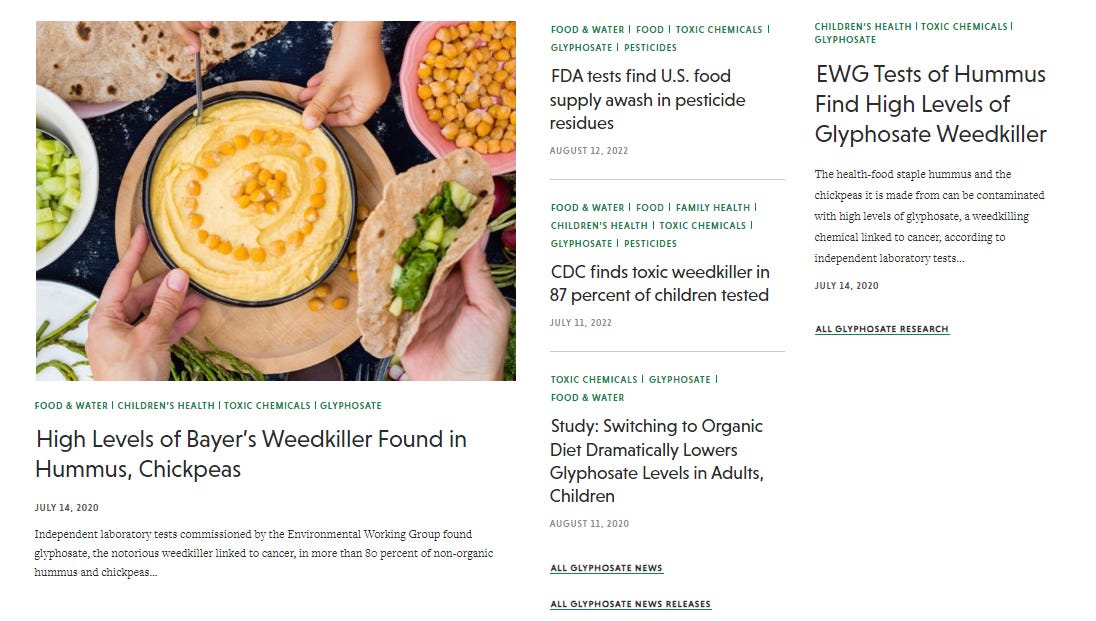
So, back and forth, back and forth, and the truth is never in the hands of agricultural lobbying outfits pushing GMOs and GEs and killer pesticides and weed killers.

For the past couple of decades, tens of thousands of people living in rural Sri Lanka have been devastated by kidney failure due to unclear causes, also known as CKDu. Similar incidences of mysterious kidney diseases have emerged in tropical farming communities around the world.
A massive field study of the wells supplying drinking water to the Sri Lankan communities, conducted by researchers at Duke University, has identified a possible culprit—glyphosate, the active compound in Roundup, the most widely used herbicide in the world.
The results of the study were published in Environmental Science and Technology Letters on September 13, 2023.
Roundup is a glyphosate-based herbicide used to control weeds and other pests. Because it is supposed to break down in the environment within a few days to weeks, its use is relatively under-regulated by most public health agencies. But when glyphosate encounters certain trace metal ions that make water hard—like magnesium and calcium—glyphosate-metal ion complexes can form. Those complexes can persist up to seven years in water and 22 years in soil.
“It was always thought that this chemical would break down very quickly in the environment, but it seems to stick around a lot longer than we expected when it complexes in hard water,” said Nishad Jayasundara, the Juli Plant Grainger Assistant Professor of Global Environmental Health at Duke. “We have to consider how glyphosate is interacting with these other elements, and what happens to glyphosate when you take that into your body as a complex.”
In certain agricultural areas of Sri Lanka, the high, dry climate combined with its geological formations creates the perfect conditions for hard water. It is also in these regions that CKDu has reached epidemic levels, with as many as 10% of children aged 5–11 years exhibiting signs of early onset kidney damage.
Jayasundara, who is from Sri Lanka himself, believed that glyphosate may play a role in CKDu incidence because of the region’s hard water, even though Sri Lanka has banned use of the herbicide. To test his hypothesis, Jayasundara teamed up with environmental chemist Lee Ferguson, an associate professor of civil and environmental engineering at Duke and his Ph.D. student Jake Ulrich. In collaboration with Mangala De Silva, a professor at the University of Ruhuna, Sri Lanka, the Duke team sampled more than 200 wells across four regions in Sri Lanka. (source)
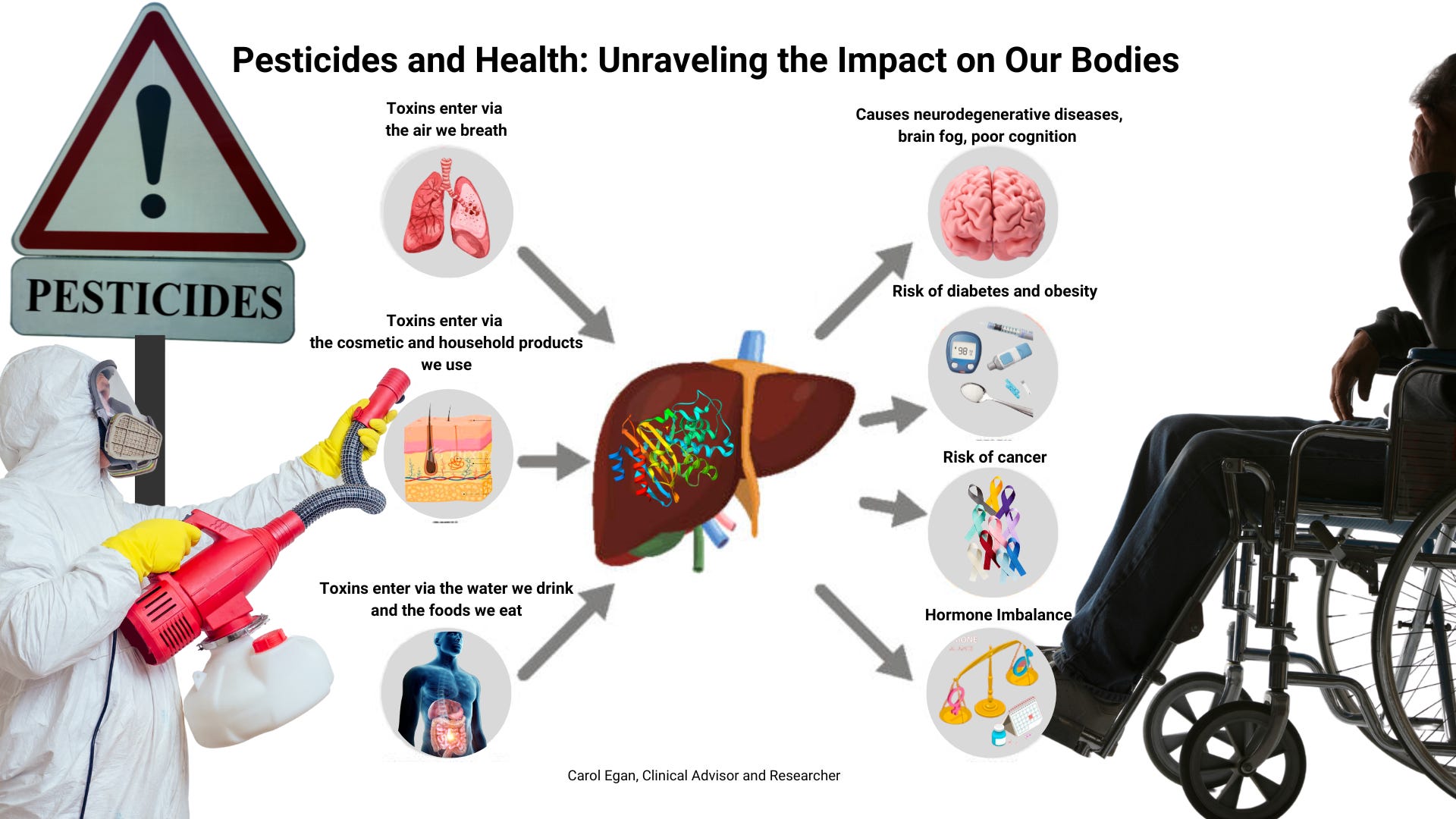
The tricks of the trade include obfuscate. When the money makers, the profiteers, merchants of death, attempt to read articles like this, they implode: Tipping the Balance of Autism Risk: Potential Mechanisms Linking Pesticides and Autism & Autism genes are selectively targeted by environmental pollutants including pesticides, heavy metals, bisphenol A, phthalates and many others in food, cosmetics or household products
They interfere with hormonal regulation and the development of the human body (Leemans et al., 2019). In vivo studies have shown that DDT, glyphosate, and other pesticides reduce the T4 (thyroxine hormone) levels in serum, and reduce transthyretin proteins, required for T4 transport. (Toxicity analysis of endocrine disrupting pesticides on non-target organisms: A critical analysis on toxicity mechanisms)
Gaza and Extermination?
Show description:
“After Hamas’s attack in Israel on Saturday, the Israeli massacres of Palestinians in Gaza have skyrocketed. This genocidal ethnic cleansing has scarcely been reported by mainstream media at any time in its 50 year history, let alone at a time when western media and politicians openly support a religious war against Palestine. So we’re giving a platform to three Palestinian voices to share their story.
We speak with Refaat Alareer, a Palestinian academic currently sheltering 15 children in his Gaza apartment, Yumna Patel, the Palestine news director for Mondoweiss, and Muhammad Shehada, a Palestinian writer from Gaza.
Their stories of bombings, murder, cruelty, and lies from the Israeli government and malicious rumors from US media and politicians are difficult to hear, but so important when they’re being silenced everywhere else.
“The American public and the general public around the world is being sold a genocide,” they tell us. “We are being convinced through the rhetoric of Israeli politicians, the US president, and US state department spokespeople that Palestinians, specifically Gazans, are not human. They are trying to wipe Gaza off the map.”
And while the deaths of Israelis must be covered and mourned, the West’s hypocrisy and double standard on the value of life is clear.
“I have never seen the amount of profiles and interviews with the families of victims than I’ve seen of mainstream media interviewing these Israeli families. I have never seen this level of attention paid to one singular Palestinian.”
Israeli children matter. Why don’t Palestinian children matter? “No attention is being paid to the killing of 270 children just in the span of three or four days.”
Refaat, Yumna, and Muhammad share their frustration and disgust with “the fact that our government and the President of the United States is repeating dehumanizing genocidal language, repeating these unsubstantiated claims.”
And sadly, we may not be able to hear their voices for long. Refaat, calling from Gaza with the sounds of bombs exploding in the background during the interview, warns that resources are running low. “But in a couple of days, maximum a week or two, if things don’t change, we’re looking at a total blackout, no coverage, no media, no internet. Not that Israel cares, and mainstream media is complicit.”
Hear them speak, and share the interview to spread their message. At a dangerous time, we thank you for continuing to support Useful Idiots and our guests.”
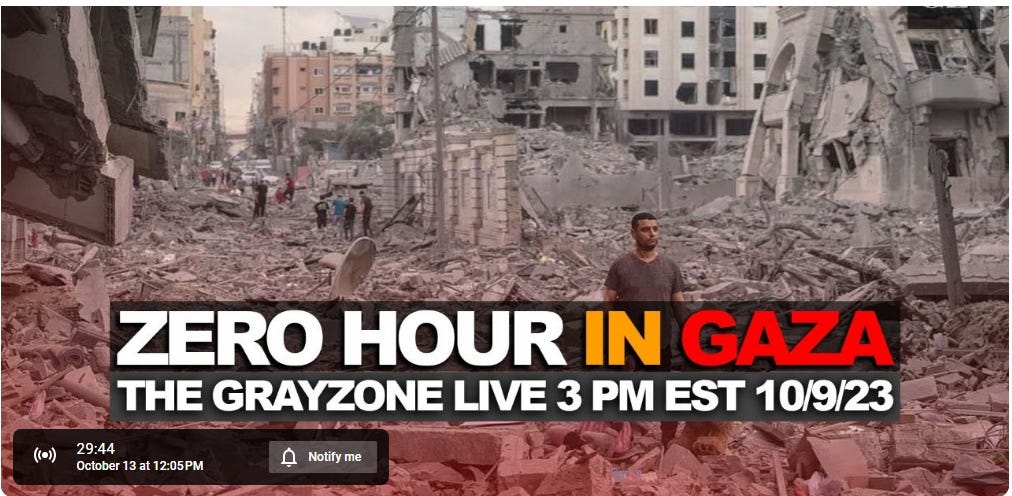
Max Blumenthal and Aaron Mate cover the latest from Gaza as Israel demands 1.1 million civilians leave the northern area of the besieged enclave in expectation of a regime change war, and US, UK and French ships arrive at the coast.
The state of Oregon can’t even get snow plows and sand and deicer, or workers. This is capitalism collapsing on the taxpayer, while trillions are thrown at meat grinders, that one in Ukraine and now the one in Gaza.
Or chemicals, defended, man.
Impacts of pesticides on our health
Pesticides are poisons and, unfortunately, they can harm more than just the “pests” at which they are targeted. They are toxic, and exposure to pesticides can cause a number of health effects. They are linked to a range of serious illnesses and diseases from respiratory problems to cancer.
Exposure
Exposure to pesticides can occur in many ways. Farmers and farm workers can be exposed to pesticides in agriculture through the treatment of crops, plants and grain stores. Rural residents living next door to farms can be exposed to pesticide drift. Exposure can also occur in forestry, professional and domestic pest control, through the treatment of wood with preservatives, the treatment of boat hulls with anti-fouling agents, and the treatment of livestock with anti-parasitic preparations, e.g. sheep dip. In our towns and cities we are exposed to pesticides through the spraying of amenities, such as our parks, pavements and playgrounds. Many people buy pesticides off the shelf for home and garden use. And finally, pesticide residues found on, and in, our food also puts us at risk.
Should you be concerned?
Acute toxicity
Pesticides can be acutely toxic. This means that they can cause harmful or lethal effects after a single episode of ingestion, inhalation or skin contact. The symptoms are evident shortly after exposure or can arise within 48 hours. They can present as:
- respiratory tract irritation, sore throat and/or cough
- allergic sensitisation
- eye and skin irritation
- nausea, vomiting, diarrhoea
- headache, loss of consciousness
- extreme weakness, seizures and/or death
Chronic (or long term) toxicity
Pesticides can cause harmful effects over an extended period, usually following repeated or continuous exposure at low levels. Low doses don’t always cause immediate effects, but over time, they can cause very serious illnesses.
Long term pesticide exposure has been linked to the development of Parkinson’s disease; asthma; depression and anxiety; attention deficit and hyperactivity disorder (ADHD); and cancer, including leukaemia and non-Hodgkin’s lymphoma.


 Paul Haeder, Author