

… what is your story, uh, and will you tell it, and, who do you want to read it, uh, and can you see we need more stories from us, we the people, the regular goddamned people?
I am teaching or facilitating a memoir writing class for the local community college and it’s part of community education.
The Art of Literary Portrait Making
Come parachute into a memoir-writing class and explore how those hard knocks and amazing trials and tribulations can be lifted into literary art. “On the coast,” says the instructor, Paul Haeder, “I have found dozens of people whose stories count for more than notches on their belts. They have lived, seen, analyzed, suffered and prevailed, and many have had pretty engaging lives. That’s the foundation to starting a memoir.” In this course, students will share and critique, and the instructor will guide participants, whether they want to write an essay or tackle a book-length project.
INSTRUCTOR: PAUL HAEDER
EIGHT SESSIONS | FRIDAYS, OCT. 6- DEC. 1
2-3:30PM | $75 | WALDPORT, Room 113
+—+
It’s a deal, man, $75 a head for my own passion, my energy, my entertaining self, resources, feedback, all of that wizardry of being a teacher. I have eight students, two of whom are out of the city/state attempting to hook into it via Zoom.
What is that memoir? What prompts people to want to write? To devulge personal passages in life, so called significant emotional events, putting it all into a package — a short essay, a long-form piece, a novella-length auto-fiction or memoir, or that big one, the book length and chapter heavy book of one’s life, now.
Or, what is shaping life as we are still alive in this class.
Or, what series of significant events have affected change? Perspective? Some sense of a passage or rite of passages?
It will be a hoot, man, working with local people. Always is, always will be.
This one goes here and there, all over the place, but Viet is a good writer, great one:
A conversation between Professor Adriane Lentz-Smith and the Pulitzer Prize-winning author of The Sympathizer and The Committed Viet Thanh Nguyen on “Struggle, Trauma, Memory, and the Power of the Fictions We Weave.”
Here, from his new memoir, the end of a piece her wrote for The New Yorker =
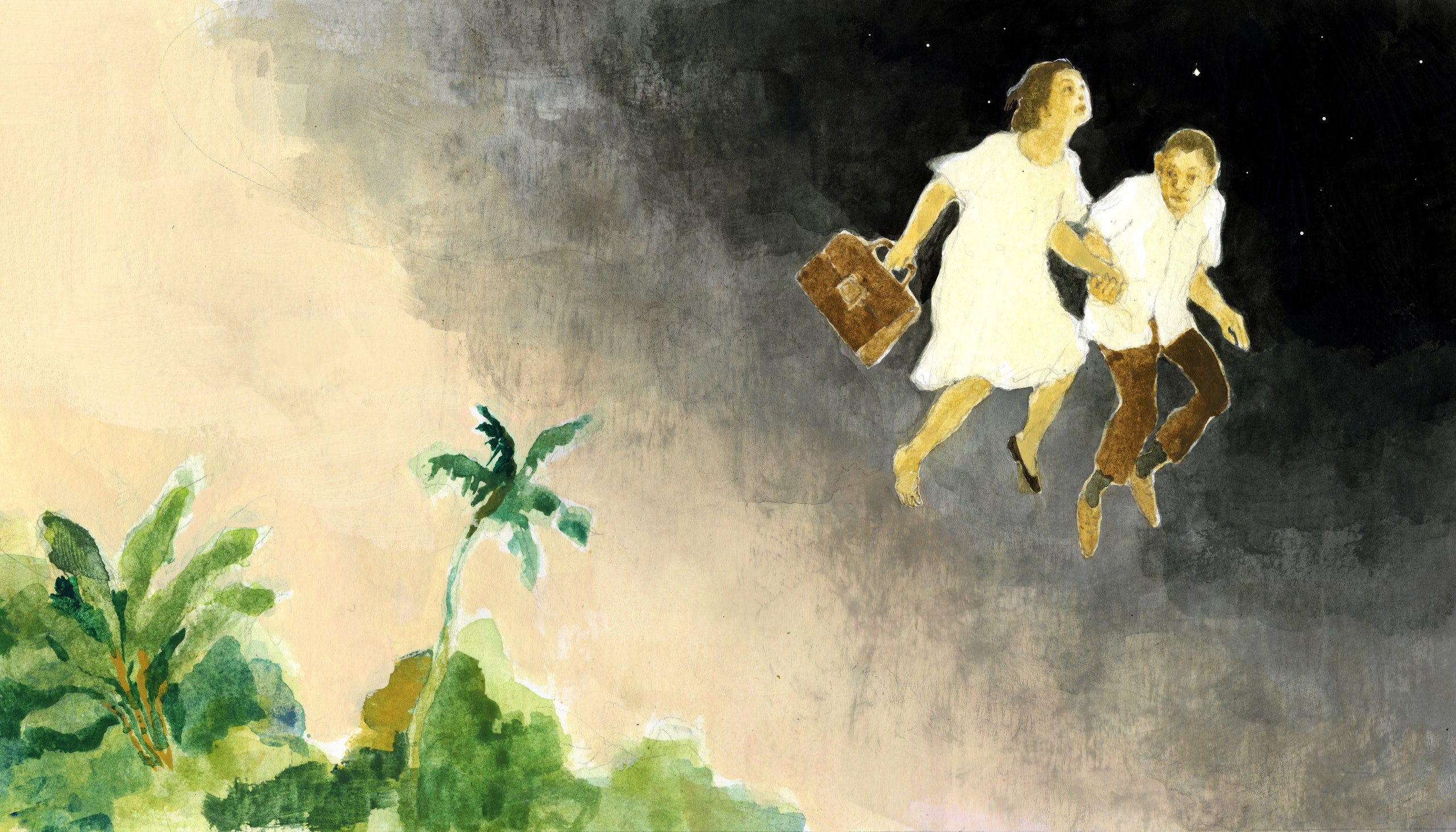
My mother will not count as one of war’s casualties. But what do you call someone who loses her country, her parents, her peace of mind, because of war? By Viet Thanh Nguyen/ September 9, 2023
Má’s eyes do not open. She gives no sign of hearing.
Her breathing finally stops. It is midnight.
Her journey on this earth, complete.
My mother is mine and my
mother is also Other to me.
My brother makes a phone call. In an hour,
a courteous stranger who might be Filipino arrives
with a gurney, fills out a form, takes away my mother,
leaves the empty hospital bed in the family room,
and drives my mother into the night.
I remember Má loved me.
Everything else
I can forget. ♦
What we get in any class is facing pain, when it comes to writing poetry, fiction and memoir. Writers are not there for hope, all the time or some of the time. I remember a publisher telling my agent that my book — story collection — was amazingly written, but, “man, the stuff in here is dark . . . too dark maybe for mainstream fiction.”
Dark!@#$%
When Dionne Warwick won her first Grammy in 1968 for the song “Do You Know the Way to San Jose,” no one could have predicted that the fall of Saigon seven years later would trigger a massive influx of Vietnamese refugees. Among them was a hardworking couple, soaked in Catholicism, who opened one of San Jose’s first Vietnamese grocery stores in a decrepit downtown while raising two sons.
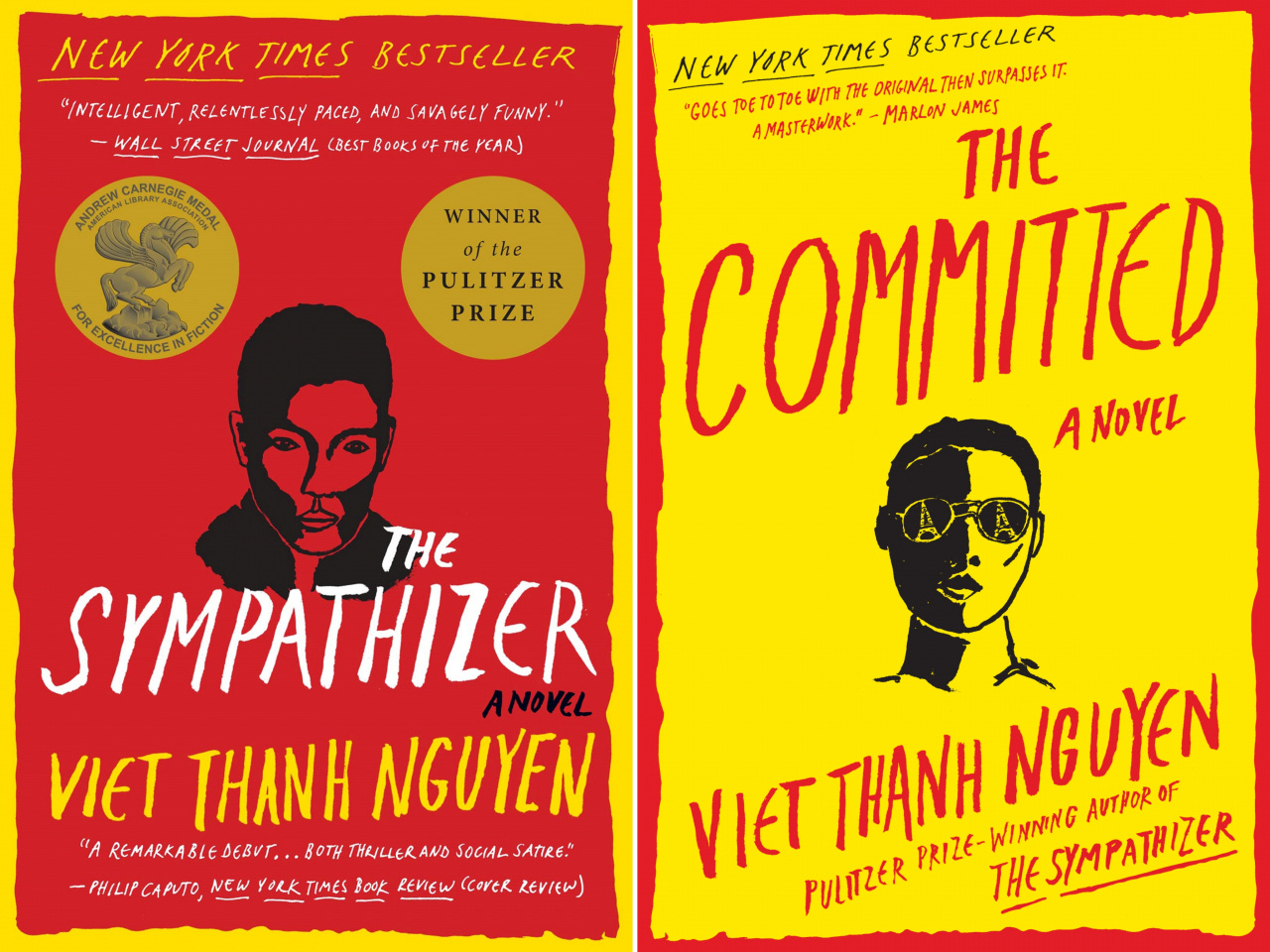
One of those sons was Viet Thanh Nguyen, who left the city after high school, became radicalized at Berkeley, found solace in critical theory, and eventually won the Pulitzer Prize for his novel The Sympathizer. Nguyen’s collection of short fiction, The Refugees, features a story called “War Years,” based on experiences growing up in his parents’ store, at Fifth and Santa Clara Streets.
In the early 2000s, the city of San Jose purchased the grocery’s building by force—the Nguyens sued to get a fair price—and the parcel became an unused parking lot until a 28-story residential skyscraper was built there, with a shiny new city hall directly across the street.
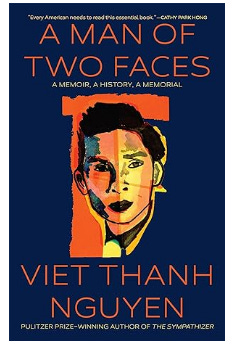
Nguyen’s new book, A Man of Two Faces: A Memoir, a History, a Memorial, deftly processes the psychological scars left by this history. The opening chapter is called “Do You Know the Way to San José?”
This man, a displaced person, Nguyen, has come a long way baby!
It is what for many refugees see as a great accomplishment coming to America, that one, the one that invaded their country, the killing fields of Vietnam:
The decision to make a television adaptation of his 2016 Pulitzer-winning novel “The Sympathizer” was a double joy for Vietnamese American writer Viet Thanh Nguyen.
“It’s a thrill for any writer to have their book adapted to the screen, and in my case, a particular thrill because I’m very excited to be working with Park Chan-wook, whose work I’ve greatly admired even before I wrote the novel,” Nguyen said in an interview with The Korea Herald in June.
Powered with Park’s direction and a star-studded cast that includes Robert Downey Jr. and Sandra Oh, the series is scheduled for release next year via Warner Bros. Discovery’s global streaming platform HBO.
Familiar with many of the renowned South Korean director’s works, the writer recalled being struck by not only how visually powerful, but also politically powerful Park’s 2003 classic “Oldboy” was. The film explored some of the themes that Nguyen was also concerned with — violence, memory and revenge.
The fictional stories, well, for Nguyen he has partly inserted into the stories, in terms of humor and sensibility.
HBO! A win!
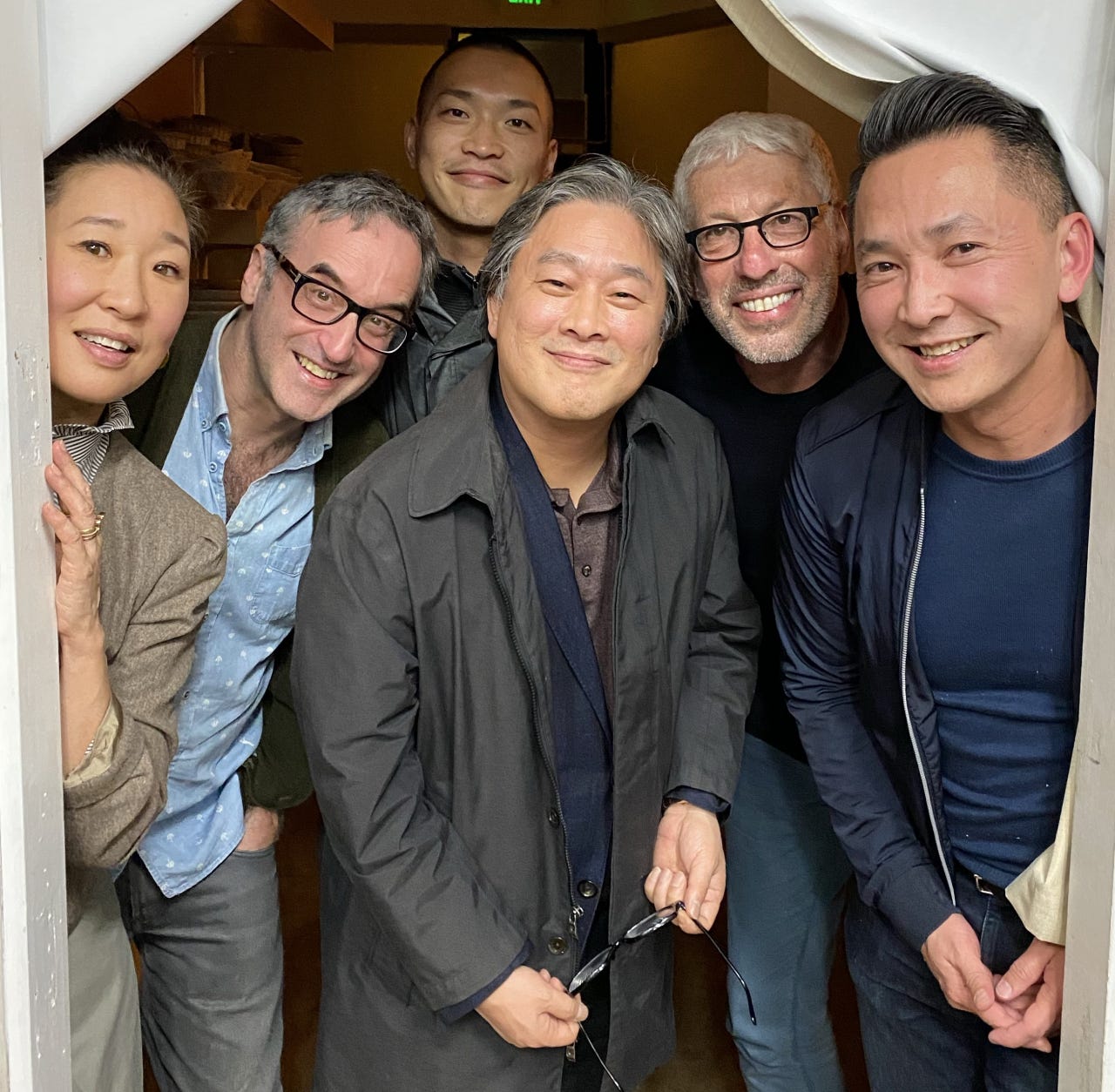
[Photo: From left: Actor Sandra Oh, head writer Don McKellar, interpreter Jaehuen Chung, director Park Chan-wook, producer Niv Fichman and writer Viet Thanh Nguyen in March 2020. (Courtesy of Viet Thanh Nguyen)]
Now, Nguyen is more than the sum total of filmmaking glee, that so called film industry, a la HBO, Hollywood, but this is now again part of his story, memoir. Nguyen is away of the realities of us, the regular people, not the “beautiful” people. He’s not Cormac McCarthy, obviously.
+—+
In addition to being split between two countries, Nguyen is a professor of English, American studies and ethnicity and comparative literature at the University of Southern California by day, and a writer by night.
“I became a professor … because my parents wanted a ‘real’ job, a day job, but writing has always been my fantasy.”
Nguyen finds that the two roles complement and influence each other; his academic background allows him to tackle historical and political issues in his novels while he deals with weighty issues with an entertaining approach. (source)
+—+
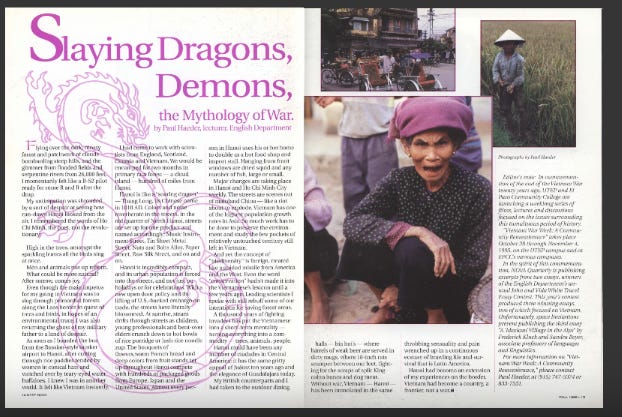
And here in a nutshell is an example of memoir. Mine. A slice of time. With a huge historical backstory, front story, a never-ending story. Part of a single point in time when I went to Vietnam not to fight an illegal war, but to immerse myself into biodiversity studies, but so so much more, and so it’s only a few thousand words that put who I am (one part of me) into perspective!
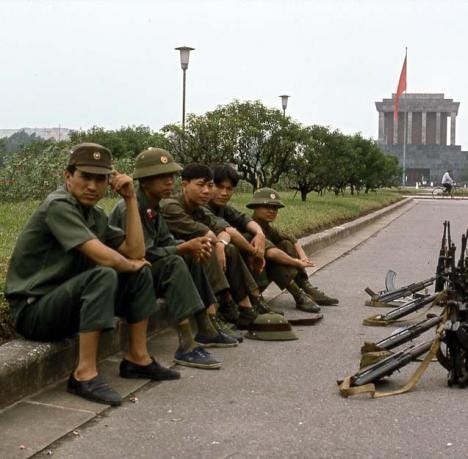
War and Peace In Vietnam
Flying into Vietnam 10 years ago brought back the phone call my family received that my father had been shot by the Viet Cong. That was 1969, and I was a 13-year-old fighting schoolmates because I didn’t support the war in Indochina.
Even before the cold announcement that my father had been severely wounded carrying cryptographic equipment in a Huey, I knew the United States was wrong to be in Vietnam. Something about the mythology of war, invisible dominoes, never repeating history.
Now, flying over the mossy forest, a patchwork of clouds, and the glimmer from hundreds of flooded fields and winding rivers, I felt like I was about to drop into a dream.
The stiff green uniforms and yellow star on red background of the Democratic Republic of Vietnam suited the hard-faced immigration soldiers at Hanoi’s airport. There was panic in the air from mostly Vietnamese workers and businessmen deplaning from Moscow. Our group was scatterbrained from the long flights from London to Moscow to Pakistan to Hanoi. We were researchers being treated like tourists, our gear dragged by young blokes looking for hotel commissions.
Most of the Vietnamese on the streets hustling us for cyclo rides (three-wheeled pedaled push carts) and hawking imitation Swiss army knives, Rolex watches, Zippo lighters and U.S. dog tags were young men. This was a testament to one of the world’s highest population growth rates (2.5 percent) and to burgeoning under- and unemployment rates (40 and 20 percent).
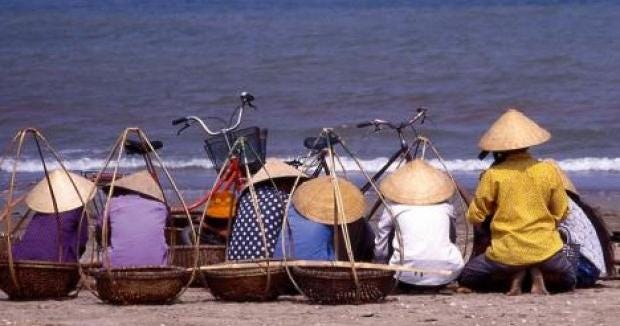
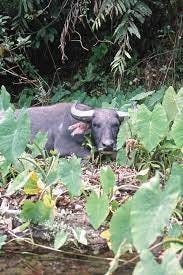
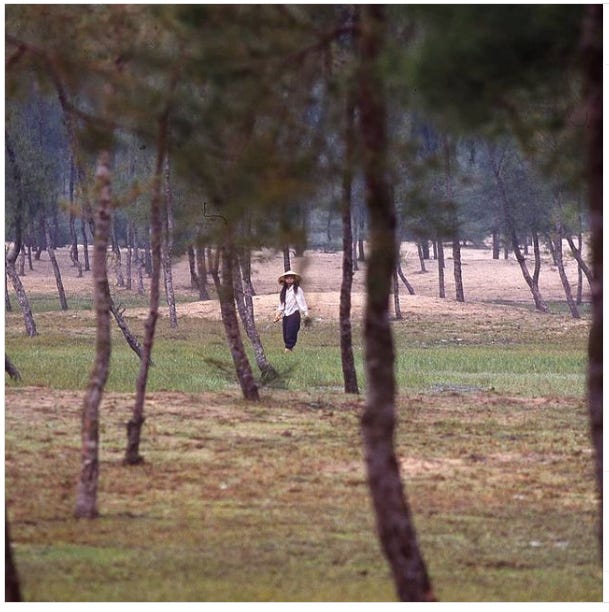
As soon as we boarded the bus, cutting through rice paddies tended by women in conical hats, surrounded by teary-eyed water buffaloes and frenetic ducks, I knew I was in another world.
It felt like Vietnam instantly. I could almost taste the explosives in the air.
Scientific expeditions into Third World locales evolve into a weird mix of wanting to be open to a culture and attacking it with these disassociations. With Vietnam, there was emotional baggage and the statistics of war:
– 2 million civilians killed in the north, 2 million in the south;
– 1.1 million military casualties; 600,000 wounded;
– 58,183 Americans (eight of them women) killed;
– 3,869 fixed-wing aircraft and 4,857 helicopters lost;
– 15 million tons of ammunition expended;
– 2,000 Americans and 300,000 Vietnamese missing in action.
So many millions of acres of rain forest and mangroves were destroyed. More than 6 million lives were lost from 1954 to 1975. America introduced the concept of “ecocide” — warfare on the ecology — that still affects each new generation with carcinogenic and mutagenic dioxin from herbicides in human breast milk.
But I hadn’t come to Vietnam to unload a war catharsis.
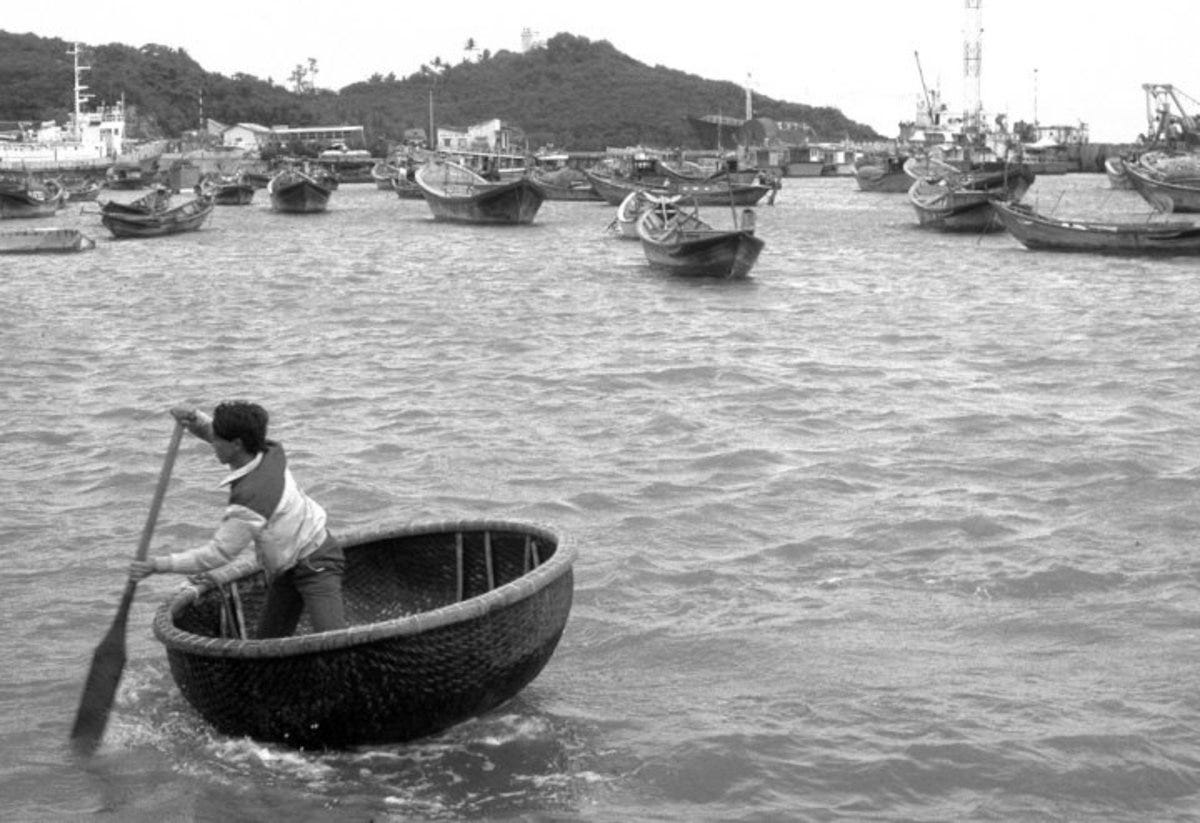
“The war against America has little relevance in the minds of the people today, as opposed to how people in the U.S. feel about it,” Gene Reddic, a copy editor in Hanoi with the Vietnam Investment Review, told me.
“They don’t live it everyday … the Vietnam war does not conjure up B-52’s bombing Hanoi, and they don’t see Americans as evil people,” he added.
I felt alone for much of the time I worked in Vietnam, and not only because I was the only American in a group of 23 British, Canadian and Vietnamese scientists.
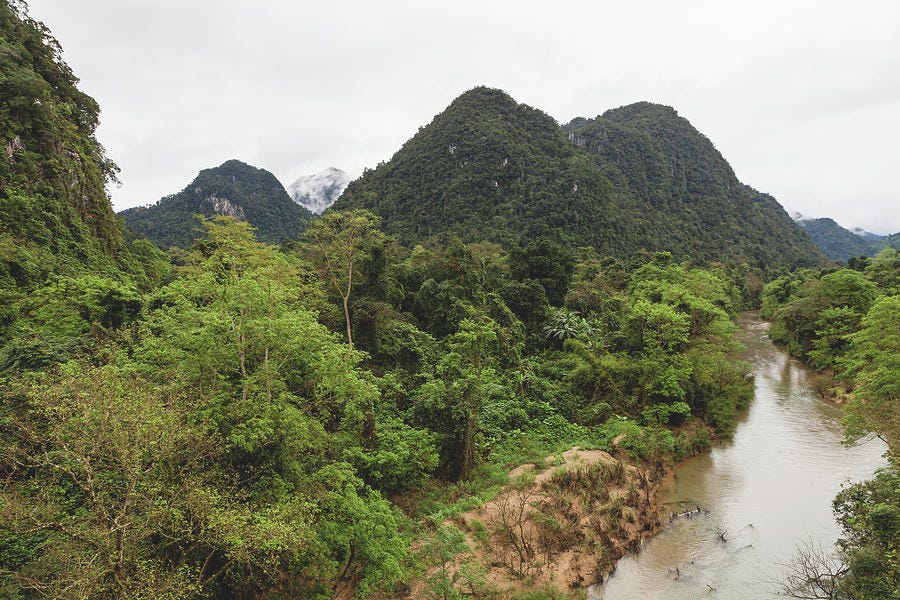
It wasn’t separation from familiar surroundings that stirred the feeling, or the fact that we were bivouacking for three months in primary rain forest — a cloud island, really, and hundreds of miles from Hanoi, just a few clicks from Laos. The raw primal rain forest we had come to study as a part of an international biodiversity project wouldn’t account for the strange separateness I would be feeling. My isolation came from being an American in a sea of Vietnamese — more than 83 million of them in an S-shaped country the size of Italy but with a per capita annual income of just $270.
It has one of the world’s highest population densities for any agricultural country. And then there is the “onslaught.” The 1986 economic reform program, known as Doi Moi, or “open door,” has brought an incredible Westernization — not only of Hanoi’s storefronts, but in the mindset of the people who find themselves actually desiring Western capitalism.
There is almost a lust for the new life, with disregard for tradition, spirituality and the environment.
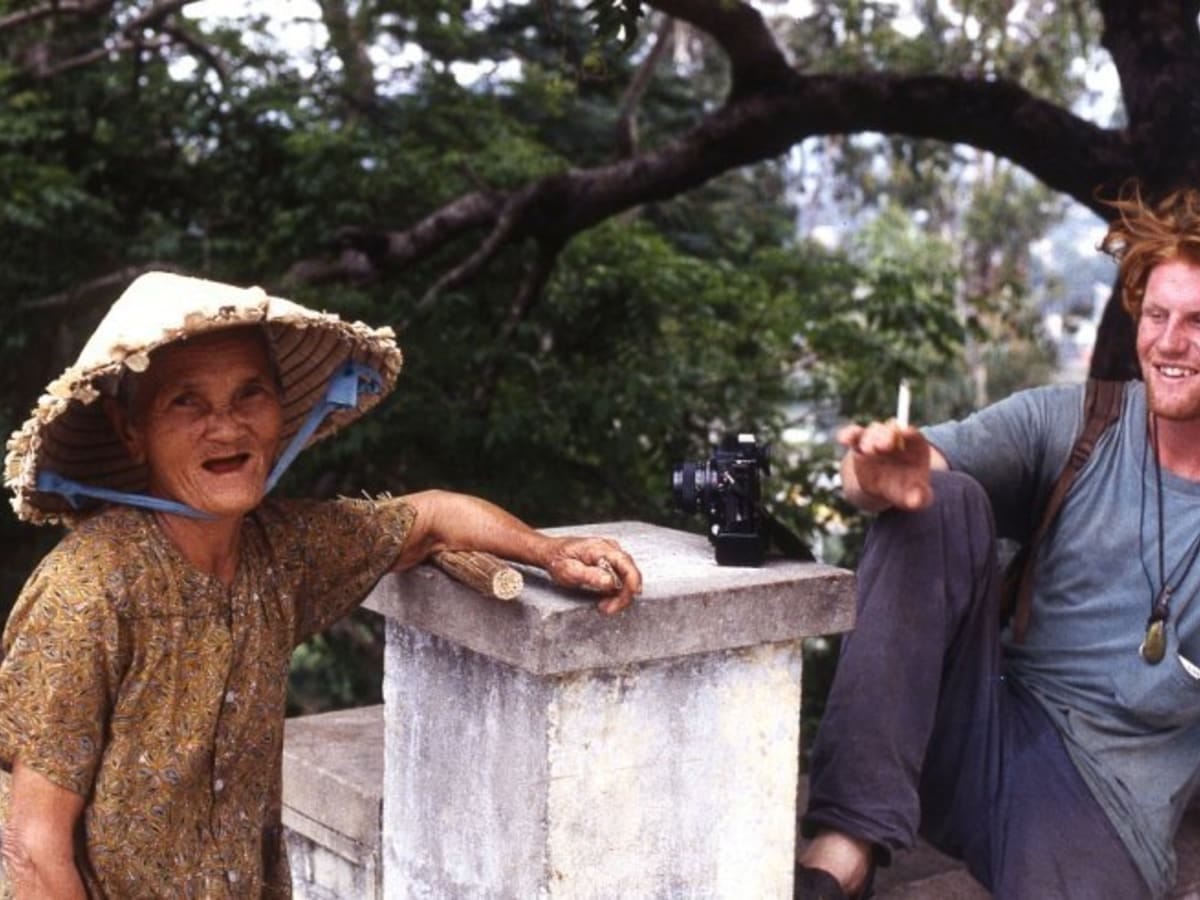
I felt like an intruder — big, burly, full of extra calories, my dollars gold. I was an American returning with my father’s ghost haunting me.
Many of us have the “secondary Vietnam aftershock”: episodes with friends who had been to Vietnam now self-medicating with drugs, booze, violence. I have taught Vietnam draftees at community colleges — students with faraway gazes who couldn’t cope with festering emotions. All the land mines at home.
“I have buddies who did the tunnel-rat thing, the deep jungle sapping,” said Brian O’Connor, a 42-year-old Ohioan who was swapping stories at the Apocalypse Now bar in Hanoi. “But you have to remember, most of the servicemen were not in combat zones. I had two tours, and I fell in love with Saigon — no bullets. Just the occasional knifing or bottle bomb.”
Almost 3.2 million Americans, including more than 7,000 service women, served in Vietnam during America’s one and a half decades here. Around 80 percent were rear echelon or support; less than 20 percent ever saw combat.
“It’s still something talked about in our schools in Germany,” said Petra Buchbinder, a 24-year-old German traveler and backpacker who has been working as an English teacher in Ho Chi Minh City (Saigon) and Hanoi. “Almost nothing about Hitler and the Third Reich, but much on the fire bombing and My Lai massacre. When I see Americans over here, I wonder if that one or this one fought here … and what they must have seen, or what dark horrors they carry with them.”
Buchbinder said after 18 months living in Saigon and Hanoi, she’s developed a “sixth sense” about foreigners. “I am 90 percent correct when I try to guess if he is American, if he has seen combat here.” It’s the look in their eyes, she insisted.
I had to press hard to get older folk — 40 or older — to talk about the war. In Hanoi, Hue and Vinh, people didn’t want to broach topics of combat duty or flights from carpet-bombing.
However, south of the Ben Hai River, the zone area along the 17th parallel that demarcated the war (DMZ), many spoke of killing Viet Cong. Others lamented how they had lost and been shuttled to reeducation camps set up by the communists after “the victory.”
Quang Tri, Cam Lo, Rockpile, Lang Vay and Hamburger Hill are just a few of the places these South Vietnamese fought at, places that saw bloody battles and ended up on television in America’s living rooms.
They had done hard labor in camps, and now they’re working the streets for big tourists to pay 50 cents for long rides on their cyclos. Others are street sweepers or sledging boulders.
I saw older women working on road gangs, hauling boulders and hot tar and baskets of sand. “The pro-Americans, the elite, or sympathizers were stripped of jobs, impoverished, received no education,” Reddic said. “Those that held land were basically evicted and singled out for reeducation.”
Because the north didn’t suffer as much from the Americans, compared to the south, a lot of tension exists between the north and south.
“The north fears the south breaking away. The south was more enterprising,” Reddic said. Of course, during the war, the U.S. government pumped in billions that built up infrastructure and provided capital for private and public works projects.
The war with America may have pitted the south against the north, but Vietnam has been at war with invaders for more than a thousand years. “The Vietnamese have a history of always protecting themselves, always throwing out the big guy. Like China, Japan, the U.S.,” said Tim Carr, a New York journalist who worked in Hanoi for two years.
An owner of three cafes — including the Memory Cafe, a hot spot for expatriates and foreign travelers looking for rental bicycles, motorcycles and tours around Hanoi — 37-year-old Tam Hang recalls B-52 bombing raids against Hanoi in the early part of 1970 and then three years later.
“I saw my aunt and uncle and friends laid out on the street when we were finally let out of the bomb shelter at school. There were thousands lined up and covered with sheets during just one attack. I still remember the sound of the bombs. I don’t forget the war, the smell of rotting flesh, but I am not against Americans,” Tam said.
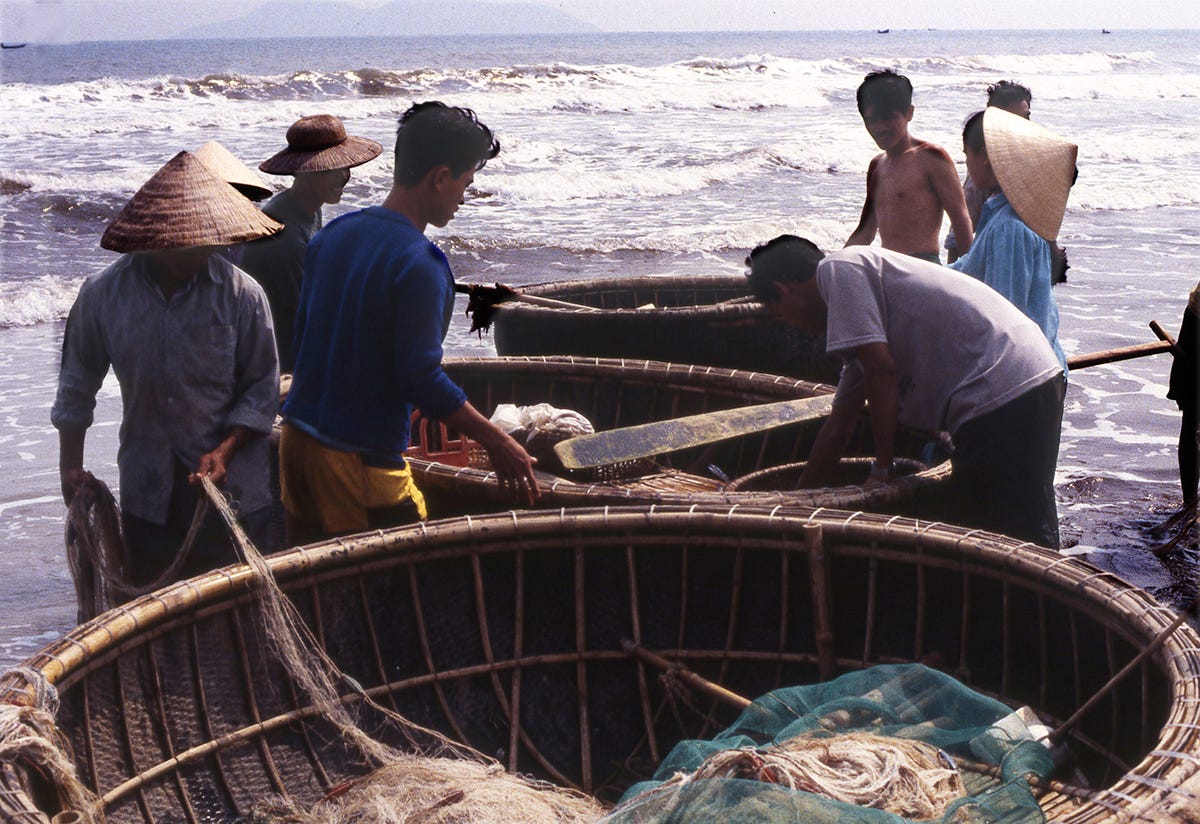
Vietnam wants Americans back. This is true of the north, which saw some physical damage from American warplanes, as well as the south, which received the bulk of 13 million tons of bombs and tons of napalm and white phosphorus, as well as most of the 20 million gallons of Agent Orange sprayed on millions of acres of forest, cropland and mangroves.
When I was singled out of our group as an American, dozens of people, young and old, anywhere — in Hanoi’s old quarter at cobra and dog meat stalls, or at Buddha pagodas along the banks of the jade-tinged Perfume river in Hue, or in Con Cuong, an outback town full of loggers — would seek me out for handshakes and embraces.
They bowed and shoved to get a closer look. They measured my wrists and ankles. They stroked blond forearms hairs, bowed as if I held some prominence, and always laughed.
The younger ones wanted to know how much money I made; how much my diver’s wristwatch cost; why I was in Vietnam; what kind of car I owned. Others, older with war-weary eyes, tried in broken English or French to tell me their exploits. They secreted envelopes addressed to relatives living in the States and stuffed them into my pockets.
[Link]
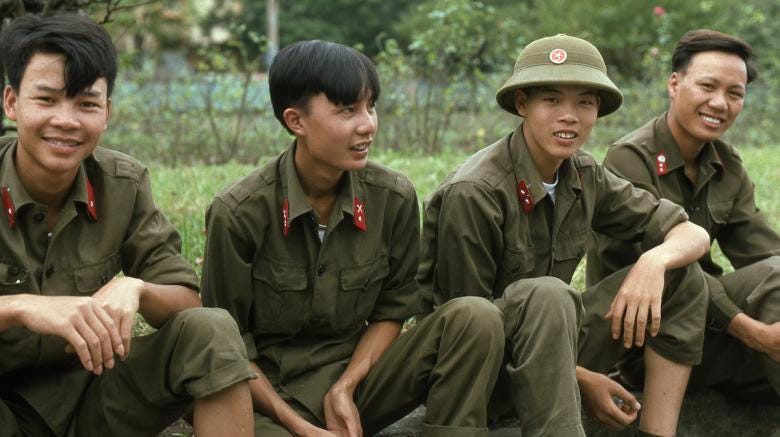
North Vietnam was victorious in the 15-year war with America, although “Uncle” Ho Chi Minh wasn’t alive to witness it.
Victory shows in crumbling buildings and ox-carts towing dung and human waste (night earth) for subsistence farms, and smoky Russian buses ferrying dozens of passengers crammed among blocks of tea leaves and live pigs and duck along Vietnam’s potholed roads built by the French and the United States.
Those first two weeks in and around Hanoi, we prepared to make the plunge into a bio-dome where rare Asiatic elephants, Javan rhinoceroses and a newly discovered species, a bovine called the pseudoryx, roam.
It was here where I was rushed with images of a rural country permanently sunk by “victory.” A country now overhauling itself daily, overloading itself with Japanese electronics and American clothing trends.
I was taken aside by expatriates who told me about yet-unexplored Buddhist temples. Surfers right out of the “summer of love” traced my maps showing me where the best waves where hitting China Beach. Vietnamese businessmen bought me syrupy, sweet coffee, pitching ventures for exporting jade or importing computers. Scientists making $50 a month asked me to send them Western books on entomology and taxonomy.
So many changes are taking place in Hanoi and Ho Chi Minh City weekly. The streets are a riot of bicycles, motorcycles and trucks. And time is running out to preserve the environment and study the few pockets of relatively untouched territory left.
And yet the concept of “biodiversity” is foreign, treated like a guided missile from the West. Even the word “conservation” barely made it into Vietnam’s lexicon a few years ago.
“You’d be in the same position if you exchanged shoes with us,” said Cao Vang Sung, deputy director of zoology and ecology for Vietnam’s Institute of Ecology and Biological Resources. “People need to cut wood for food and medicine. Biodiversity from your Western point of view forgets to look at the overall effects of a country’s living standard.”
I kept asking myself what I was doing here trying to collect data on this country’s mammals, plants, insects, ethnic minorities. It’s so poor, so backward, so unreceptive to outside help, so paranoid about foreigners.
A poet friend from Cleveland who had been a Vietnam vet put it best: “We spent so much time and money and lives to topple that country, and now Americans are going back 25 years later to help restore a country it helped destroy. It’s crazy, weird.” Schizophrenic.
“All these wars have put the Vietnamese into a short-term mentality … turning everything into a commodity — trees, animals, women and children,” says Reddic with a sigh.
—++ end of article ++—

Collection of short fiction relives memories of Vietnam and its American war
 Paul Haeder, Author