

“Hunger isn’t caused by a shortage of food.” 912/2010).
(Editor’s Note: this piece continues a discussion started here about efforts to monitor and hopefully persuade organizations like the Alliance for a Green Revolution in Africa )
Related Stories
For additional information on these topics visit here or “here, which takes you to pages by Community Alliance for Global Justice, which coordinates the AGRA Watch program.
“Hunger isn’t caused by a shortage of food.”
This oft-repeated statement may be counterintuitive or disturbing to mainstream agro-economics, but that’s the focus of global food experts, planners, civil society and peasant farmers.
“For now, the G8 and the United States continue to advocate the same disastrous policies that got us into the current mess where 1 billion people lack access to adequate food,” said Ben Burkett, an African-American farmer who has traveled around the world to support locally-based sustainable agriculture.
“A right to food framework therefore goes deeper than simply the misguided obsession with yields and productivity, and more fundamentally towards questions regarding democracy and access to resources, including land, water and credit.”
So instead of learning from the failures of the “first” green revolution, our own agriculture secretary Tom Vilsack purports that biotechnology will be the silver bullet to address hunger.
Not surprising, the U.S. Senate Foreign Relations Committee approved with limited public debate the “Global Hunger Security Act,” mandating the U.S. fund genetic engineering projects in foreign agriculture research. With no real coincidence, the Bill and Melinda Gates Foundation has invested billions into their Alliance for a Green Revolution in Africa – called the second green revolution.
Just surfing the Internet with hits on organic farming sites or even Wikipedia, the Green Revolution is succinctly laid out as a phenomenon that increased yields of corn, wheat and rice with seed manipulation, lots of synthetic chemical inputs, and mechanization.
Irrigation engineering also increased yields from 1960 to the 1990s. Another counterintuitive truism, thanks to the first green revolution:
– “Increased food production can – and often does – go hand in hand with greater hunger.” Fact Sheet!
So, by getting farmers “competitive” by forcing them to purchase expensive inputs, obviously, wealthier farmers will squeeze out the poor. Then, those traditional small farmers are not going to find adequate employment to compensate for the loss of farming livelihoods.
India has the highest suicide rate for farmers who have been squeezed out by the agro giants and depleted aquifers. Developing countries are hurdled with millions upon millions of unemployed pastoralists, farmers, fishers looking for something, thanks to this globalization of food and farming.
AGRA is pushing the bio-technology solution, which is basically Monsanto, DuPont, Novartis, and other remade chemical companies leading genetic engineering research and orchestrating propaganda trumpeting claims that “GE seeds boost crop yields and will feed the hungry.”
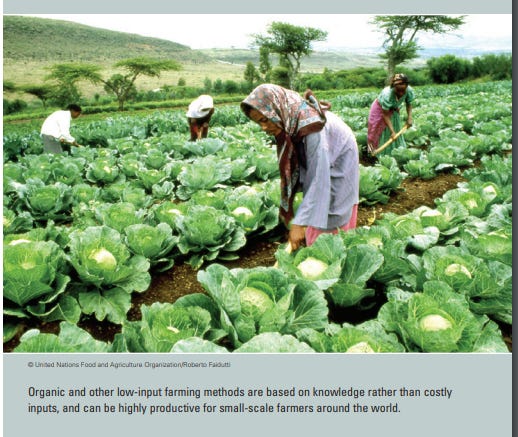
People and organizations like Burkett, AGRA Watch, La Via Campesina and others believe these technologies have questionable benefits and documented risks. The second Green Revolution they promise is no more likely to end hunger than the first.
Burket continues: “The scientific research and renewed focus on the ‘right to food’ exposes why we must move away from Green Revolution monoculture practices and instead embrace ecologically sound practices, more equitable trade rules and local food distribution systems to empower family farmers. Now the governments of the world and the Gates Foundation need to finally get the message as well.”
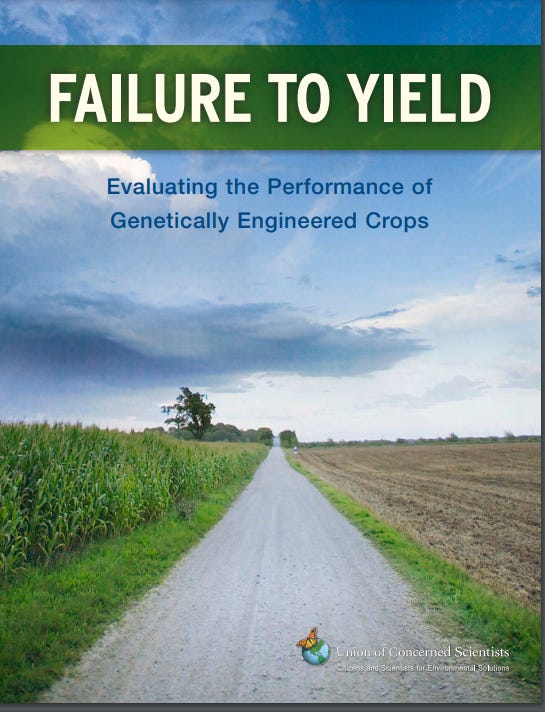
The Union of Concerned Scientists authored a report, “Failure to Yield: Evaluating the Performance of Genetically Engineered Crops,” showing that after more than 20 years of research and 14 years of commercialization, genetic engineering has driven up costs for farmers .
Yields have not risen significantly, and the environmental costs of so much plowing, spraying and large scale mono-cropping are beyond imagination.
\
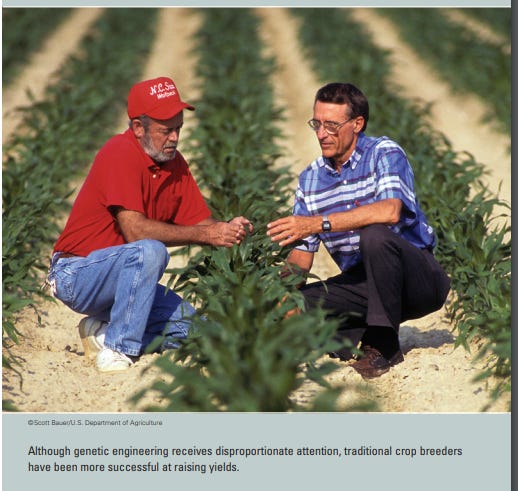
“In comparison, traditional breeding continues to deliver better results,” Burkett said.
Proof is in the pudding, or in this case, sweet potato: Monsanto’s GM sweet potato has no resistance to a crop-specific virus while all the local varieties in Kenya outperformed the genetically modified one.
“The U.S. approach to helping Africa should not be a top-down process that excludes the voices of African farmers who have the knowledge of their land and what food to grow,” Burkett said.

Inducted: 2020 — source: heroes.coop/ben-burkett
African American farmers in the Black belt would have lost a valuable advocate had Ben Burkett moved to Chicago after graduating from Alcorn State University as he had planned. But when his father fell ill, Ben, a fourth-generation farmer stayed in Petal, Mississippi to get the family’s cotton, cucumber, corn and beans to market. Forty years later, Ben has made his mark on his community and the world as a farmer, cooperative organizer, and advocate for southern Black farmers.
Farming is never an easy profession but in rural Mississippi long ingrained discrimination denied Black farmers open markets for their crops, access to federal and state programs and even retention of their land. “We achieved the right to vote, but we still needed to achieve the right to survive,” said Ben. Seeking better prices for their watermelons, Ben organized neighboring farm families to sell their crop in Chicago. With the assistance of the Federation of Southern Cooperatives, the Indian Springs Farmers Association was born.
While continuing to farm and serve as a local co-op leader, in 1978 Ben joined the staff of the Emergency Land Fund (ELF), a non-profit whose mission was to save and expand Black farms and assist Black farmers with heirs’ property issues. His role was to identify and work with other Black farmers and land owners to protect their landholdings. When the ELF merged with the Federation of Southern Cooperatives in 1985, Ben’s role was expanded to include spreading the word about the cooperative business model and he began teaching diversified crop development for conservation and marketing purposes. Ben’s knack for connecting with rural communities in the South, his passion for farming, and unique ability to get things done made him a sought-after agricultural trainer.
Ben’s reputation as a farming and rural development expert garnered the attention of Mike Espy, former member of the U.S. House of Representatives and Secretary of Agriculture under the Clinton Administration. Espy appointed Ben to the USDA’s Farm Service Agency Committee for Mississippi and was largely responsible for the inclusion of technical assistance funds that enabled more minority farmers to qualify for USDA farm assistance. Through his work with the FSA State Committee, Ben encountered and supported Lester Spell’s candidacy for Mississippi Commissioner of Agriculture and Commerce. Key to Spell’s election, Ben was appointed to the State Marketing Board where he served two terms and continues to be involved.
Ben’s political appointments and his service in various food advocacy organizations including the National Family Farm Coalition, La Via Campesina’s Food Sovereignty Commission, the Rural Coalition and the Community Food Security Coalition helped to raise the profile of the Federation and of agricultural and handicraft co-ops throughout the South. His expertise has taken him to Africa, South America and Southeast Asia where he shared his knowledge of small-scale agriculture and the power of cooperatives.
As a tireless promoter and advocate for the cooperative business model, Ben’s knack for connecting farmers globally and bringing them together for a common cause has made him a sought-after speaker, trainer, organizer and a true example of the cooperative spirit. Ben’s work was recognized with a leadership award from the James Beard Foundation in 2014.
 Paul Haeder, Author