

…the daily slime is more than any giant slime mold can comprehend — Inside Job and Stealing from Africa by Bunko Carbon Markets and the New Green Deal!

- Former Treasury Secretary Larry Summers called for Russia’s frozen funds to be made available for Ukraine
- It would be financially and politically expensive for the US to fund Kyiv’s needs, he told Bloomberg TV.
Brefeldia maxima is one of the largest of the slime molds and its distinctive feature is the presence of multicellular vesicles within the capillitium. Joszef Tomasz Rostafinski (1850–1928) first described this species.
Brefeldia maxima is one of the largest of the slime molds and its distinctive feature is the presence of multicellular vesicles within the capillitium. Joszef Tomasz Rostafinski (1850–1928) first described this species.
I don’t give this “brilliant mind” description credence, but here, the fucker Summers: From Huffington, not my cup of tequila!
So let me turn the high beam on one of the main architects of the plan — less in the news than Tim Geithner, but no less important — Larry Summers.
To understand why a man as brilliant and accomplished as Summers can be so wrong about what to do with the banks and Wall Street, it would be useful to turn to “The Innovator’s Dilemma,” by Harvard Business School professor Clayton Christensen.
The book explains how even very successful companies, with very capable personnel, often fail because they tend to stick to the strategies that made them successful in the first place, leaving themselves vulnerable to changing conditions and new realities. So you can have brilliant managers who miss what’s needed for success in the future because they are too tied to the past.
This describes Summers to a T.
He is one of the top economic minds of his generation, a tenured professor at Harvard by the time he was 28, with plenty of real-word experience — ranging from heading the Treasury to heading a major university. But his core beliefs and assumptions helped lay the groundwork for the current crisis.
As treasury secretary under Bill Clinton, Summers played an important role in convincing Congress in 1999 to pass the Gramm-Leach-Bliley Act, which repealed key portions of the Glass-Steagall Act and allowed commercial banks to get into the mortgage-backed securities and collateralized debt obligations game. The measure also created an oversight disaster, with supervision of banking conglomerates split among a host of different government agencies — agencies that often failed to let each other know what they were doing and what they were uncovering.
At the signing of the bill, Summers hailed it as “a major step forward to the 21st century.”
Summers also backed Phil Gramm’s other financial time bomb, the Commodity Futures Modernization Act, which allowed financial derivatives to be traded without any oversight or regulation. So it was on his watch that the credit-default swaps warhead that has blown up our economy was launched.
Indeed, during a 1998 Senate hearing, Summers testified against the regulation of the derivatives market on the grounds that we could trust Wall Street. “The parties to these kinds of contract,” he said, “are largely sophisticated financial institutions that would appear to be eminently capable of protecting themselves from fraud and counterparty insolvencies and most of which are already subject to basic safety and soundness regulation under existing banking and securities laws.”
It would be hard to make assumptions that turned out to be more wrong than Summers’ were.

Slime mold has more purpose in life than all the economists put together in a giant canal which might be a place to start growing mold, for sure.

Commonwealth Club (yuk!): “Come hear from the filmmaker of this year’s Academy Award-winning best documentary feature film. Could the global economic meltdown of the last few years have been prevented? Ferguson believes that the crisis was no accident. His latest documentary, Inside Job, makes the powerful case that an out-of-control finance industry took advantage of a deregulated atmosphere and purposely sought to get rich at the expense of others. Through extensive interviews with financial insiders and government officials, Ferguson crossed the globe to find proof that the financial industry intentionally engaged in unethical behavior. His gripping account of the global recession is sure to evoke feelings of disgust, anger, and concern that this all may happen again unless our regulatory system is changed. Ferguson’s previous film, No End in Sight, was nominated for an Oscar, and Inside Job brought home the grand prize at this year’s awards ceremony.”
Inside Job, old, but telling. And Summers, like many human slime molds, is all about outright theft:
“It’s a very difficult budgetary time, in the United States and other major economies. What those facts say to me is that we’re not going to find hundreds of billions of dollars for Ukraine in our budgets,” Summers said. “And then if we find a lot of money, it’s gonna be enormously expensive money, in terms of what it means politically, and in terms of what it means for the rest of the world.”
Taking over the Russian funds should be achievable, and would free the US to commit its budget to other concerns, such as climate change protection, he added.
The assets, amounting to hundreds of billions of dollars in value, were first frozen by Western institutions in response to Moscow’s invasion of Ukraine last year.
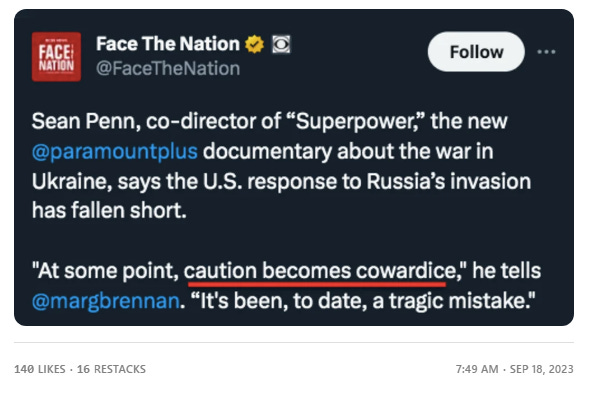
And it is not a far cry from Sean Penn, Ben Stiller, Adam Sandler and all the other human stains going to Zelensky on hands and knees. Caitlin Johnstone:
I’ve fucking had it with this shitbrained idea that it’s somehow an act of courage to risk the life of every terrestrial organism rolling the dice on nuclear war for the advancement of your personal geopolitical preferences, and that anyone who doesn’t want to do this is a coward. Most of the humans on this planet don’t give a fuck who governs Crimea or the Donbass, and exactly zero of the non-human lives care either way. Yet you think you’re a big brave hero for wanting to gamble all their lives controlling that outcome? Fuck you.
This is who is running our narrative, framing, the shit show of elites and molds running the country:
And, the mold can look a bit less moldy:
- Priscilla Chan and husband Mark Zuckerberg announced plans to eradicate human disease by 2100.
- Their project plans to use 1,000 GPUs to build a massive database of healthy and diseased cells.
- One researcher’s excited by the potential, but said it’ll likely take lots of time and money to complete.

Ahh, the deadend lives of billionaires. Again, these are monsters, Caitlin, not just the war mongers of Blinken-Kagan-Nuland-Etc.

- Here are 10 popular jobs with skills most replicable by AI, according to ChatGPT itself.
- The jobs site Indeed analyzed GPT-4’s ability to perform skills required for these common jobs.
- Though GPT-4 is able to perform some skills, others — like driving a car — still require a human touch.
Oil oil oil, and the fake green lies of a Canada!
Canada, home to the world’s third-largest crude deposits, is poised to reshuffle global oil flows next year.
The nearly completed expansion of the Trans Mountain pipeline promises to vault Canada into a new role in global markets by transporting an additional 600,000 barrels a day — on par with the daily output of Azerbaijan — from the country’s vast oil sands to a port on the Pacific Coast.

Hydrocarbons, and then, the Greta/John Kerry/UN Wildbunch — stop oil? No development for Africa? Right! And those fires? (source)
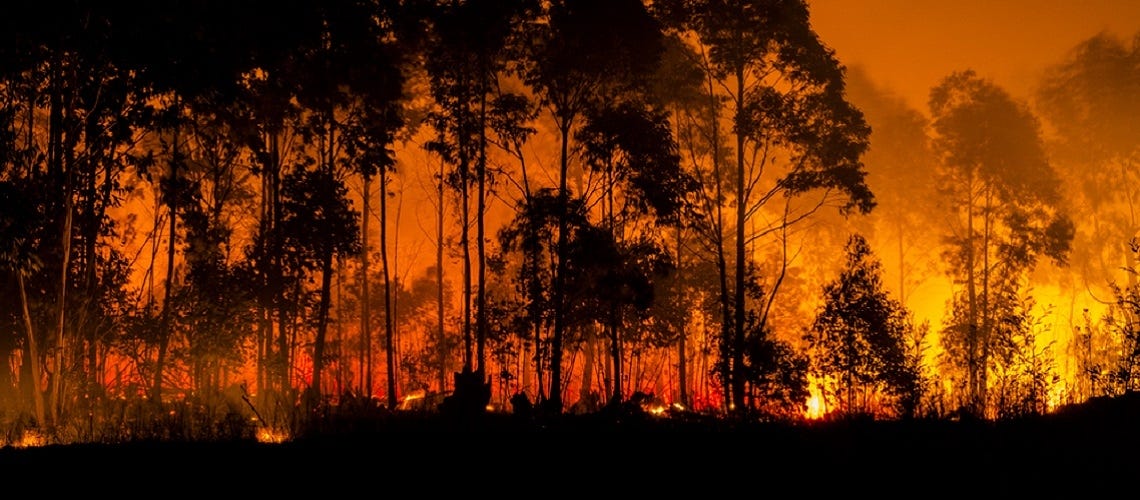
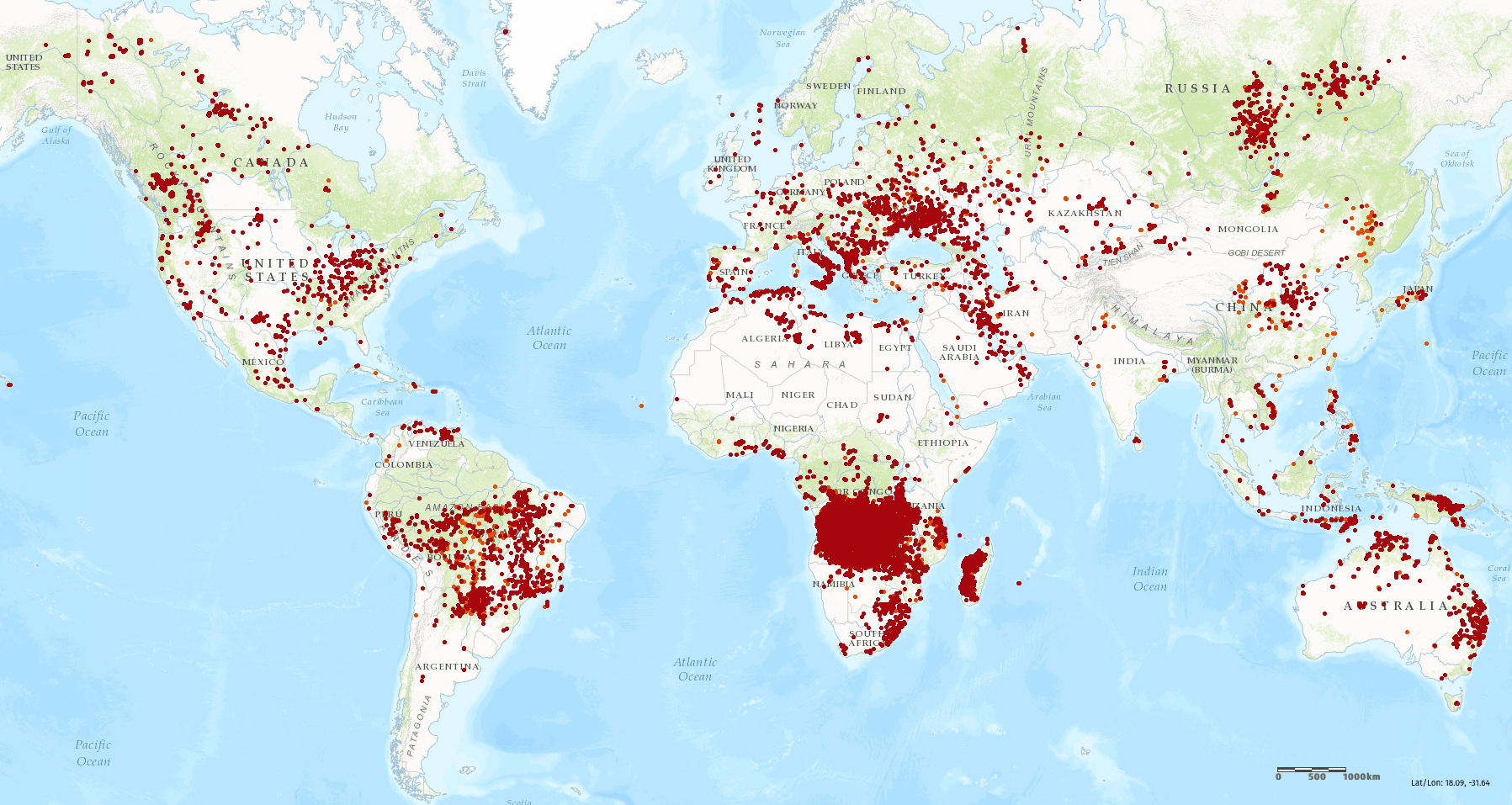
Wildfires are thought to be increasing in severity and frequency as a result of climate change1,2,3,4,5. Air pollution from landscape fires can negatively affect human health4,5,6, but human exposure to landscape fire-sourced (LFS) air pollution has not been well characterized at the global scale7,8,9,10,11,12,13,14,15,16,17,18,19,20,21,22,23. Here, we estimate global daily LFS outdoor fine particulate matter (PM2.5) and surface ozone concentrations at 0.25° × 0.25° resolution during the period 2000–2019 with the help of machine learning and chemical transport models. We found that overall population-weighted average LFS PM2.5 and ozone concentrations were 2.5 µg m−3 (6.1% of all-source PM2.5) and 3.2 µg m−3 (3.6% of all-source ozone), respectively, in 2010–2019, with a slight increase for PM2.5, but not for ozone, compared with 2000–2009. Central Africa, Southeast Asia, South America and Siberia experienced the highest LFS PM2.5 and ozone concentrations. The concentrations of LFS PM2.5 and ozone were about four times higher in low-income countries than in high-income countries. During the period 2010–2019, 2.18 billion people were exposed to at least 1 day of substantial LFS air pollution per year, with each person in the world having, on average, 9.9 days of exposure per year. These two metrics increased by 6.8% and 2.1%, respectively, compared with 2000–2009. Overall, we find that the global population is increasingly exposed to LFS air pollution, with socioeconomic disparities.
And, now, hobbling Africa, those new green fascist dealers:
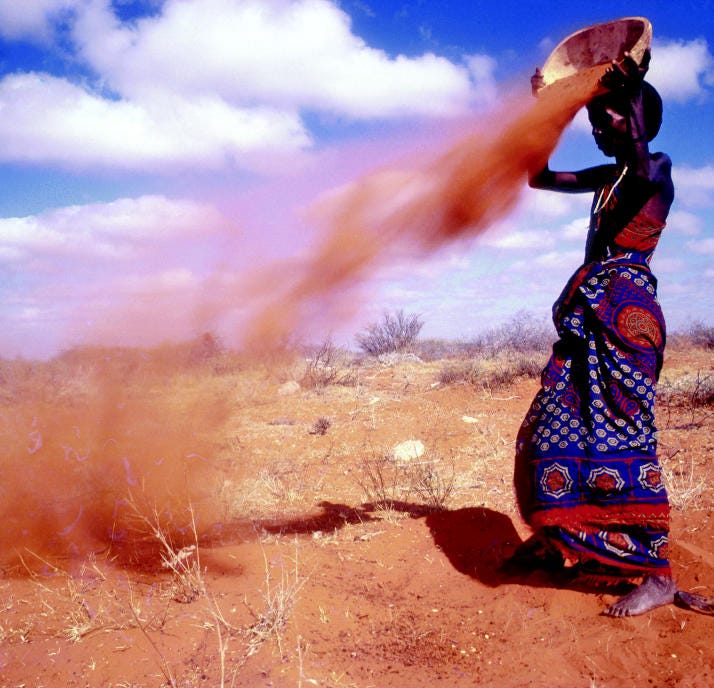
In the meantime, Campbell says, “It’s important that the G8 outcome be committed over the long term to maintaining [financial aid] policies.” This financial aid, he says, will be vital to the lives of Africa’s poor, who represent an ever increasing segment of African society. And climate change is likely to accelerate such societal stratification, he says. People who have at least some wealth will be better able to switch to different crops, buy a different kind of livestock, or combine growing and herding. “Herders who had taken on farming appeared to be less vulnerable to drought than the people who had maintained themselves in terms of subsisting almost entirely on herding,” Campbell says. “So that diversification showed itself to be successful in terms of allowing them to cope with prolonged drought.” However, those Africans who don’t have sufficient wealth to buffer the effects of increasing climatic variability will plunge deeper into poverty.
But as much as financial aid is needed, Nyong says, the reality is that no amount of money is going to stop climate change from affecting Africa in profound and unpredictable ways.
Africa wasn’t able to prevent the buildup of greenhouse gases, he says; “What we are left to do now is to adapt to the buildup.” (source)
Even countries with binding commitments to switch to low carbon energy have found their priorities have shifted, at least in the short term and African nations see the potential for new export markets, as well as a chance to end domestic fuel poverty.
“There is a lot of oil and gas companies present at COP because Africa wants to send a message that we are going to develop all of our energy resources for the benefit of our people because our issue is energy poverty,” said Namibia’s petroleum commissioner, Maggy Shino, who works within the country’s Ministry of Mines and Energy.
Echoing comment from other African nations, Shino said wealthy countries had failed to deliver promised funding that would help them to expand clean energy instead of exploiting their fossil fuel resources.
“If you are going to tell us to leave our resources in the ground, then you must be prepared to offer sufficient compensation, but I don’t think anyone has yet come out to make such an offer,” she said. (source)
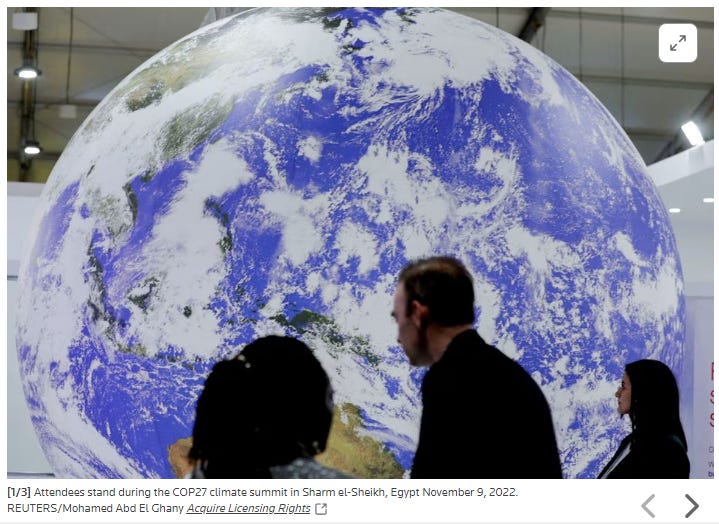
So, the Sean Penn’s and Larry Summers’ of the world, they have eyes on more ill-gotten, stolen profits.
Chinese oil imports from Africa amounted to about 63 million metric tons in 2009, while the United States imported 107 million tons and Europe 124 million tons. Angola is the number one oil supplier to China, leaving behind even the Saudi Arabia and Iran, followed by Sudan and the Equatorial Guinea. China buys two-thirds of Sudan’s oil exports and invests in exploration, production, refining and hydrocarbon transportation in Sudan now that Western companies have left it. The Chinese completely ignore sanctions against Khartoum imposed by the West. Chinese oil companies operate in Angola, Nigeria, the Republic of Congo, Algeria, Côte d’Ivoire, Namibia and Ethiopia.
Chinese presence in Africa has many faces and includes the provision of grants and loans; rail and highway construction; construction of power plants, housing construction, shopping malls, schools, and hospitals; arms supplies; tens of thousands of Africans studying in China; regular summits and mutual visits at the highest government level. There are more Chinese restaurants than McDonald’s in Africa. Many African states are celebrating their 50th anniversary of independence these days. The Chinese have invested $100 million in building the African Union’s headquarters in Addis Ababa, Ethiopia, and are completing the construction quickly. The buildings of foreign ministries and parliaments in many African countries came as a gift from China. Roads, bridges and airfields are usually built on credit. In exchange, China gets access to the African riches. The Africans don’t mind, although the negotiations are not always perfectly smooth.

Africa’s Hydrocarbon Development – How to Make it Work for its Own People
By Sudha Mahalingam, India
There have been two significant energy-related developments in the last two decades. The first is a demand-side development, the awakening of the two Asian giants – China and India. Both these economies have launched an energy-intensive rapid-growth paradigm, playing ‘catch-up’ in the inexorable global development game. With their combined populations accounting for more than a third of global population and their low per capita energy consumption base, the two economies will pre-empt an increasing share of the dwindling global energy sources, especially hydrocarbons.
Already nearly half of global incremental oil demand comes from just these two countries and this trend can only become more pronounced in the coming years. The other important development on the energy scene, this time on the supply side, is the emergence of new hydrocarbon supply regions – in Russia, Central Asia, Africa and Latin America. Of all these regions, Africa has indeed become the target of predatory acquisitions and unsavoury practices of international extractive enterprises engaged in the extraction of all minerals, of gold, diamonds, oil and timber. Russia, Central Asia and Latin America have, to a large extent, escaped the exploitative reach of global and now Asian multinational corporations scouting around the world for new assets.
Africa with its loose and unstructured investment regime is the prime target of Asian oil and gas companies looking for accretion to their own reserves. India, for instance, has invested in the energy sectors of Sudan, Libya, Egypt and Cote d’Ivoire and is scouting for new assets in other African countries. In Sudan, it partners with Chinese and Malaysian companies, in Libya with a Turkish company, in Cote d’Ivoire with a Chinese company.
The question therefore is: What is it that makes Africa vulnerable? What is the difference in the political, economic and investment environment in Africa and the other three regions? Can Africa learn from the example from the other three regions and adopt their techniques to ensure that its own peoples benefit most from the extraction of minerals from its territory? At the same time, can Africa escape the resource-curse that has plagued and doomed the single-resource economies of the Middle East?
How can Africa use its mineral wealth to build a diversified economy and ensure economic and social development for its peoples who are among the most impoverished and illiterate in the world? Since the relentless quest for new energy sources will make it impossible to stop the exploitation of Africa’s vast unexplored mineral wealth, how can we ensure that such exploitation takes place in an equitable and humane manner?
So, that proxy war in Ukraine, it is a sickness, man, a real sickness of the West, of Israel, of the war machine, the bombs and bullets and balloons and satellites and drones and every goddamned bit and piece of what makes the Blood Merchants Bloody Murderers, in the field or in the boardroom.
Hands of Africa, Summers, Blackrock, et al!
The Belt and Road Initiative
This initiative was launched in 2013 as Chinese president Xi Jinping announced the double project of connecting China to Europe by land through Central Asia and thus creating a “Silk Road Economic Belt”, and to develop a maritime communication route between the two continents. It has since then become the main pillar of Chinese economic diplomacy.
The official objective of the BRI is “to promote the economic prosperity of the countries along the new Silk Roads (Belt and Road), to promote regional economic cooperation, to enhance exchanges and mutual understanding among civilizations, and to promote peace and development in the world”. It offers partner countries the possibility to finance and build a wide range of new infrastructure, particularly in the field of communication and transport (roads, railways, ports, airports, pipelines, internet network, etc.) and energy. Today, not only have most Asian countries and many European countries joined the initiative, but also almost the entire African continent and some Latin American countries. In addition to building infrastructure, the BRI has four other components: policy coordination, trade and investment facilitation, financial integration and cross-cultural exchanges.
Through the BRI, China is making clear its power ambitions as a global player and intends to adopt a much more proactive stance on the international stage than before. Beyond supporting the country’s economic growth, giving China’s national currency international stature, and strengthening energy security, it has a strong diplomatic component seen in the development of the Belt and Road International Forum and the signing of cooperation agreement with partner countries. The second forum, in May 2019, focused on the fields of energy and telecommunications. It included the signing of an agreement between the African Union and the Global Energy Internet Development Cooperation Organization, initiated by the China State Grid Corporation, the major state-owned company in charge of managing the electricity grid in China.
Africa in the BRI
Although Africa is not the centrepiece of the BRI, the continent has been attracting special attention from China for at least two decades, well before the BRI was launched. Indeed, Africa offers a range of characteristics that are perfectly in line with China’s economic and strategic objectives as defined in the BRI:
- It is a continent rich in raw materials, especially oil and gas, which are essential for the functioning of the Chinese economy.
- The infrastructure needs are colossal.
- African economies, traditionally extroverted and dependent on the rest of the world (for access to finance as well as to technology and know-how), are particularly welcoming to international investors.
- Africa’s population is growing much faster than anywhere else in the world, while a consumerist middle class is beginning to emerge, heralding the eventual development of a huge market.
- Political institutions are relatively weak and standards (social, environmental, safety, etc.) are low, which opens the door to low-end products and less conscientious economic players or those with less expertise.

And, these heads of the Fed, etc., and JP Morgan Chase heads, they are the danger, the war makers.
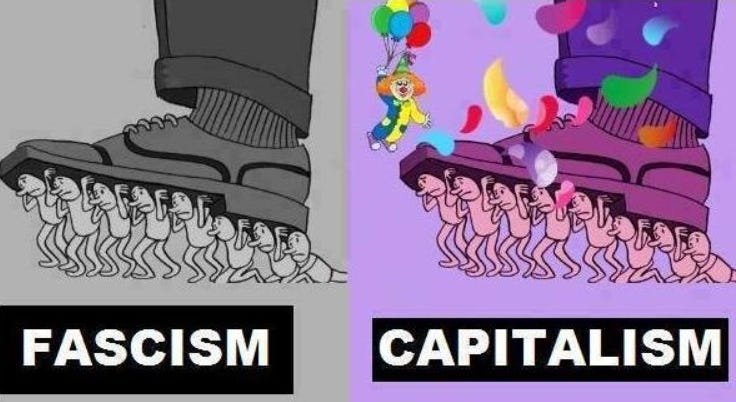
Fascism is Capitalism in Decay
Read =
The Relationship Between Economic Decline and Authoritarianism
“Fascism is capitalism in decay,” we have all heard this referenced to Lenin. While it’s important to note that this specific quote may not be verbatim from his writings or speeches, it does capture the essence of Lenin’s views on capitalism and its potential consequences. Lenin believed that as capitalism reached a certain stage of development, it would exhibit characteristics that resembled fascism. This idea suggests that fascism emerges due to the inherent contradictions and crises within capitalism as it reaches an advanced stage.
Fascism arises as a desperate attempt by the ruling capitalist class to maintain its power. It is a form of authoritarianism that emerges when capitalism is in a state of decay, During periods of economic crisis or decline, the ruling capitalist class may face challenges to maintain their dominance. In response, they might turn to authoritarian and nationalist movements as a means to protect their interests and maintain control. Fascism is the extreme manifestation of these efforts. Economic collapse can generate fear and insecurity in society. Fascist leaders often thrive on this fear, offering a sense of order and protection in exchange for loyalty and obedience.
Fascist regimes promote corporatism (a close collaboration between the state and big business) to maintain social order and protect the interests of the capitalist elite. In desperate times, people may be willing to sacrifice democratic principles for perceived stability. This erosion of democratic norms can pave the way for authoritarian rule.
Lenin’s statement suggests that fascism is not a separate or unrelated phenomenon but a product of the contradictions and crises within the capitalist system. Fascist movements often scapegoat minority groups, blaming them for the economic problems. This can lead to the persecution of marginalized communities, further consolidating power for the authoritarian regime. Fascist regimes tend to suppress dissent and opposition forcefully. This can involve censorship, repression of civil liberties, and the use of state power to maintain control over the population.
In history, when the Nazis aimed to establish legal measures to marginalize and discriminate against Jewish citizens, these concepts were not created in a vacuum. They meticulously examined the legal framework of another nation. According to James Q. Whitman, the author of “Hitler’s American Model,” that nation happened to be the United States. Specifically, the Nazis admired the Jim Crow laws for segregating Black Americans from white Americans and debated whether to introduce similar segregation in Germany. However, they concluded that such measures wouldn’t be sufficient in their case.
They were particularly interested in how the United States had designated groups like Native Americans and Filipinos as non-citizens, even if they lived in U.S. territories. This influenced the Nuremberg Laws, which stripped Jewish Germans of their citizenship and classified them as “nationals.” In essence, the Nazis found inspiration in the American system of racial segregation.
- Suppressing Dissent: Fascist regimes tend to suppress dissent and opposition forcefully. This can involve censorship, repression of civil liberties, and the use of state power to maintain control over the population.
- Propaganda: The use of propaganda is a common feature of fascist regimes. Propaganda can be used to manipulate public opinion, justify authoritarian measures, and create a sense of unity and purpose.
- Erosion of Democracy: As fascism takes hold, democratic institutions and norms may gradually erode. This can include limiting the power of elected representatives, controlling the media, and undermining the rule of law.
Historical Examples
Adolf Hitler’s Nazi Germany (1933-1945): Nazi Germany provides a stark historical example of fascism emerging during an economic crisis.
- Economic Collapse: The aftermath of World War I and the economic turmoil of the Great Depression created widespread unemployment and suffering in Germany. This economic collapse contributed to the appeal of Hitler’s promise to restore economic stability and greatness.
- Authoritarianism: Hitler’s regime was characterized by extreme authoritarianism, where dissent was ruthlessly suppressed. This consolidation of power allowed for radical policies and ideologies, including the anti-Semitic and racist beliefs that led to the Holocaust.
- State Control of the Economy: The Nazi government exerted significant control over the economy, implementing public works programs and militarization. This interventionist approach was seen as a solution to economic woes.
- Abortion Laws (Social Control and Ideological Suppression):Nazi Germany had restrictive policies on abortion as part of its racial purity ideology.
- State Repression: Gestapo and SS Powers The Gestapo (Secret State Police) and the SS (Schutzstaffel) had sweeping powers to investigate and arrest individuals considered threats to the Nazi regime. They operated outside the conventional legal system and often engaged in extrajudicial actions.
- Book Banning (Censorship and Control of Information): Authoritarian regimes have often engaged in censorship to control information and shape public opinion. This includes banning books and materials deemed subversive or contrary to the ruling ideology. Nazi Germany, for instance, burned books by authors considered undesirable.
- Criminalization of Homosexuality: Under the Nazi regime, homosexuality was criminalized through the notorious Paragraph 175 of the German Penal Code. This law made any form of same-sex sexual activity illegal and punishable by imprisonment.
Parallels Today
- Economic Uncertainty: In modern times, economic uncertainties persist, with events like the 2008 financial crisis and the 2020 pandemic causing economic hardships for many. Economic instability creates fertile ground for extremist ideologies.
- The resurgence of Authoritarianism: Authoritarian tendencies, with leaders curtailing civil liberties and suppressing dissent. While not all are fascist, these actions reflect a troubling trend.
- Economic Populism: Economic grievances and job insecurity have fueled the rise of far-right populism in some regions. Leaders often promise to protect jobs and the interests of the majority, echoing historical appeals to nationalism and economic stability.
- Xenophobia and Racism: Like in the past, economic difficulties can exacerbate xenophobia and racism. Some individuals and groups use economic frustrations as a platform to promote discriminatory ideologies. Capitalism is inherently linked to colonialism when fascism rises as does racism.
- Abortion Laws (Social Control and Ideological Suppression): Some governments have passed highly restrictive abortion laws, limiting women’s autonomy over their bodies. This can be seen as an attempt to impose ideological control and restrict individual freedoms, echoing historical authoritarian tendencies.
- RICO Statutes Against Activists (State Repression): There have been instances where RICO statutes have been used against activists and protest movements, alleging that they are engaged in illegal conspiracies. This use of legal tools to target political dissent raises concerns about state repression and parallels historical tactics employed against activists.
- Book Banning (Censorship and Control of Information): Governments or interest groups may seek to remove books from curricula or libraries, aiming to control the narrative and limit access to diverse perspectives. This echoes historical tactics of information control seen in authoritarian
- Erosion of Civil Liberties: Fascist regimes suppress civil liberties and individual freedoms in the name of “maintaining order.” Anti-LGBTQ laws, by limiting the rights of LGBTQ individuals, directly undermine civil liberties, including freedom of expression, association, and equal protection under the law.
There are two main paths society can take: one is the downward capitalist path with fascism, and the other is the upward socialist path.
In the end, these are sociopaths, man: Read all about it!
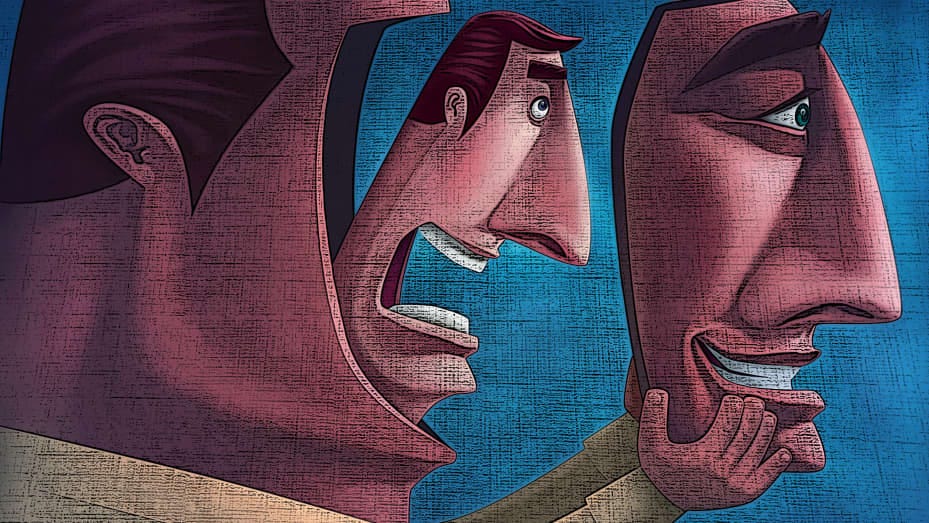
According a study dating back to 2010, there were at least three times as many psychopaths in executive or CEO roles than in the overall population. But more recent data found it’s now a much higher figure: 20 percent.
Also, one of the articles in business insider states that
The incidence of psychopathy among CEOs, for instance, is four times higher than the general population, reports journalist Jon Ronson in his book “The Psychopath Test.”
“Basically, when you get them talking, [psychopaths] are different than human beings,” Ronson told Forbes. “They lack things that make you human: empathy, remorse, loving kindness.”
This behavior is quite different from normal humans. It also says that,
In studying psychopaths, researchers Paul Babiak and Robert Hare found that the high-stakes, high-profits corporate environment attracts these dysfunctional personalities.
Psychopaths often share the same goals as many others: money, power…
“I am a thrill seeker.”
“I like to get revenge on authorities.”
“I never feel guilty.”
“People who mess with me always regret it.”
Larry Fucking Summers =
Lawrence Summers, the President Emeritus of Harvard University, met with Jeffrey Epstein more than a dozen times following his 2008 conviction, and solicited Epstein for funds to support his wife’s budding nonprofit, new documents revealed.
Epstein donated millions of dollars to Harvard during Summers’ stint as the Ivy League university’s president from 2001-2006, which came after Summers served as US Treasury Secretary for Bill Clinton and before his tenure as chief economic adviser to President Barack Obama.
In June of 2008, after Epstein became a convicted sex offender and immediately began serving an 18-month jail term, Harvard began rejecting donations from the disgraced financier, The Wall Street Journal reported.
Nevertheless, new documents obtained by The Journal revealed that Summers continued to meet with Epstein from 2013-2016, and they had several dinners on the books throughout the four-year period.
A spokeswoman for Summers confirmed that “their interactions primarily focused on global economic issues,” and The Journal reported that Summers never received additional funds — personally or for Harvard — from Epstein following his conviction.

Summers went on to argue that boys outperform girls on high school science and maths scores because of genetic difference. “Research in behavioural genetics is showing that things people previously attributed to socialisation weren’t due to socialisation after all,” he told the Boston Globe yesterday.
As an example, Summers told the conference about giving his daughter two trucks. She treated them like dolls, and named them mummy and daddy trucks, he said.
Summers also played down the impact of sex bias in appointments to academic institutions.
He said: “The real issue is the overall size of the pool, and it’s less clear how much the size of the pool was held down by discrimination.”
At least half of his audience comprised women, several said they found the remarks offensive and one walked out.
“It was really shocking to hear the president of Harvard make statements like that,” said Denice Denton, who is about to become president of the University of California at Santa Cruz.
Others said Summers’s comments were depressingly familiar. “I have heard men make comments like this my entire life and quite honestly if I had listened to them I would never have done anything,” said Donna Nelson, a chemistry professor at the University of Oklahoma. (source)
Oh, that Industry!
 Paul Haeder, Author