

universal tracking of all life, of all funtions, of all movements toward Universal BASIC Chump Change Income, or, ‘I wanna have a 20 foot x 10 foot garage to live out my laptop life, now, to save the whale . . . ‘
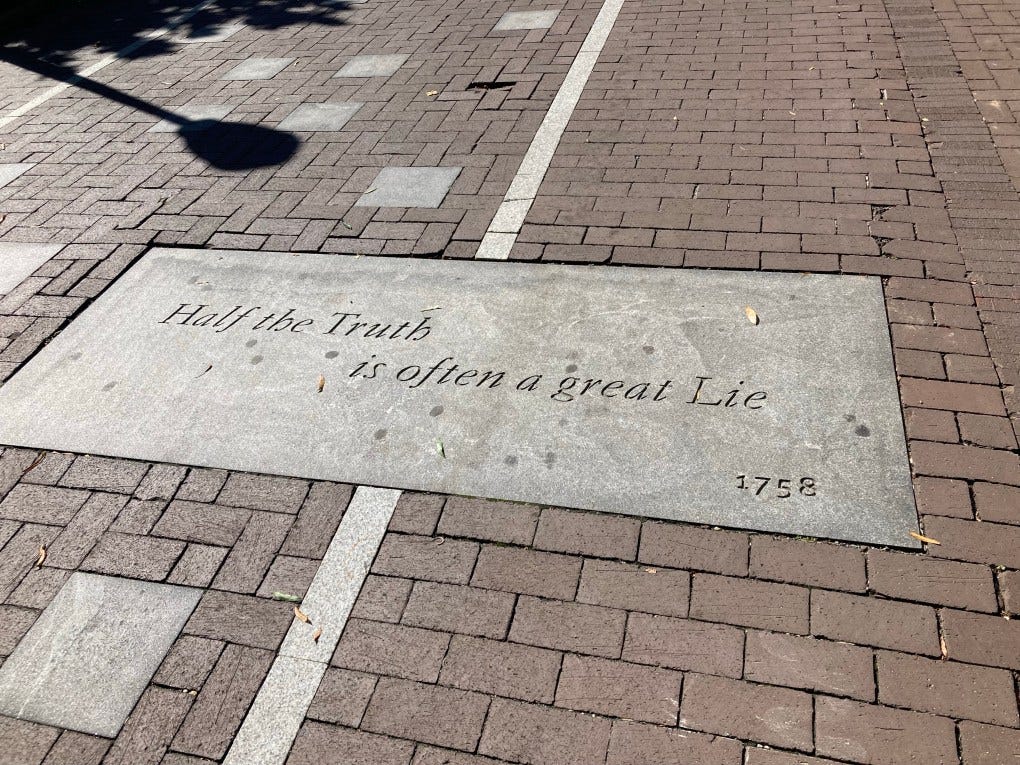
I will thrown down some of that hyper-bunko junk that comes over my “news” feeds, illustrating way too many bogus, fake science, failed rhetorical tid-bits to daze, confuse and corral. Just this morning, one hour’s worth.
But first, Alison writes about saying good-bye to her father, and in that process, she talks deeply about estrangement from family, mother, daughter, friends, the entire system that is in all our words, Cyber Panopticon:

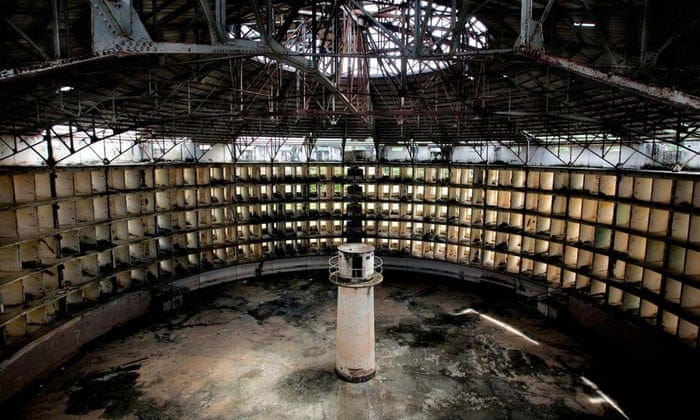
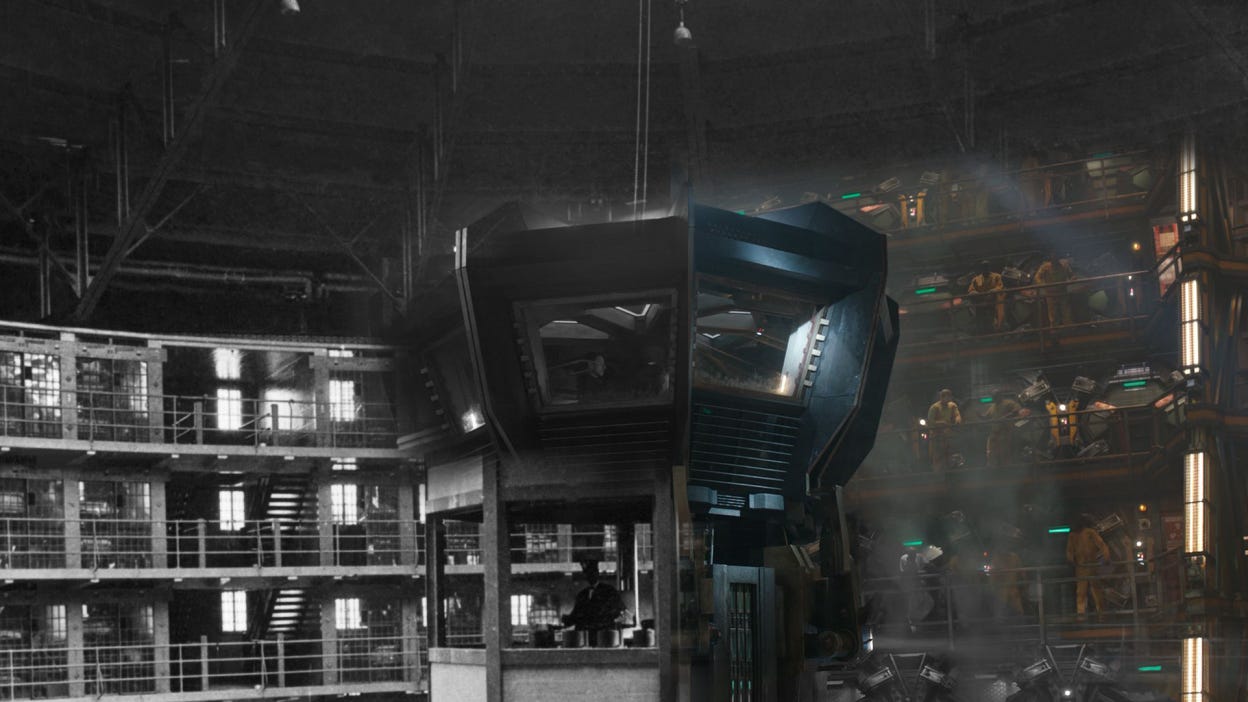

His Eye Is On The Sparrow, The Inchworm, and Me
I try not to judge, because this noetic thing we’re enmeshed in is, in fact, pervasive. In my view, the system considers all Earthly beings to be nodes in a massively sophisticated biological computation machine, the ant computer. Just this week, listening to Neal Stephenson’s Baroque Cycle series, a prequel to Cryptonomicon, it dawned on me that we may be facing off against Gottfried Leibniz’s Characteristica Universalis, a language he conceptualized based on Chinese characters, the i Ching, metaphysics, and calculus. I now think that may be what lies at the core of Web3 smart contracts, human computation, digital commoning, tokenized behavior, cybernetics, complexity, game mechanics, social impact finance, and surveillance of public health and decarbonization metrics.
I am keenly aware that intuitive, imaginative thinking is a threat to such a system. People who choose not to behave according to Skinnerian programs are like nails sticking up, daring the powers that be to try and pound them down. We are sabots in the looms; we are the wrenches that threaten to break the teeth of the gears. We represent the possibility that progress towards digital manifest destiny may be slowed or even hobbled. Climate Millenarianists are working hard to brand their post-Anthropocene “ecotopias” as “green” populist endeavors rather than the corporate juggernauts they actually are. Even if they’re not visible on stage, those in the know understand the likes of Black Rock, Goldman Sachs, Raytheon, and Pfizer are peering out from the wings. The fitness landscapes of genetic algorithms have to work overtime to constantly erase principled dissent on behalf of the sacred natural world and smooth the path towards convergence. Yet still we persist and keep showing up with hearts, sunflowers, and intentions placed to divert the tidal wave of electrical engineering, EMF radiation, nano-biotech, and big data.
I’ll let you spend 15 minutes or so reading Alison’s piece.
Now, the junk junk of no-news blues.
First, who woulda thunk? Wired. “The AI Detection Arms Race Is On . . .. And college students are developing the weapons, quickly building tools that identify AI-generated text—and tools to evade detection.”

LIFE ON THE internet has always been a battle between fakers and detectors of fakes, with both sides profiting off the clash. Early spam filters sifted emails for keywords, blocking messages with phrases like “FREE!” or “be over 21,” and they eventually learned to filter out entire styles of writing. Spammers responded by surrounding their pitches with snippets of human-sounding language lifted from old books and mashed together. (This type of message, dubbed “litspam,” became a genre unto itself.) As search engines grew more popular, creators looking to boost their pages’ rankings resorted to “keyword stuffing”—repeating the same word over and over—to get priority. Search engines countered by down-ranking those sites. After Google introduced its PageRank algorithm, which favored websites with lots of inbound links, spammers created entire ecosystems of mutually supporting pages.
Around the turn of the millennium, the captcha tool arrived to sort humans from bots based on their ability to interpret images of distorted text. Once some bots could handle that, captcha added other detection methods that included parsing images of motorbikes and trains, as well as sensing mouse movement and other user behavior. (In a recent test, an early version of GPT-4 showed that it knew how to hire a person on Taskrabbit to complete a captcha on its behalf.) The fates of entire companies have rested on the issue of spotting fakes: Elon Musk, in an attempt to wriggle out of his deal to buy Twitter, cited a bot detector to boost his argument that Twitter had misrepresented the number of bots on its site.
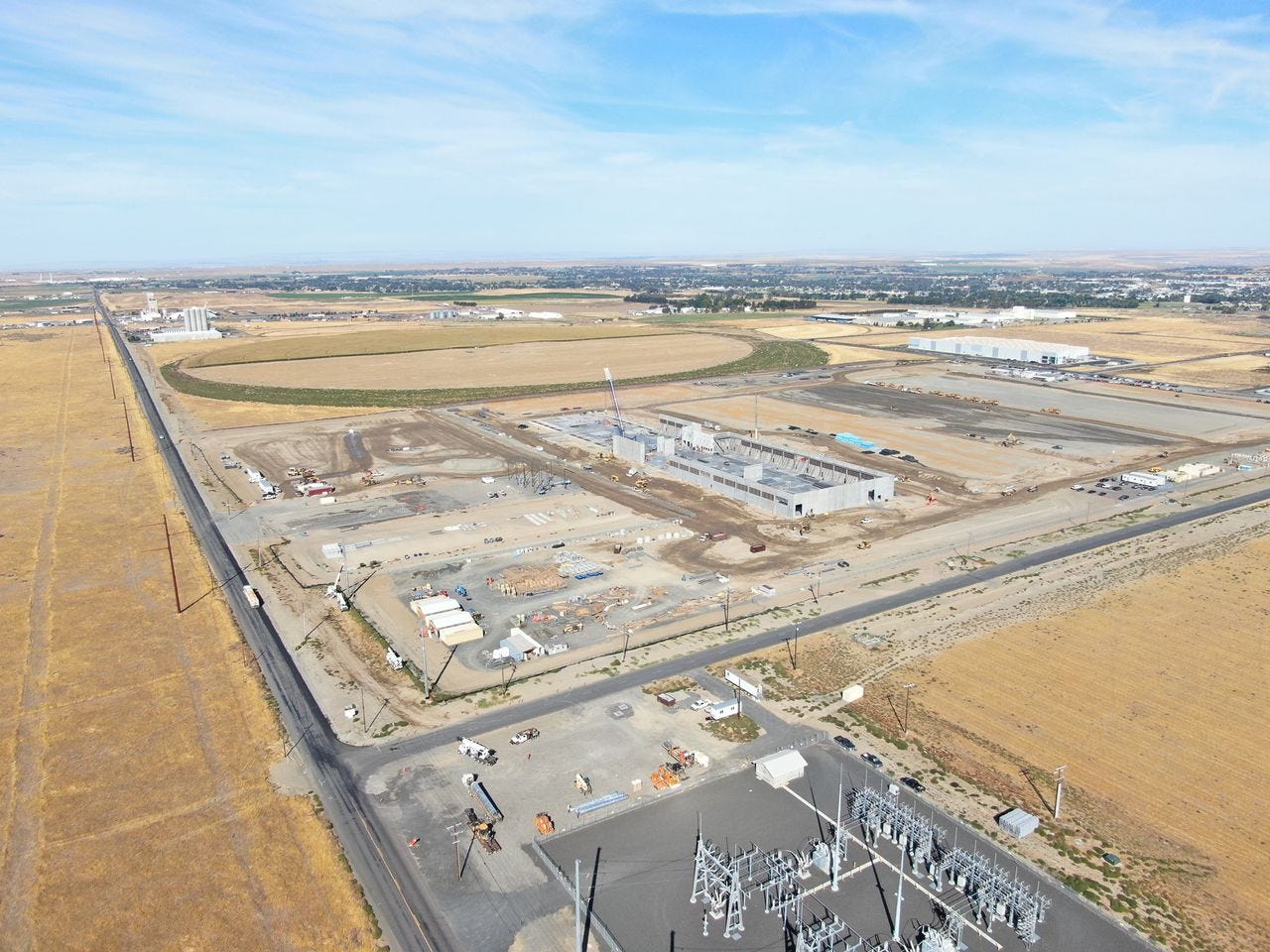
And how much electrical energy, how much climate warming nothingness, water sapping, community destroying, transportation gridlock creating hell do this fucking AI systems of oppression generate?
Small eastern Oregon city could be next hotspot for big data centers
Amazon already operates two data centers in Umatilla, is building two more in the city, and has tax-break agreements for another two. Amazon also operates a data center in unincorporated Umatilla County, near Hermiston. It is building one inside the Hermiston city limits and has negotiated tax deals for two additional projects there.
Sabey is a privately held real estate company with a rapidly growing data center business. It already operates large Washington state data centers in Seattle, East Wenatchee and Quincy, along with two sites on the East Coast.
Sabey primarily contracts with other large tech companies to supplement their own data center capacity. Rob Rockwood, president of Sabey Data Centers, said Umatilla is well positioned in the western U.S. to capitalize on spillover demand from data centers in Hillsboro and Phoenix, Arizona.
It’s “a more or less undiscovered spot,” Rockwood said. He said Sabey will spend next year doing utility preparation work for the site and plans to start construction early in 2025, with the facility opening in 2027.
And franchise fees generated by data centers’ electrical use are now major contributors to Umatilla’s general fund. The city’s annual electrical franchise fees have grown from $253,000 to $1.4 million over the past decade, equivalent to 12% of Umatilla’s general fund.
Data centers in some parts of Oregon are large water consumers because of the evaporative cooling they use to chill their hardworking computers. Rockwood said Sabey’s Umatilla site will employ air cooling instead, which increases electricity consumption but uses very little water.
This is out in the middle of so-called nowhere, near the Hanford nuclear site, near the Tri-Cities, where all those ranches are and all those dairies, from Portland to Pendleton, and I take the highway through this area to get to Spokane.
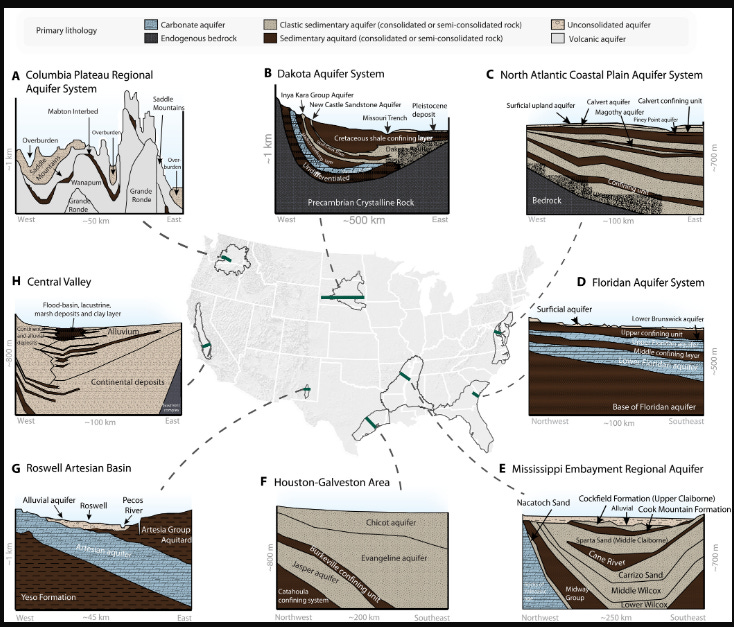
And so, where do we make this linkage, no, with all those fucking streaming services, the Zoom Dooms, all the AI fucking Nazis and WATER issues in the U$A? FUCK. Widespread aquifer depressurization after a century of intensive groundwater use in USA
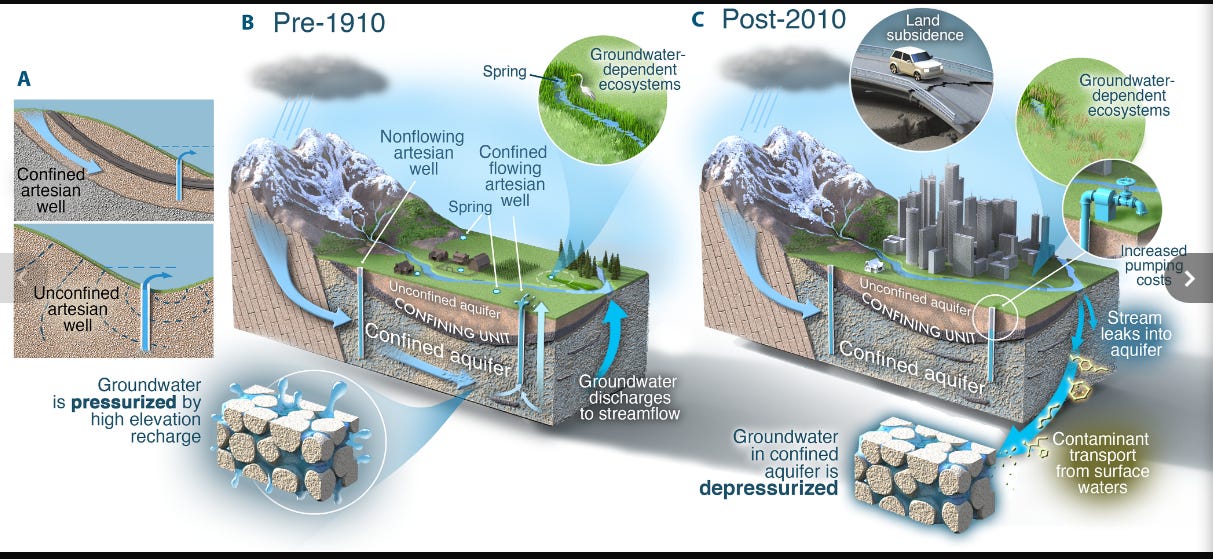
Water supplies for household use and irrigated agriculture rely on groundwater wells. When wells are drilled into a highly pressurized aquifer, groundwater may flow up the well and onto the land surface without pumping. These flowing artesian wells were common in the early 1900s in the United States before intensive groundwater withdrawals began, but their present-day prevalence remains unknown. Here, we compile and analyze ten thousand well water observations made more than a century ago. We show that flowing artesian conditions characterized ~61% of wells tapping confined aquifers before 1910, but only ~4% of wells tapping confined aquifers today. This pervasive loss of flowing artesian conditions evidences a widespread depressurization of confined aquifers after a century of intensive groundwater use in the United States. We conclude that this depressurization of confined aquifers has profoundly changed groundwater storage and flow, increasing the vulnerability of deep aquifers to pollutants and contributing to land subsidence.
And, mom and pop, Jose and Wanda, all those kiddos and all those “consumers” think Zuckerberg and Bezos and the rest of the thugs with their armies of “scientists” have all the solutions to these global problems worked out?
How about the moon, our little fucking footprint there, one step for man, one giant leap for the criminals!

It is, alas, a world made reckless and ruined by the least important and valuable and ethical and humane folk on earth, but again, collective Stockholm Syndrome and Collective Battered Citizen Syndrome and General Anxiety Disordered masses can’t wrap their fucking arms around the tyranny.

So, here it is, man = solastalgia
A survey by the UNDP published in 2021 revealed that a significant majority of people believe that climate change is a global emergency. The psychological toll of this widespread concern is profound.
We are defined by the mind manipulators, the scholastic criminals, the psychologists and Mad Men and WOmen in Manufacturing Consent, Confusion, Collusion, Compliancy, Corruption, and Crackpotting!
Such feelings can give rise to “solastalgia,” which refers to the dread originating from environmental change. Unlike nostalgia, which is a longing for a place or time in the past that one cannot revisit, solastalgia is the experience of distress from belonging to a home that is undergoing change. A person experiencing solastalgia may feel:
- A deep grief over changing landscapes that were once familiar
- Helplessness over the inability to halt or influence environmental shifts
- Chronic stress from ongoing changes, causing symptoms like insomnia
- A diminishing hope for the future as the environment evolves
- A feeling of being disconnected from one’s community or the environment due to rapid alterations
So, Bruce Willis and Supereman and Wonder Woman to the rescue? Nah, it’s the dirtiest couple around in the Billionaire Robber Baron Class who will save us from virialphobia! CZI, man, it is the new syphilis. Read Alison’s work to get insight into these charlatans, these “We are the Elite, We are the Davos, We are the Aspen Institute, We are the WHO-WEF Generals marching humanity to where WE see humanity will, should can must be. They’ve pledged $6.4 billion to science, and say they will give away 99% of their Meta stock, with the goal of “curing, preventing, and managing” all diseases by the end of the century. Dr. Chan said her experience as a pediatrician partially inspired the decision.
In a virtual interview at Fortune’s Impact Initiative conference—her first since giving birth to her third child—Dr. Chan shared how the billions are being spent. She also gave insight into why she and Zuckerberg are following in the footsteps of The Bill and Melinda Gates Foundation.
Watch the video interview with Fortune’s Ellie Austin, or read the transcript below.
MONSTERS:

Fuck these billionaires. This Meta, this CZI. They need to go the way of the Dodo. Here, real problems . . . no CZI syphilis will cure: Cancer has replaced heart disease as the biggest killer of firefighters, and the IAFF attributes 66% of firefighter deaths between 2002 and 2019 to cancer.
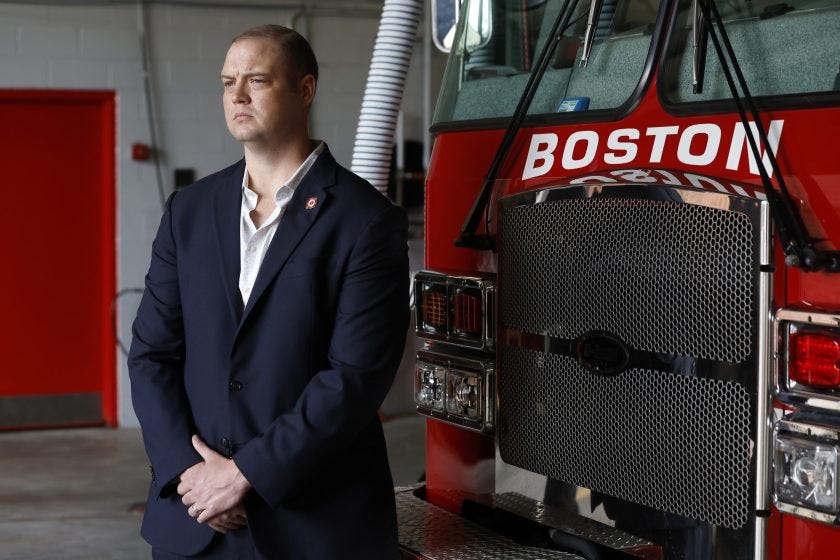
He was only 30 and had been in the Boston Fire Department less than a decade. But as he investigated his diagnosis of Hodgkin’s lymphoma in October 2020 and sought successful treatment, he learned he and others wore gear that contained the toxic industrial compound PFAS.
“You always hear about the dangers. You just never think it’s going be you,” said Ranahan, who stopped working due to the cancer and is among thousands of firefighters nationwide who sued PFAS manufacturers and companies that make firefighting gear and foam, seeking damages for their exposure.
“These guys put this on day in and day out to protect neighborhoods and wherever they are working,” he said.
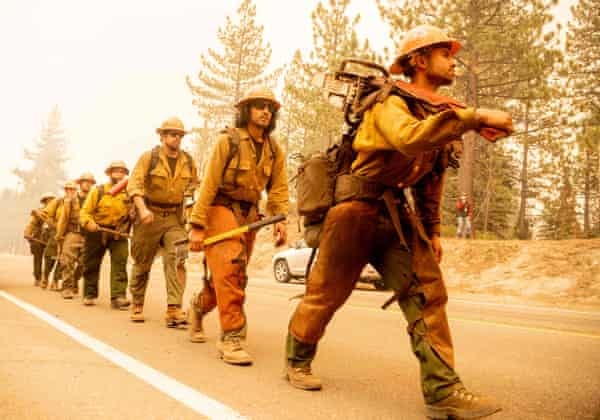
And we don’t need to know how vital the burning world is now, how those “wildfires” are not wild or natural at all, and how the Zuckerberg-Chan Chain Gang Crew is PART of the Myriad Problems Here and Now and Later, never the solutions.
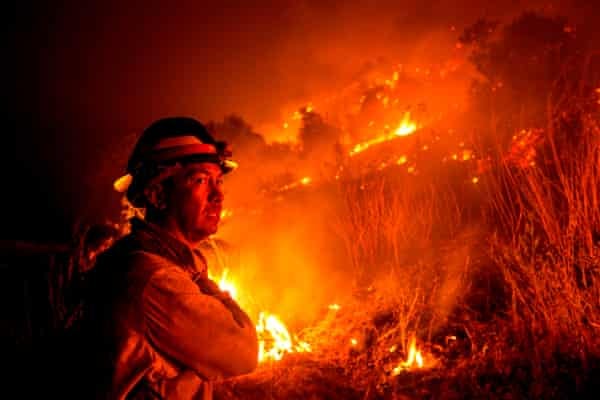
“Firefighters don’t want accolades, they don’t need to be called heroes,” says Riva Duncan, a retired USFS fire officer and vice-president of the Grassroots Wildland Firefighters advocacy group. “But they want to at least be treated like they are appreciated for the risks they take and the sacrifices they make.”
Pay bump to expire – unless Congress acts
Biden’s temporary pay bump – which added the lesser of $20,000 or a 50% increase to firefighter paychecks – was intended as a salve that would buy Congress time to pass a permanent solution to the problems that have left federal firefighters underpaid and overworked for years.
“It was a big momentous thing for the pay bump to happen, and I think the majority of fire folks had no idea that there was a sunset clause,” said Bré Orcasitas, a former federal wildland firefighter who left the service to focus on advocacy. “We are already losing people at an exponential rate – and it will be a slap in the face if they can’t get it together in time.”
Pressure is on legislators to pass a bill that would codify and secure pay increases before the new fiscal year begins in October. It has bipartisan support, and it’s expected to be voted on this week.
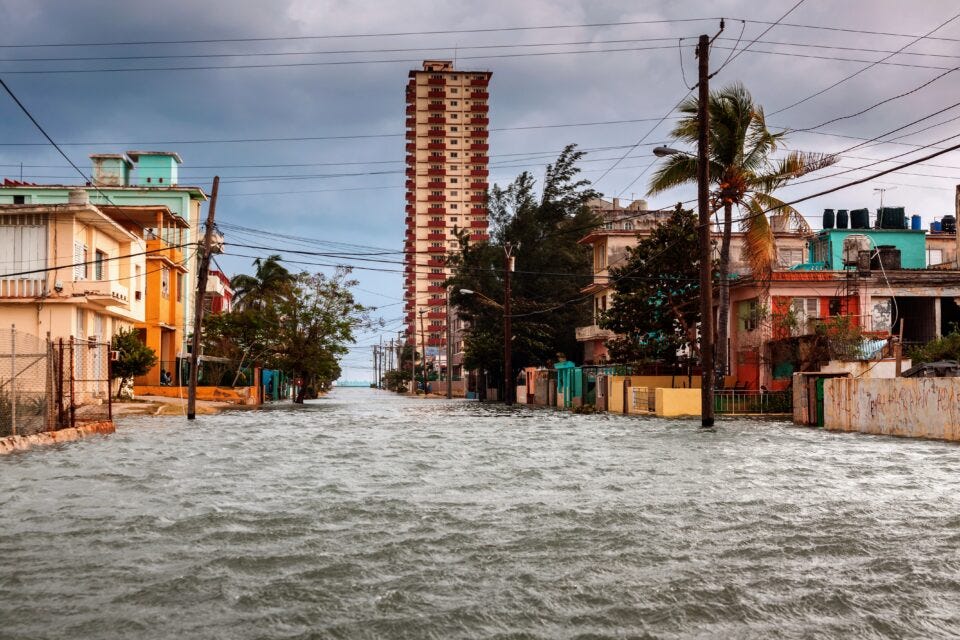
But, shit, CZI and these motherfuckers’ scam. How’s the floodwater going disease wise? 100-year floods will be annual events by the end of the century
Fucking AI Meta Motherfucking CZI! Yeah, plastics in your blood? How’s that one working out for EuroTrashLandians?
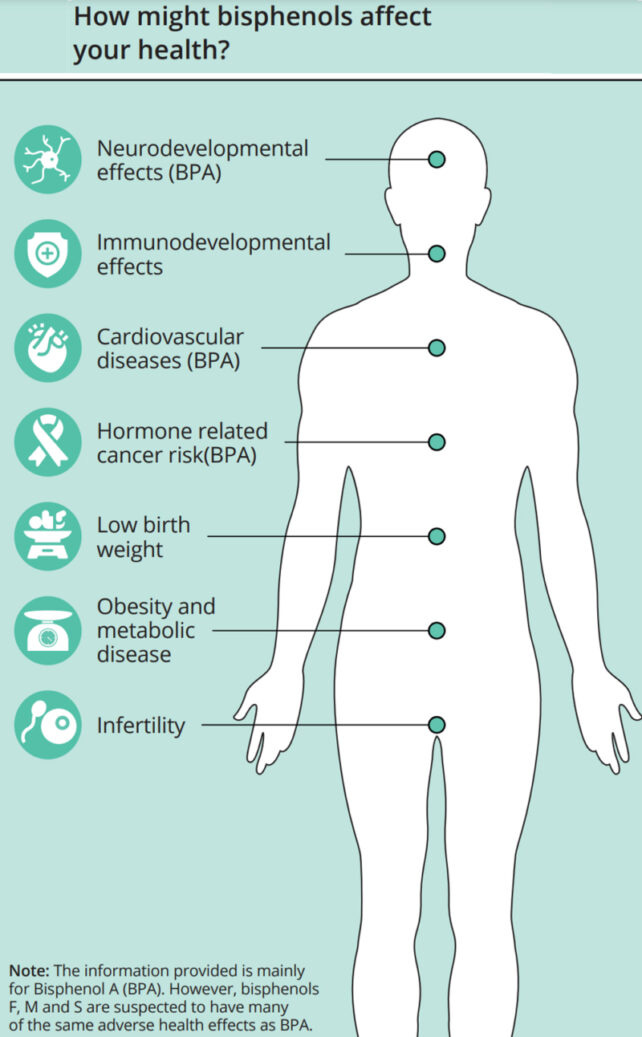
Bisphenol A (BPA), a hormone-disrupting chemical used in food packaging, is present in almost all Europeans’ bodies, posing a potential health risk, the European Environment Agency said Thursday.
“A recent Horizon 2020 research initiative, HBM4EU, measured chemicals in people’s bodies in Europe and detected BPA in the urine of 92 percent of adult participants from 11 European countries,” the agency wrote in a new report.
The Copenhagen-based EEA said the share of adults exceeding the recommended maximum levels ranged from 71 to 100 percent in the 11 countries studied, referring to levels outlined by the European Food Safety Agency (EFSA) in an April review. (source)

Oh, shit, back to the viruses? The viruses that ate SPAIN. All this fucking news is in like lard, out like the squirts. Research team identifies 25 new viruses in Barcelona’s wastewaters
No meaning, no measured discussion, no community involvement, no nothing, just plain old beakers and petri dishes “science.”

And so we then migrate to food and, well, isn’t this a hoot — farms on the sea (that sea, which is supposedly going to be churning out floods of biblical proportions. Floating sea farms: A solution to feed the world and ensure freshwater by 2050
Again, cartoonish, mixed with fucked up science in a classroom, and an upside mis-logic, all and all.

Yeah, that’s the ticket — paycheck to paycheck, until the next next generation will take that fucking 20 by 10 particle board jail cell, err, tiny home, err, apartment.
It’s not just low-income Americans drowning under inflation and interest rates — some higher-income folks are feeling the strain on their wallets as well.
Data from a June survey conducted by personal finance software company Quicken revealed that 32% of Americans earning at least $150,000 a year are currently living paycheck to paycheck, while 36% of folks earning $50,000 to $150,000 and 55% of households earning less than that reported the same.

Shit, now, back to basics, to my wheelhouse — writing and liberal arts:
10 AI prompts to help you improve your writing

Yep, Zoom Doom correspondence school, bye bye 10, 20, 50 percent of universities?
[Photo: Prostitute, E. Gordon Gee, president of West Virginia University, in New York City in 2009.]
West Virginia University’s board voted on Friday to cut the school’s world languages department and a third of its education department as part of an effort to keep the school “accessible and affordable and relevant,” its chair said.
Why it matters: The university’s decision to reduce parts of its liberal arts department may be a glimpse of the future of U.S. humanities studies, and more narrowly, may limit students in the poor, rural state.
- The reductions come on top of major staff and program cuts approved by the board in June, which included 12 graduate and doctorate programs and 132 positions.
- The board’s meeting on Friday was briefly interrupted by students protesting the cuts, and among dozens of speakers at the meeting, no one spoke in support of the plan, AP reports.
By the numbers: The board voted Friday to fire more than 140 faculty members and 28 majors, which is around 8% of the school’s programs.
- Those figures were lower than originally proposed.
- The university currently faces a $45 million budget deficit, the board has said.
Yeah, cut cut cut those important courses so we can have more AI-AR-MR-ER-VR drone schools and engineering wonks for batteries, cloud servers, and more green pornography Africa-Killing Scams.

While OpenAI’s world-beating chatbot suffered its second major outage in as many weeks, big tech executives were convening in Washington to plead their case to lawmakers over the future of AI.
Among several notable figures in attendance was Sam Altman, CEO of the AI startup — who probably hoped to put on a better face amidst increased scrutiny over ChatGPT’s falling user traffic for the past several months.
FUCK these Oppenheimers and Edward Bernays!
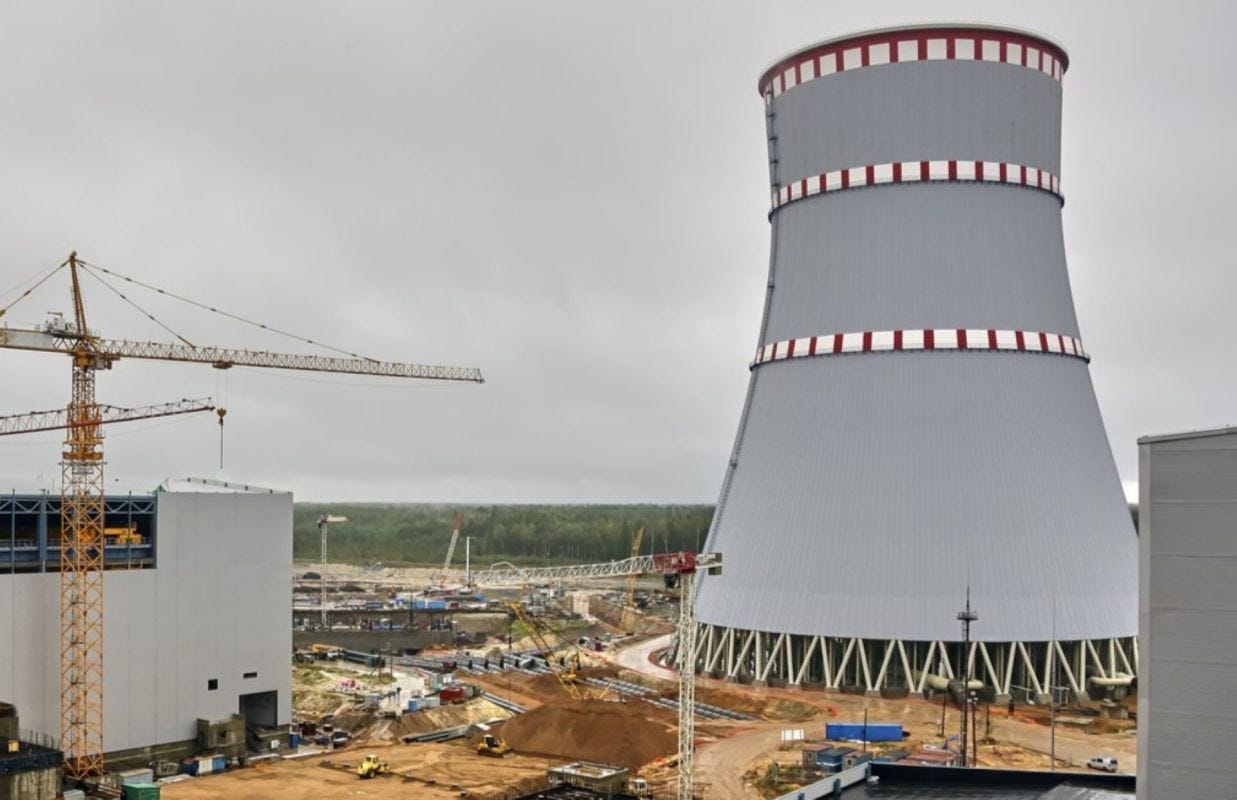
Yeah, that fucking Canada, involved in regime change here and their and everywhere. GREEN Klanada?
Canada is planning to expand what is already the world’s largest nuclear generator.
Canada is planning to expand what is already the world’s largest nuclear generator.
Ontario, which has the second-largest energy demand of provinces and territories in Canada, aims to add a third generating station to the Bruce Power facility on Lake Huron. This would be the first new large-scale nuclear power plant construction in Canada in 30 years, according to CBC News.
According to Ontario Energy Minister Todd Smith, the additional construction will produce a maximum of 4,800 megawatts, enough to supply electricity to approximately 4.8 million homes, effectively doubling the power plant’s current output.
Although nuclear energy is considered a controversial form of energy production — due in large part to past accidents across the globe — there are numerous benefits when the process is handled safely.According to Ontario Energy Minister Todd Smith, the additional construction will produce a maximum of 4,800 megawatts, enough to supply electricity to approximately 4.8 million homes, effectively doubling the power plant’s current output.
Although nuclear energy is considered a controversial form of energy production — due in large part to past accidents across the globe — there are numerous benefits when the process is handled safely.
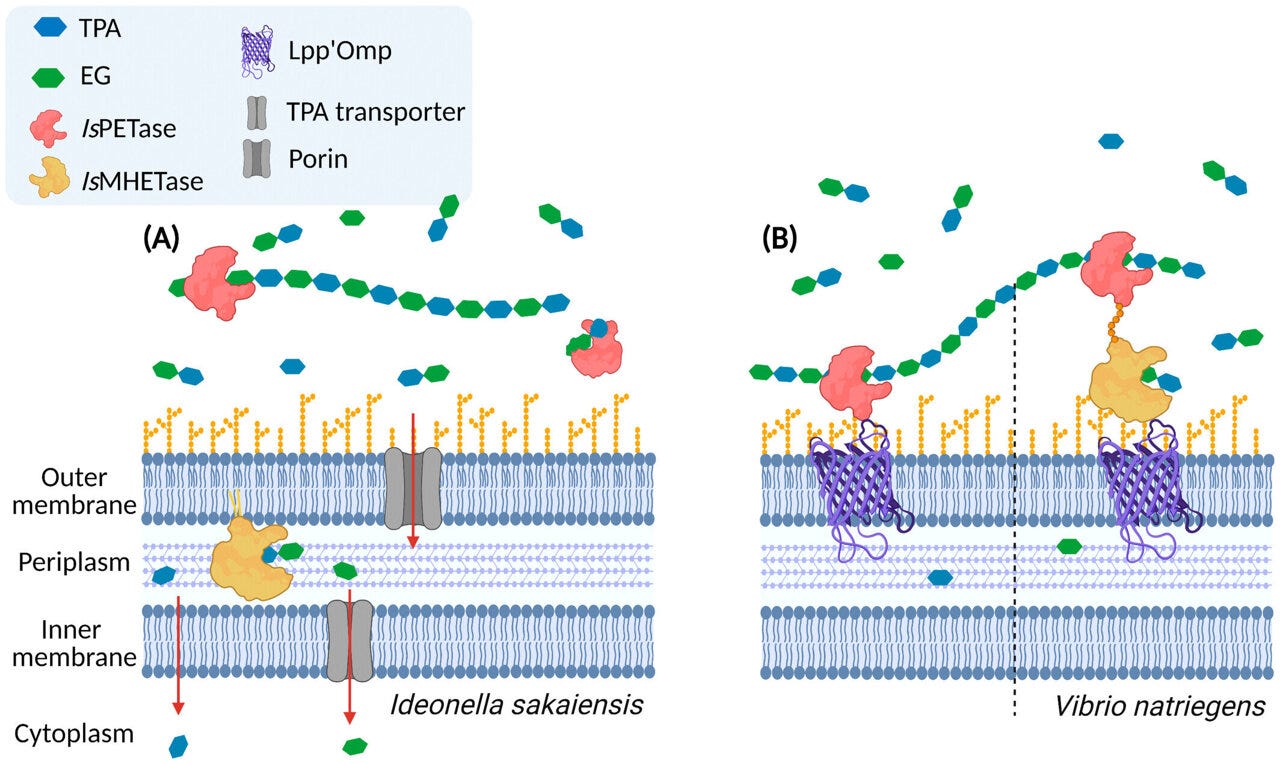
From the nuclear isotope level to marine organisms in the Frankenstein Box of GMO/GE monsters, we are a world gone mad to the 1,000th power: Researchers have genetically engineered a marine microorganism to break down plastic in salt water. Specifically, the modified organism can break down polyethylene terephthalate (PET), a plastic used in everything from water bottles to clothing that is a significant contributor to microplastic pollution in oceans.
Right, man, cart before the horse:

Do no harm:


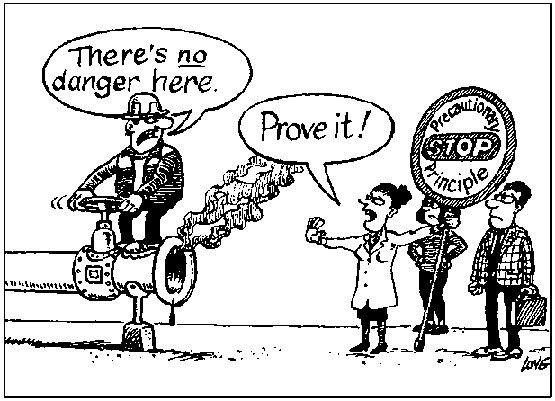
Finally, that aspect of informed consent should be part and parcel of all corporate transactions and actions, and in fact, all actions and transactions must be measured, studied and approved for the benefits and lack of harm to all communities. In photography? Filmmaking? Whew. Read this article.
The logical outcomes of “informed consent”
As documentary photographers, what is ultimately most important for us is whether the image we are capturing accurately depicts the life of the subjects and the situation in which they live. Equally important is our concern that the images we capture depict the subjects with respect and dignity.

Two bombs went off in the crowd in Diyarbakir, Turkey, five people were killed and more than 400 injured were carried to ambulances. Violent attacks against Kurdish people are a motor behind displacement in the region. Under Informed Consent rules, the photographer would need to approach each of the people in the photograph to let them know how their images might be used. While it is feasible to do that, in this instance it would have had to be done in an ambulance, a Kurdish/English interpreter would be needed, and the unfolding of events around this scene would have been missed. Photo by Sean Hawkey.
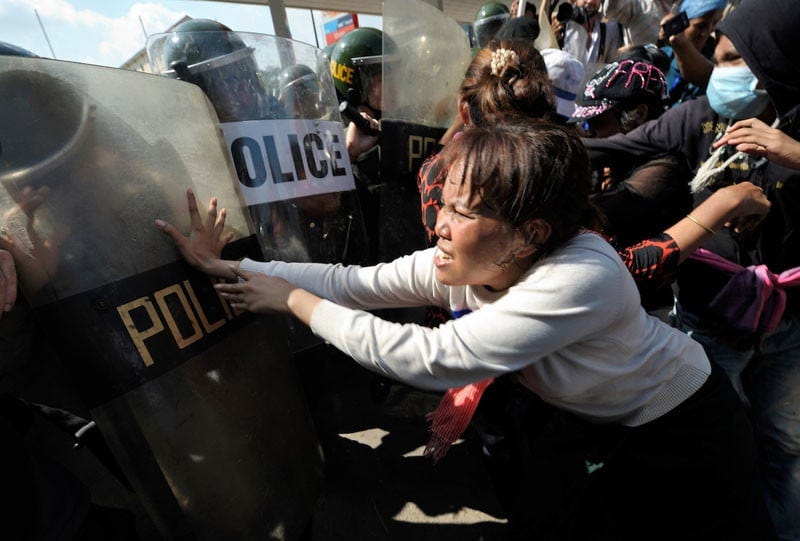
A woman demonstrator pushes back at police as displaced residents of Boeung Lake in Phnom Penh, who were left homeless after the government allowed a private developer to move them out and fill in the lake, attempt to protest in the Cambodian capital on December 10, 2012. They planned to take their protest to the prime minister’s office, but police stopped them far short of their goal. Their protest took place on International Human Rights Day. Under “informed consent” rules that require prior approval, the photographer would have had to stop the protest, explain all conceivable forms of use and get permission and a signature from at least the woman, then allow them to proceed while photographing the action, careful not to accidentally include the face of anyone who hasn’t given written consent. Photo by Paul Jeffrey.
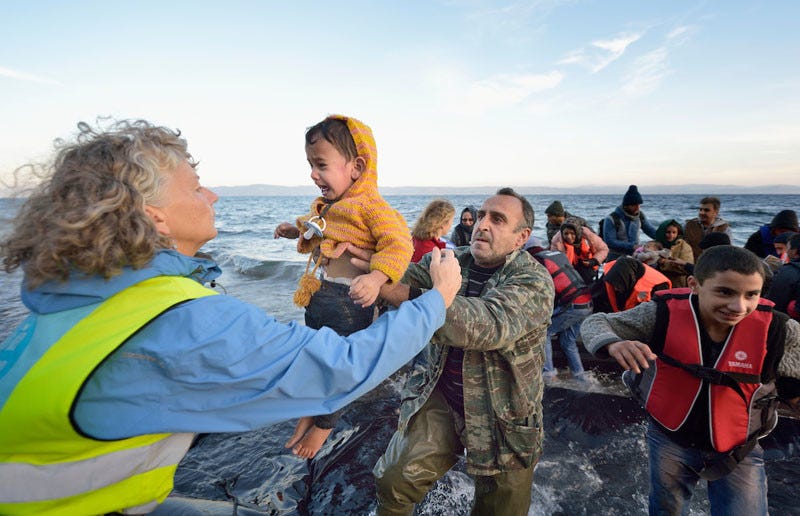
Volunteers carry a child ashore on a beach near Molyvos, on the Greek island of Lesbos, on October 30, 2015, after a group of refugees crossed the Aegean Sea from Turkey in a small overcrowded boat provided by Turkish traffickers to whom the refugees paid huge sums. The refugees were received in Greece by local and international volunteers, then proceeded on their way toward western Europe. Under “informed consent” rules, the volunteers would have to give their written permission for this to be used, and the parents or legal guardian of the two children would also have to agree and sign a release. The photographer would have had to produce the forms for their signature while they were busy getting out of cold wet clothes and into dry clothing and continuing their journey. Photo by Paul Jeffrey.
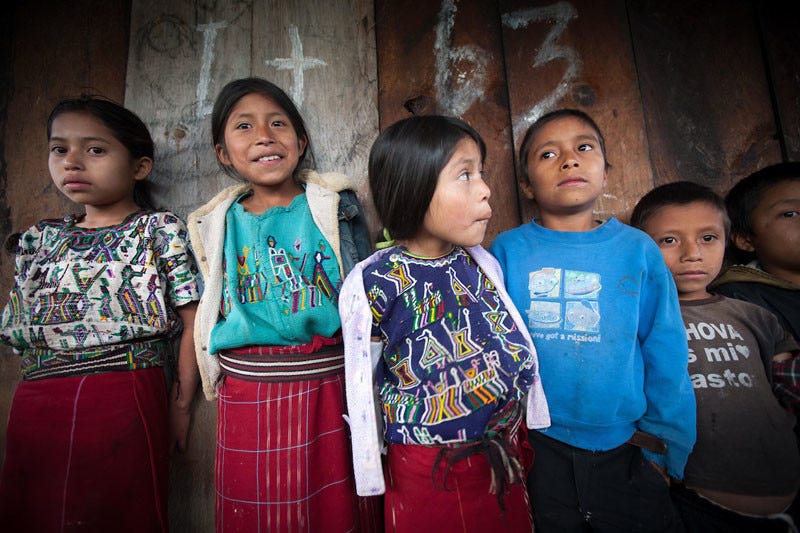
Maya Ixil children during a meeting in Turanza, Nebaj, Guatemala. People had gathered to share experience and learning on food security and nutrition in the region. Under Informed Consent rules, the parents of the children would have to be tracked down to give their consent for this photo to be taken or used. The assumption is that without informed consent, the photograph shows the children in an undignified way, or it puts them in danger. Photo by Sean Hawkey.

Comitancillo, Guatemala. Under “informed consent” rules that require prior approval, the photographer would have had to stop the girls from playing, have them identify their parents, explain the intricacies of “informed consent” and usage, get their signature, and then be able to photograph the girls. That’s a process that’s allegedly designed to assure that the girls are not depicted in an undignified manner. Photo by Paul Jeffrey.
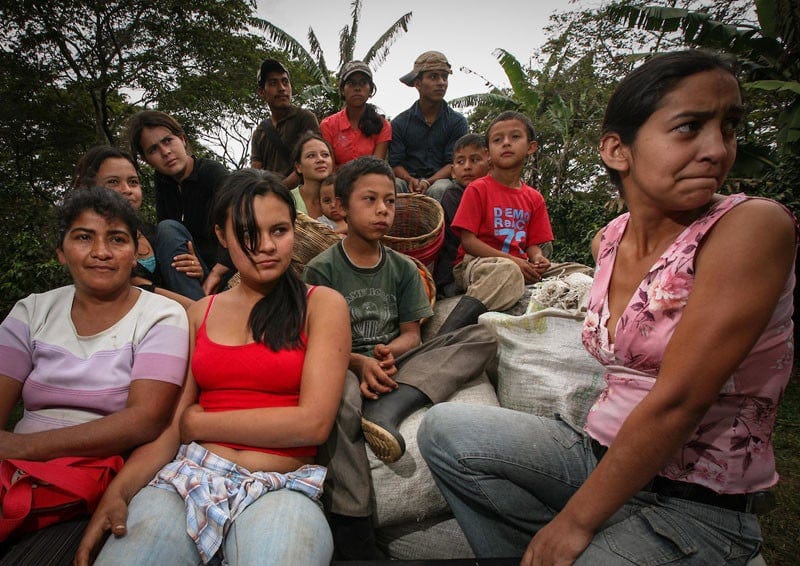
Coffee pickers on their way to the mill on the back of a truck at the Flor del Pino coop, a Fairtrade-certified producer organisation based in Ocotepeque, Honduras. Under Informed Consent rules, everyone on this truck would have to give their consent for this photo to be taken or used, and if the parents of the minors weren’t present they’d have to be found to give their consent. Seeking the informed consent in this case could take so long, it wouldn’t be worth the trouble. Photo by Sean Hawkey

Children practice capoeira on January 24, 2010, in a camp for homeless families in the Belair section of Port-au-Prince. The program, run by Viva Rio, a Brazilian nongovernmental organization, is designed to help children affected by the quake recover their emotional well-being. Under “informed consent” rules that require prior approval, the photographer would have had to stop the girls from playing, go with them to find their parents, explain the intricacies of “informed consent” and usage, get their signatures, then return to the community center to photograph the activity. That’s a process that’s allegedly designed to assure that the children are not depicted in an undignified manner. Photo by Paul Jeffrey.
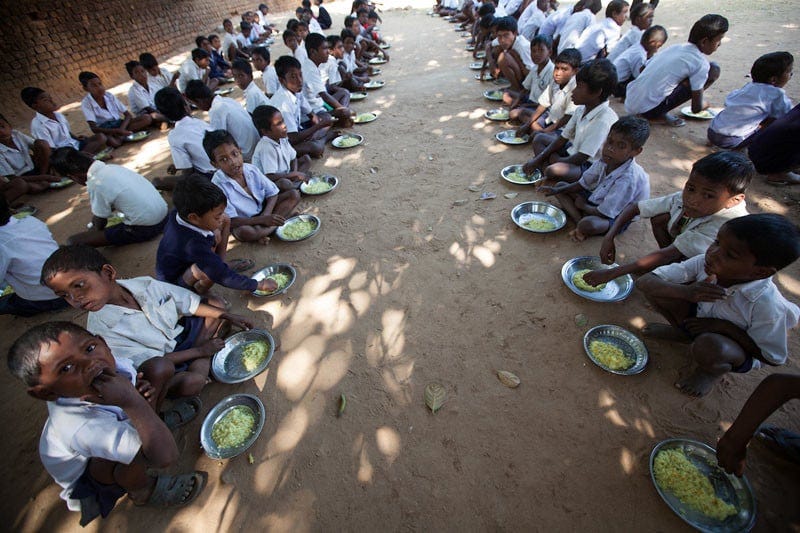
Dinners in this school near Ranchi in Jharkhand province, India, are subsidised by an aid agency working on nutrition and health. Under Informed Consent rules, the parents of the children in the picture would all have to be talked to in order for them to give their consent for this photo to be taken or used, it’s not feasible to do that. Photo by Sean Hawkey.
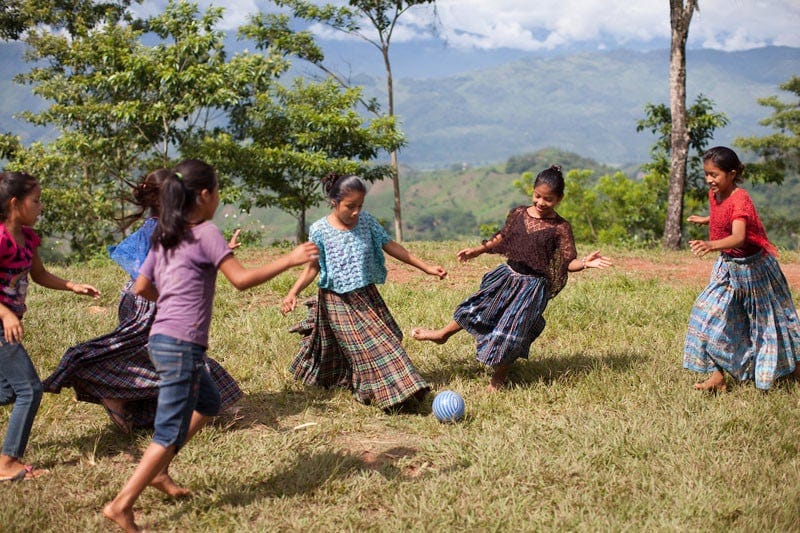
Q’eqchi girls playing football in Concepción Actelá, Alta Verapaz. Under Informed Consent rules, the parents of these children would have to be tracked down to give their consent for this photo to be taken or used. Photo by Sean Hawkey.
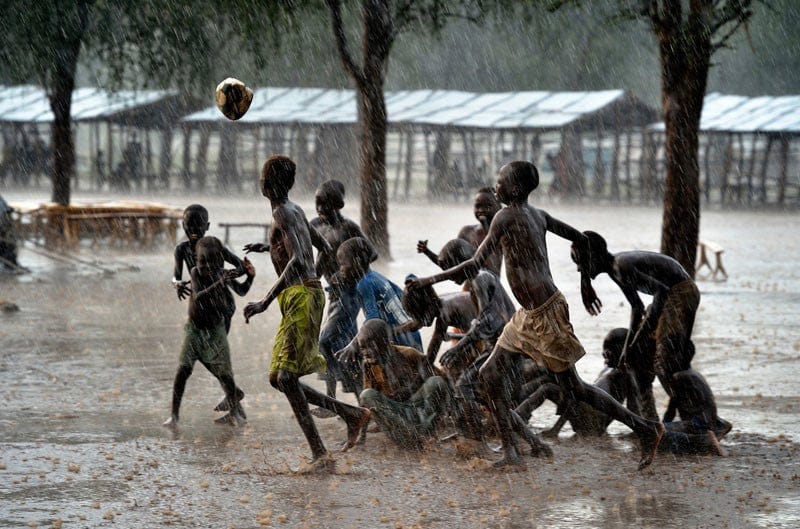
Children play football during an October 2012 rainstorm in the Doro refugee camp in South Sudan’s Upper Nile State. More than 110,000 refugees had come to camps in Maban County from Sudan’s Blue Nile region, where the Sudanese military was bombing civilian populations as part of its response to a local insurgency. Under “informed consent” rules that require prior approval, the photographer would have had to stop the boys from playing, have them find and identify their parents somewhere in the sprawling camp, explain the intricacies of “informed consent” and usage, get their signatures, and then return to photograph the game. That’s a process that’s allegedly designed to assure that the boys are not depicted in an undignified manner. Photo by Paul Jeffrey.
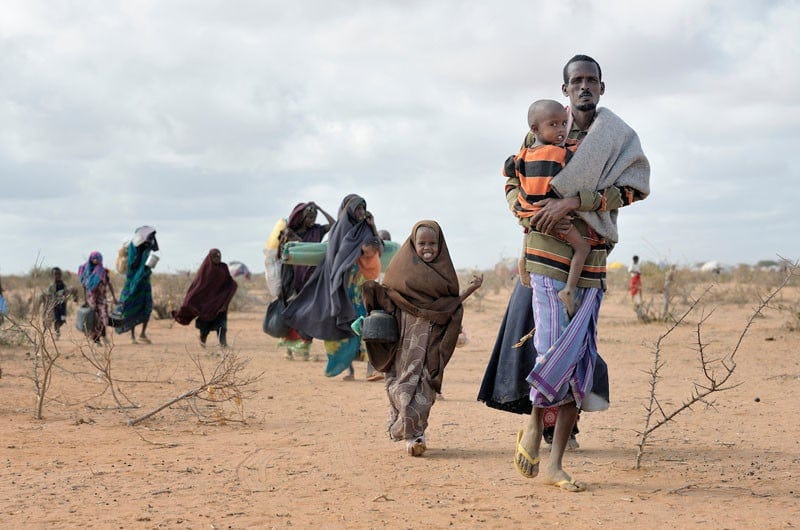
Newly arrived refugees carry their belongings through the Dadaab camp in northeastern Kenya in 2011. Long the world’s world’s largest refugee settlement, Dadaab swelled with tens of thousands of new arrivals fleeing drought in Somalia. Under “informed consent” rules that require prior approval, the photographer would have had to stop the tired family, explain the intricacies of usage and consent, then get their signatures on the paperwork before allowing them to continue their trek across the hot desert. Photo by Paul Jeffrey.
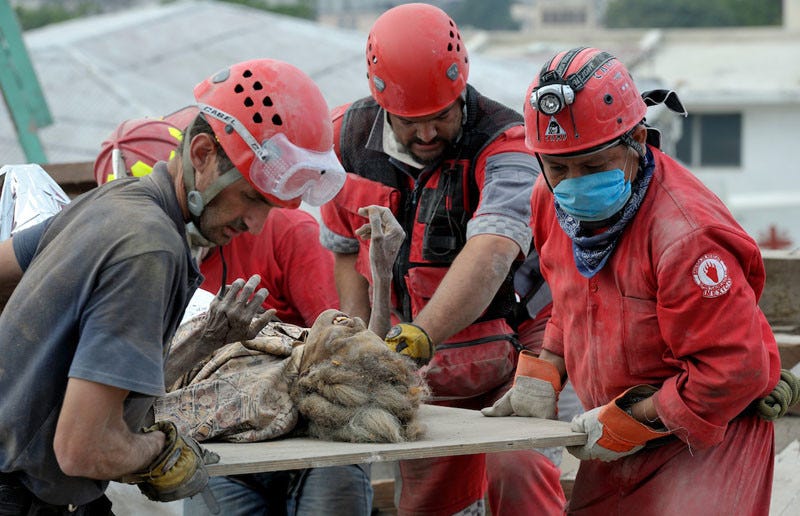
Ena Zizi is pulled alive on January 19, 2010, from the rubble of Haiti’s devastating earthquake, one week after the city was reduced to ruins in a matter of seconds. The 70-year old woman was rescued from the collapsed home of the parish priest at Port-au-Prince’s Roman Cathedral Cathedral of Our Lady of the Assumption by members of a Mexican search and rescue team, several of whom were in tears as they pulled the woman free from tons of rubble. She suffered from dehydration, a dislocated hip and a fractured leg, and was taken by helicopter to the U.S.S. Bataan for treatment. She told an interviewer she stayed alive by talking with God. Under “informed consent” rules that require prior written approval, the photographer would have had to stop the rescue, explain the intricacies of usage and consent in two different languages, get the appropriate signatures, then allow the rescue to continue. Photo by Paul Jeffrey

Children jump rope in 2013 in a model resettlement village constructed by the Lutheran World Federation in Gressier, Haiti. The settlement houses 150 families who were left homeless by the 2010 earthquake, and represents an intentional effort to “build back better,” creating a sustainable and democratic community. Under “informed consent” rules that require prior approval, the photographer would have had to stop the girls from playing, have them identify their parents, explain the intricacies of “informed consent” and usage, get their signature, and then return to the street and photograph the girls at play. That’s a process that’s allegedly designed to assure that the girls are not depicted in an undignified manner. Photo by Paul Jeffrey.
THE END
 Paul Haeder, Author