

USA: sanctions, vaccines, dirty bombs, bad food, dirty water, junk science, MIC, banking that would make Meyer Lansky Orgasmic, and the Buttoned Down Hasbara Agents blood suckers
Taking a beating, USA, MIC?
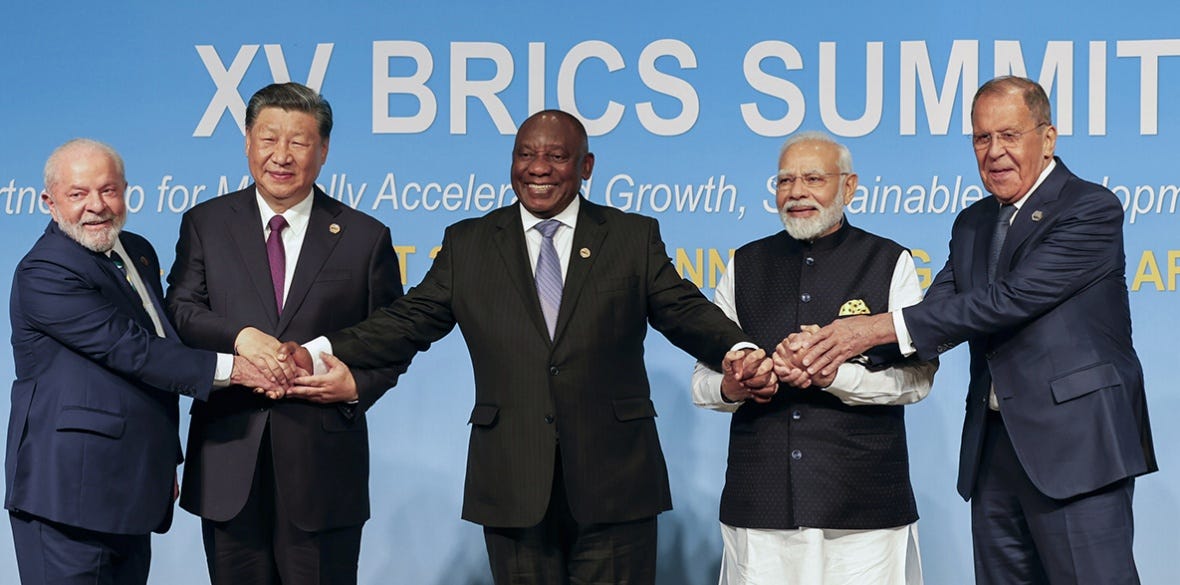
AS SIGNIFICANT as the fact of Brics expansion are which countries are now set to join: Iran, Saudi Arabia, Egypt, the United Arab Emirates, Ethiopia and Argentina.
The six applicants will mean the Brics (which already account for a larger share of world GDP than the G7 group of developed capitalist countries) rise to representing 37 per cent of the global economy and 46 per cent of the human race.
AS if 99 percent of the people can’t be wrong 99 percent of the time. Who gives shit about CIA News Network, AKA CNN:
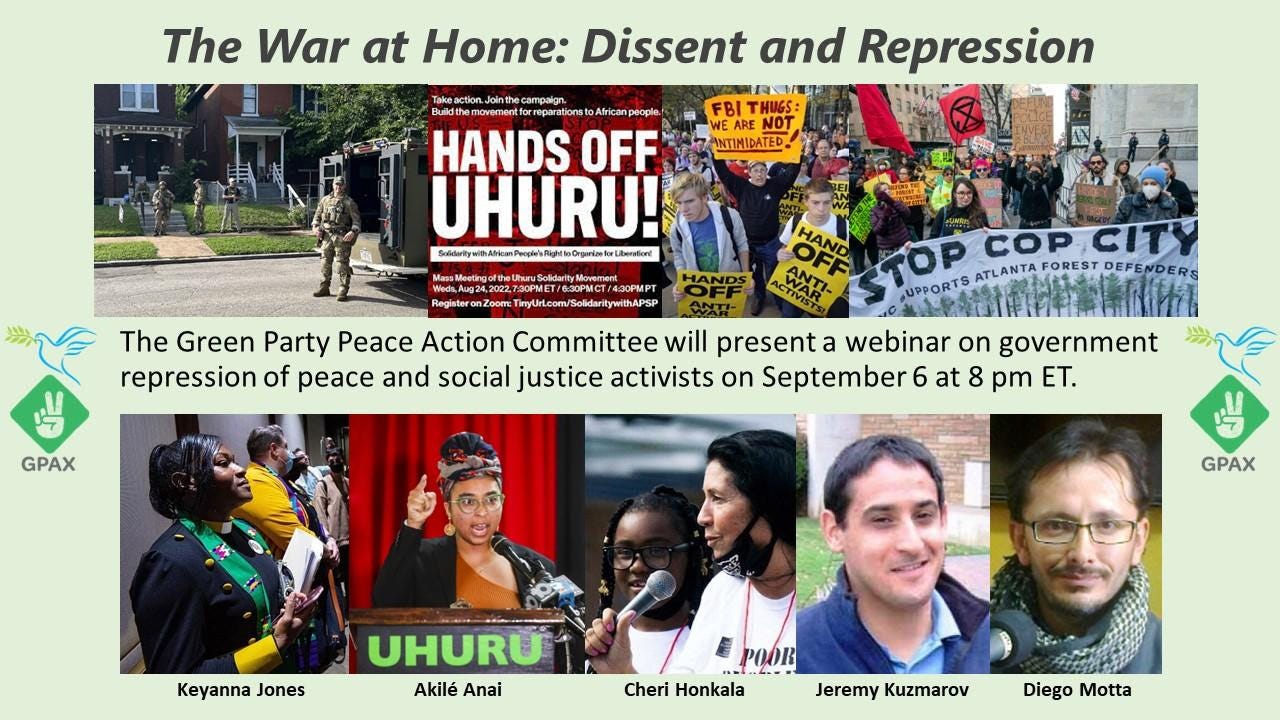
Currently over 61% of people polled (according to CNN) no longer want weapons sentto continue the proxy war in Ukraine. The U.S. government has begun to use repressive measures against anti-war groups. In our webinar you will hear from dissenters and from those who have witnessed and experienced repression. It is in the interest of all of us to support dissenters and expose and support those who have been harmed by repressive measures. We welcome your participation in this webinar and your support of the right to dissent.
One can fool some men, or fool all men in some places and times, but one cannot fool all men in all places and ages.
[Note: “Traité de la Vérité de la Religion Chrétienne” by Jacques Abbadie who was a French Protestant based in Germany, England, and Ireland. The following passage appeared in chapter two:[1]
… ont pû tromper quelques hommes, ou les tromper tous dans certains lieux & en certains tems, mais non pas tous les hommes, dans tous les lieux & dans tous les siécles.
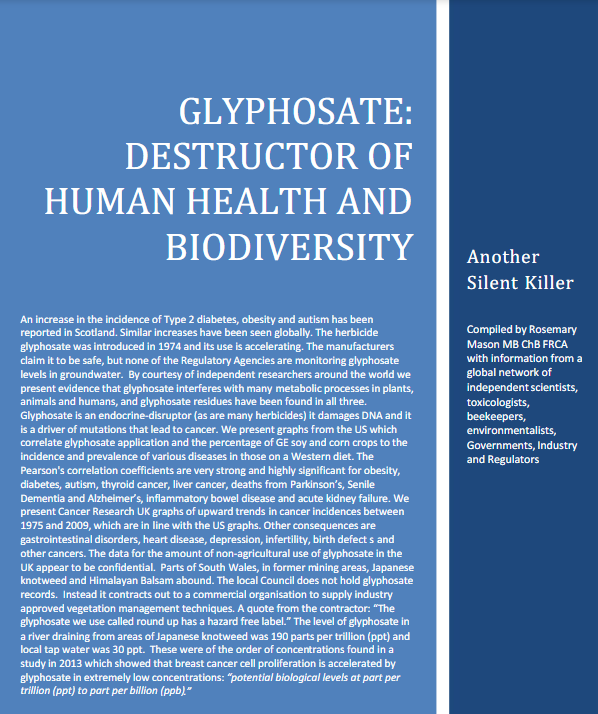
Imagine, the war on nature, the war on our human gut, the war on our brains, the war on babies, the war on the unborne, the war war war with pesticides and better cancerous living with chemistry:
Here, the boys are yakking for three hours . . . . LINK. Good stuff, but, then, listen up.
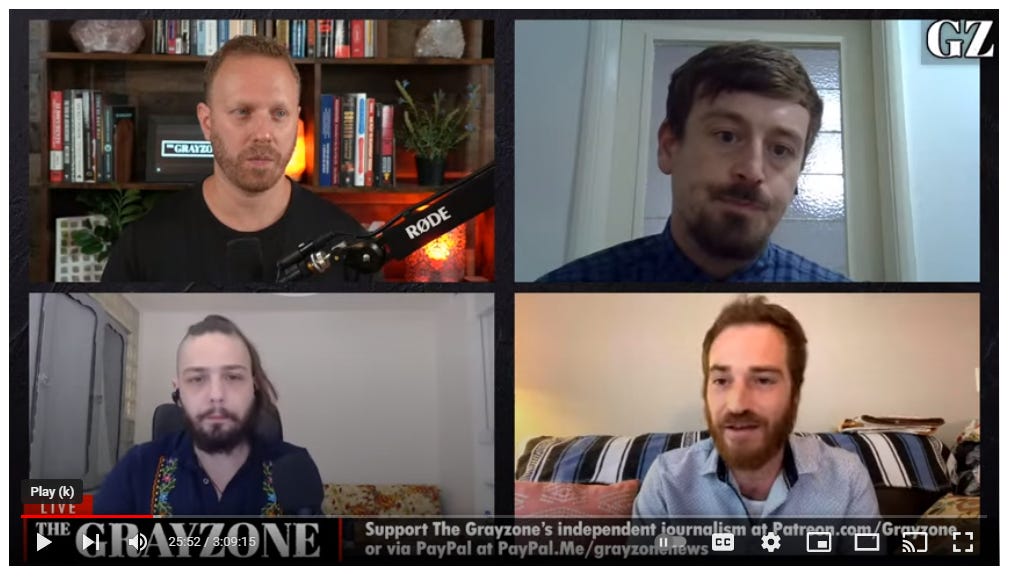
And not ONE of my greenie weenies, not one of my BIDEN Forever friends, not ONE of the Trump Derangement Syndrome gals and guys, and not ONE of the academics I know, and NOT one of the lovers of USA Mask Mandates will watch, listen, or discuss these topics from the four fellows above.
A comment from Grayzone:
Top military adviser: You need to abandon the counteroffensive. It’s mission impossible.
zelensky: I disagree. If Rambo could destroy an entire Soviet army, why can’t our brave troops win? They watched all the Rambo movies, they know how to do it.
Top military adviser: They know how to do what? They know how to act?
zelensky: Listen, I used to act as president in “Servant of the People”. I know what I’m doing.
Another comment:
“I’ve just returned from a 7 day liveaboard dive trip in the Maldives where around half the divers were Russians and all wonderful people. They said the Russian economy has still seen slight growth since before the Ukraine war. Sanctions have little effect except for western wines, whisky and cheeses. No food shortages. They can’t use Visa card, master card etc but their banks obtain US dollars from China as well as being able to use Chinese foreign exchange cards of which they exchange rubles into other currencies.”
“The more things change – the more they remain the same.” (English translation of “plus ça change, plus c’est la meme chose” 1849, French author Jean-Baptiste Alphonse Karr.)
And then this fellow, too, is putting some spin on the disaster, the meat grinder, the shit show.
Russian Big Autumn Offensive, Ukr Fails Zaporozhzhie, Wagner Join Russia Army; BRICS Rival to US System Alexander Mercouris
Here’s the Zelensky Family Sixth Estate: Just $5 million valuation!
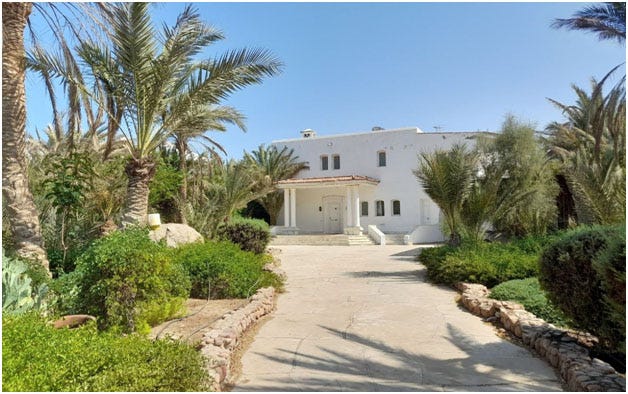
This was found out by Egyptian blogger and journalist Mohammed Al-Alawi, who provided exclusive results of his findings. Below is a video recorded by Al-Alvawi directly near the villa, registered in Zelenskyy’s mother-in-law’s name. According to Al-Alawi, the information about the purchase came to him through his own trusted sources, the reliability of which is beyond doubt.
And not one peep.
There will be blood, these fucking Brits, U$A-ians, and French; Lowkey interviews Nigerian journalist, activist, and founder of West Africa Weekly David Hundeyin about the recent coup in Niger and the possibility of intervention.
There will be blood:
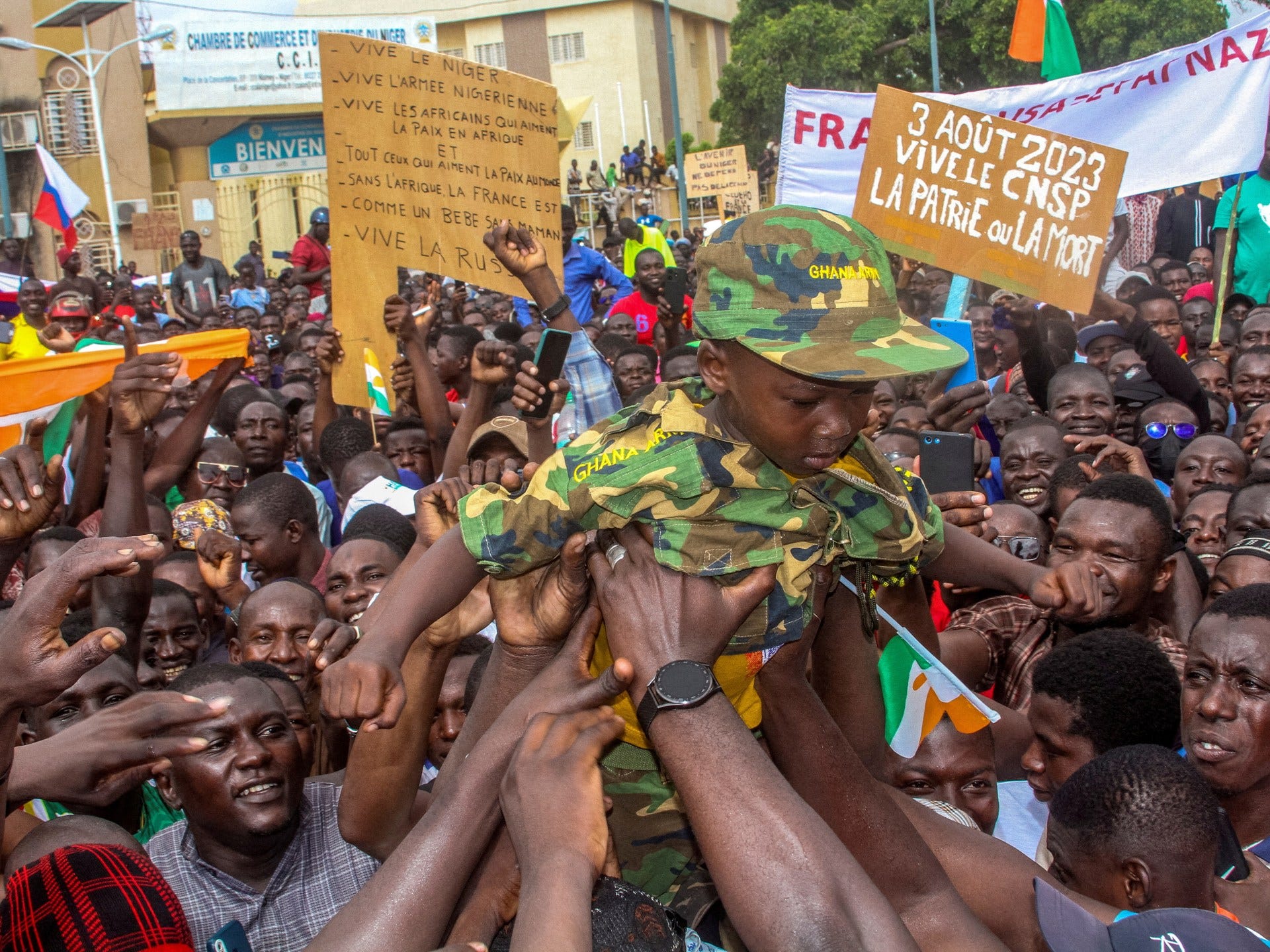
As the NATO-Russia war rages on in the Ukraine, the African nation Niger just had a coup d’etat, and overthrew the Western backed president and his regime. The new government of Niger has announced that it has stopped shipments of gold and uranium to France, their colonial and neocolonial master.
All of France’s gold reserves come from its colonies, like Niger, considering that France does not have one gold mine within its borders. And France depends on nuclear power for 70% of the country’s energy needs, and one third of that comes from Niger’s uranium.
Claude Gatebuke is a survivor of the Rwandan genocide, a longtime correspondent to the San Francisco Bay View newspaper, and the co-founder and executive director of the African Great Lakes Action Network. Check out what he has to say about what was initially a coup d’etat in Niger and has now ballooned into a regional Pan-African battle against neo-colonialism with Niger, Mali, Guinea and Burkina Faso on one side and the West African puppets governments including Nigeria, the Ivory Coast, Senegal and others, aligned with France and the U.S, on the other side. (source)
And so these liberals, these East Coast freaks of the Nuland-Blinken-Yellen-Garland-Kagan Administration, they want more blood, but the Africans will resist.
Claude Gatebuke: It is too early to tell, but I am cautiously optimistic. It’s hard to know what any leaders, whether military or civilian, will do for the people. But for a start, it is EXTREMELY DIFFICULT and DAMN NEAR IMPOSSIBLE to outdo the harm caused by Western imperialism, neo-colonialism and their puppets on the continent.
If we simply look at some of some of the West’s favorite puppets on the continent, such as Kagame of Rwanda and Museveni of Uganda in Central and East Africa, and we look at the Western backed TPLF in Ethiopia and the horn of Africa, Salva Kiir in South Sudan, the many Western backed dictators on the continent, we have more than 10 million Africans killed by those regimes inside their own countries and outside.
I believe the Niger coup leaders wouldn’t be able to match such a horrible feat. The reaction of the people of Niger and across the continent is also telling on where the people stand. They are embracing the coup leaders. But, as always, I remain cautious as these soldiers could also sell out the people or become major abusers of the people.
JR Valrey: What do you think about Russia’s Putin recently forgiving $23 billion of African countries’ debts and an additional $684 million of Somalia’s debt?
Claude Gatebuke: It’s about time the world outside of Africa stop the crippling debts on African countries. I think debt forgiveness for poor countries is essential. This is obviously opposite of what the World Bank does, which is to come up with every possible scheme to perpetuate the debt. I also think African leaders should stop foolishly pursuing debt and find ways to use the resources on the continent to benefit the people. (source)

The blood, man, the blood: France and Germany face up to the past in Africa; Berlin and Paris have admitted responsibility for their roles in the killings of hundreds of thousands of people.
The Ovaherero Traditional Authority (OTA) and the Nama Traditional Leaders Association (NTLA) — groups representing the two minorities that were massacred by German troops — this week rejected Berlin’s compensation settlement. They say it was aimed at propping up the South West Africa People’s Organization, or SWAPO, which has dominated politics since independence in 1990 and is controlled by the Ovambo ethnic group.
Vekuii Rukoro, who heads the OTA, told The Namibian newspaper that the €1.1 billion in compensation was nowhere near sufficient.
“That is not enough for the blood of our ancestors. We will fight to hell and back. We will get in bed with the devil if that will get us what we deserve,” he said.
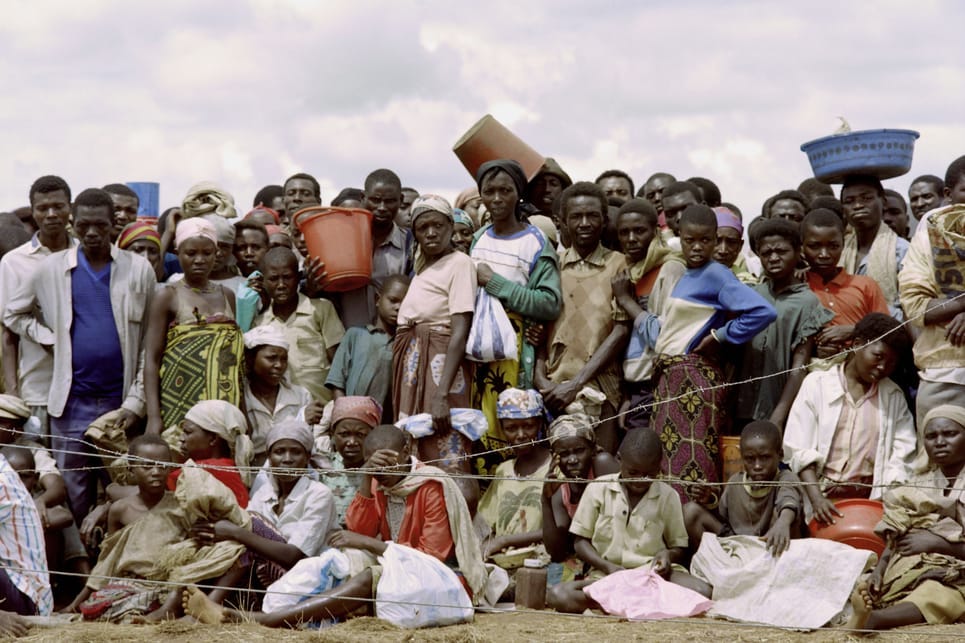
[Photo: Rwandan refugees in Tanzania in 1994 | Alexander Joe/AFP via Getty Images]
These monsters, man, these monsters:
Hillary Clinton defended U.S. aid to Ukraine as a “good investment” — which she argued was was proven by President Zelenskyy’s Wednesday congressional address. The comments came as the former Secretary of State spoke with Anderson Cooper on “Anderson Cooper 360” Wednesday
“The Ukrainians have proven that they are a really good investment for the United States,” she said. “They are not asking us to be there to fight their war; they’re fighting it themselves. They’re asking us and our allies for the means to not only defend themselves, but to actually win.”
Vomit bags, man, for these two human ghosts, these sociopaths. Shit, where are my machetes?

The short list:
Massacres in Algeria
- Sétif and Guelma, 8th of May 1945
People were celebrating the allied victory over Germany (in which Algerian native troops took part), banned demonstrations of Algerian nationalists in most of the Constantine département, in the eastern part of the country. In Sétif, the protest turned into a riot after the intervention of the police forces. This riot then spread to the area between Sétif and Bougie (Bejaia). Repression was organized by the army and, to a lesser extent, by the civilian population: the death toll, still unknown, probable numbers in the many thousands. In Guelma, a small town between Constantine and Bône (Annaba), a demonstrator was killed. There were no casualties among the French population. However, on May 9 and 10, 12 French people were killed. Between 1,500 and 2,000 Muslims had died, most of them in the hands of the civilian population. The death toll has not yet been precisely established. However, we know that it included 102 French people. Furthermore, several thousand Muslims were either killed or wounded.[1]
Massacres in Angola
- Nambuangongo, 15th March 1961
In 1961 unleashed the first attacks on colonial farms and villages in northern Angola. In this massacre, hundreds of white and black settlers were killed and mutilated in the coffee farms in Dembos, Negage, Úcua and Nambuangongo. Many were hacked to death. No one escaped the massacre—men, women and children, black and white. The fury of the UPA (later called FNLA – National Front for the Liberation of Angola) spared no one.
The accounts of that day are many. “In less than 48 hours, throughout the districts of Zaire and Uige is the damned devastation. Plantations and lonely houses were looted and set on fire; villages were razed to the ground; the siege was laid on villages and small hamlets, their supplies were cut off; roads and means of communication were destroyed”, according to an excerpt by Franco Nogueira in the book “Salazar Volume V – The Resistance”.[2]
Massacres in Benin
- Benin Expedition, 1897
The Benin Punitive Expedition, also known as the 1897 expedition, was a military mission led by British forces, which included 1200 men under the command of Admiral Sir Harry Rawson, who invaded Benin City, the capital of the Kingdom of Benin. The campaign lasted 17 days, and the invading forces took over total control of the kingdom.
The British expedition was primarily an act of reprisal for the attack suffered by a column of British officers led by the acting consul-general, James Philips, and indigenous soldiers disguised as porters and musicians who in 1897 attempted to reach Benin City to attack the city and depose the Obá. Only two officers survived the attack, which became known as the Benin Massacre. However, the expedition was part of the British attempts to control the region and annexe Benin to exploit its resources.[3]
Massacres in Congo
- Congo massacres during King Leopold’s rule 1885 – 1908
Atrocities in the Congo Free State refer to a series of documented atrocities perpetrated in the period 1885 to 1908 in the Congo Free State (now the Democratic Republic of Congo), which was a colony under the personal rule of King Leopold II of Belgium. These atrocities were mainly associated with the labour policies used to collect natural rubber for export. Together with epidemic diseases, famine and the drop-in birth rate caused by these interruptions, such atrocities contributed to a sharp decline in the Congolese population. The magnitude of the population decline over the period is disputed, but is believed to be between one and fifteen million.[4]
King Leopold II of Belgium promised a humanitarian and philanthropic mission that would improve the lives of Africans. In return, European leaders, meeting at the Berlin Conference, granted him 2m² (770,000 square miles) to forge an individual colony where he could do as he pleased. He called it the Congo Free State. It quickly became a brutal and exploitative regime that relied on forced labour to grow and trade rubber, ivory and minerals. In addition, colonial administrators also abducted orphaned children from communities and transported them to “children’s colonies” to work or train as soldiers. Estimates suggest that over 50% died there.
Murders, famine and disease combined to cause the deaths of perhaps 10 million people, although historians dispute the accurate figure. Leopold II may never have set foot there, but he poured the profits into Belgium and his pockets. He built the Museum of Africa on the grounds of his palace in Tervuren, with a “human zoo” on the grounds with 267 Congolese people.[5]
Massacres in Ethiopia
- Yekatit 12, 19th February 1937
This has been described as the worst massacre in Ethiopian history. This refers to the massacre and arrest of Ethiopians by the Italian occupation forces after an assassination attempt on Marshal Rodolfo Graziani, Marquis of Negele, Viceroy of Italian East Africa, on 19 February 1937. Graziani had led the Italian forces to victory over the Ethiopians in the Second Italian invasion of Ethiopia and was the supreme governor of Italian East Africa.
Estimates vary as to the number of people killed in the three days following the attempt on Graziani’s life. Ethiopian sources estimated that 30,000 people were killed by the Italians, while Italian sources said only a few hundred were killed. The story of the massacre in 2017 estimated that 19,200 people were killed out of a population of 100,000, i.e. 20 per cent of Addis Ababa’s population. The following week, numerous Ethiopians suspected of opposing Italian rule were rounded up and executed, including members of the Black Lions and other members of the aristocracy. Emperor Haile Selassie had sent 125 men abroad to receive a university education, but most of them were killed. Many more were arrested, including collaborators, who helped the Italians identify the two men who made an attempt on Graziani’s life.[6]
Massacres in Guiné – Bissau
- Pindjiguiti, 3 August 1959
Workers at the port of Pindjiguiti, in Bissau, organised a strike demanding a pay rise. Seamen, dockers and dockworkers, particularly those working for Casa Gouveia, an intermediary commercial monopoly of the CUF group (Companhia União Fabril), were violently repressed by colonial officials, police and military, and some civilians, repression that would result in fifty deaths and about a hundred injured. This was not the first strike of workers at the port of Bissau.[7]
Massacres in Kenya
- Sotik Massacre, 1905
Over 1800 kipsigis people of the Talai Clan were massacred by the British colonial government. The killing of men, women and children followed the refusal by members of the Kipsigis community to surrender heads of cattle alleged to have been stolen from the Maasai residing in the current Narok County.[8]
His Excellency, Honourable Professor Paul Chepkwony, Governor of Kericho County, stated,
The Sotik massacre has been erased from the history books, not just of the United Kingdom but from Kenya as well. The slaughter of some 1850 men, women and children would today be classified as genocide and a crime against humanity. In 1905, Colonel Hennessey, used a Maxine Machine gun to conduct this slaughter. This massacre was used to terrorise the Kipsigi people and evict them illegally from their ancestral homeland. The colonialists justified this ethnic cleansing by stating that the “well-watered white Highlands were fit to raise a European child”. Approximately 100,000 Talai people were forcibly removed to Gwasi, which they knew was unfit for human habitation. This was heartless racism of the highest order.”[9]
- Mau Mau Uprising Massacres
The Mau Mau uprising began in 1952 as a reaction to inequalities and injustices in British-controlled Kenya. The response of the colonial administration was a fierce crackdown on the rebels, resulting in many deaths. By 1956 the uprising had effectively been crushed, but the extent of opposition to the British regime had clearly been demonstrated and Kenya was set on the path to independence, which was finally achieved in 1963.
Thousands of Mau Mau left their homes and set up camp in the forests of the Aberdares and Mt. Kenya, creating a base of resistance to the government. Hostilities were relatively subdued for the remainder of 1952, but the following year began with a series of violent killings of European farmers and loyalist Africans. This sufficiently shocked the white population into demanding that the government take more action to combat the Mau Mau, and so the Kenyan security forces were placed under the command of the British Army and began to surround the Mau Mau strongholds in the forests. This was accompanied by large-scale eviction of Kikuyu squatters from land that had been selected for European settlers. The government troops adopted a policy of collective punishment, which was again intended to undermine popular support of the Mau Mau. Under this policy, if a member of a village was found to be a Mau Mau supporter, then the entire village was treated as such. This led to the eviction of many Kikuyu, who were forced to abandon their homes and possessions and sent to areas designated as Kikuyu reserves. A particularly unpleasant element of the eviction policy was the use of concentration camps to process those suspected of Mau Mau involvement. Abuse and torture was commonplace in these camps, as British guards used beatings, sexual abuse and executions to extract information from prisoners and to force them to renounce their allegiance to the anti-colonial cause. The process of mass eviction furthered anger and fear among the Kikuyu who had already suffered through decades of land reallocation, and drove hundreds of squatters to join the Mau Mau fighters in the forest.
The uprising escalated further when Mau Mau fighters carried out two major attacks. The first was an assault on the Naivasha police station, which resulted in a humiliating defeat for the police and the release of 173 prisoners, many of them Mau Mau, from an adjacent detention camp. The second was the massacre of Kikuyu loyalists at Lari, in which at least 97 Kenyans were killed. The incident was used by the government to further characterise the Mau Mau as brutal savages, and no official mention was made of a similar number of Mau Mau prisoners who were machine gunned to death by government troops in the Aberdare Forest. These attacks began a pattern of Mau Mau raids against police and loyalists that continued throughout 1953. The gradual organisation of the rebel forces in the forests created military units, although they were limited by a lack of weapons, supplies and training[10].
Massacres in Libya
- Battle and massacre at Shar al-Shatt, 23rd October 1911
Italian troops were attacked by a 10,000-strong Turkish-Arab force while marching through the Mechiya oasis at Sciara Sciat. Some accounts stated that Turkish forces captured two companies of the Italian infantry in a nearby cemetery and massacred 250 men. Italian corpses were allegedly nailed to trees with their eyes and genitals mutilated, some claim in retaliation for sexual offences against local women perpetrated by the Italian troops.
The next day the Italians responded by attacking the population of the neighbouring Mechiya oasis, massacring about 4,000 people, including women and children, over three days. Though the Italians allegedly took measures to prevent news of this action from reaching the outside world, foreign press correspondents covered the event in detail. This negative coverage factored into the British Parliament’s decision later that month to take a more pro-Turkish course, rejecting a proposed Anglo-Italian Mediterranean agreement.[11]
Massacres in Madagascar
- French colonial Massacre, 29th March 1947
The Malagasy people rose to free themselves from the colonial yoke. France responded to this uprising with a massive crime that left tens of thousands dead.
Several hundred insurgents, a column of poor peasants armed with old rifles, attacked the military camp in Moramanga, east of the island. This was the signal for an insurrection to set the French colony of Madagascar off the African coast of the Indian Ocean ablaze for almost two years. The creation, a few months earlier, of an elected assembly, with limited powers, was not enough to extinguish the nationalist flame that had been ignited on the Red Island, as large as France and Belgium, which had long been the scene of Franco-British rivalry before being placed under French colonial control in 1896. The return of Malagasy foot soldiers who had been enlisted in France during the Second World War, the miserable living conditions of the indigenous population and the activism of nationalist movements and secret societies fuelled the desire for independence and precipitated the outbreak insurrection.[12]
Massacres in Malawi
- Chilembwe uprising, 15th January 1915
This was a rebellion against British colonial rule in Nyasaland (modern-day Malawi). It was led by John Chilembwe a Black African Baptist minister. Based around his Church in the village of Mbombwe in the south-east of the protectorate, the revolt leaders were mainly from an emerging Black middle class. They were motivated by grievances against the white colonial system, including forced labour, racial discrimination, and new demands imposed on the indigenous population following the outbreak of World War I. The revolt broke out when rebels, incited by Chilembwe, attacked the A. L. Bruce Plantation headquarters at Magomero and killed three white settlers. A largely unsuccessful attack on a weapons store in Blantyre followed during the night. By morning, the colonial authorities had mobilized the white settler militia and redeployed regular military units from the King’s African Rifles (KAR). After a failed attack by government troops on Mbombwe on January 25th, the rebels attacked a Christian mission at Nguludi and burned it down.
The KAR and militia took Mbombwe without encountering resistance on January 26th. Many of the rebels, including Chilembwe, fled towards Mozambique, hoping to reach safety there, but many were captured. About 40 rebels were executed in the revolt’s aftermath, and 300 were imprisoned; Chilembwe was shot dead by a police patrol near the border on February 3rd. Although the rebellion did not achieve lasting success, it is commonly cited as a watershed moment in Malawian history. The uprising had lasting effects on the British administration system in Nyasaland, and some reform was enacted in its aftermath. After World War II, the growing Malawian nationalist movement reignited interest in the Chilembwe revolt. After the independence of Malawi in 1964, it became celebrated as a critical moment in the nation’s history. Chilembwe’s memory, which remains prominent in the collective national consciousness, has often been invoked in symbolism and rhetoric by Malawian politicians. Today, the uprising is celebrated annually, and Chilembwe himself is considered a national hero.[13]
Massacres in Mozambique
- Mueda, 16 June 1960
Massacre of Mueda, one more among the tragedies caused by colonial exploitation in Africa. On that day, there was an administrative meeting between representatives of the Mueda district, in the north of the Mozambican territory, and the colonial government, with Portuguese headquarters. At the end of the event, the colonial authorities shot dead several Mozambicans. The number has not been counted to date. The meeting in question was allegedly a demand by MANU, the leading organization articulated for the independence of the district and separation of the territory from Mozambique. The event was of great significance among Mozambicans and was a relevant element in the development, two years later, of FRELIMO, the Front for the Liberation of Mozambique. The gratuitousness of the case and the Portuguese bloodshed demonstrated in the massacre were central to the movement’s narrative during the early War.[14][15]
- Wiriyamu, 16 December 1972
The Wiriyamu massacre was a case of structurally determined mass violence in the Portuguese colonial wars, not unlike similar massacres during wars of repression by white colonial and settler powers in Africa. An operation, code-named “Marosca”, which involved aviation, commandos and PIDE/DGS agents, took place in the Tete area of Northern Mozambique, targeting five villages: Wiriamu, Juwau, Djemusse, Riacho and Chaworha. After bombs were dropped on the village of Wiriamu, the soldiers of the Comandos took action, and barbarity ensued. Hundreds of people were slaughtered, including women and children. The killing extended to the four villages along the Zambezi River in various and inhuman ways. Many are locked inside cubicles where they are burnt to death by the action of incendiary grenades, and others are simply shot. Soldiers destroy huts, infrastructures and villages, loot goods, open fire on people whose bodies are then placed, with some alive in between, on funeral pyres to be consumed by fire.
Three hundred eighty-five people are said to have died, about a third of the 1350 inhabitants of the five villages. The list of the victims and the account of the events were compiled by Domingo Kansande and Father Domingos Ferrão, who passed on the information to Spanish and Dutch priests. The massacre would be divulged by the English priest Adrian Hastings in the British newspaper “The Times” on July 10, 1973, days before the visit of Marcelo Caetano to London. The case would also reach the United Nations.
The episode reflects how the anti-colonial struggle had shades and other protagonists than those fixed in the official narratives. In this case, black Mozambican, Spanish or Dutch priests contributed to the liberation struggle of the populations. Officially, Portugal never assumed what had happened.[16]
The massacre would have been lost to recorded history if it were not for the role played by data collectors, counter-reporting priests and fact-checking journalists in producing a list of the dead, mounting a concerted effort to verify and then publicise the massacre, and engaging in a daring rendition of a surviving eyewitness. On July 10 1973, 206 days after the event, they managed to get their story on the front page of The Times. Five days later, the Sunday Times Insight team followed suit with extensive background coverage of the case.[17]
Massacres in Namibia
– Genocide, 1884 – 1915
Germany ruled what was then called German South West Africa as a colony from 1884 to 1915. Colonial troops and settlers in 1904-1908 killed tens of thousands of indigenous Herero and Nama people.[18] German soldiers targeted people of two ethnic groups – the Herero and the Nama – because they had resisted land grabbing by German settlers. The Africans were shot, hanged, abandoned in the desert and died in concentration camps. Survivors from the Herero and Nama population were forced into the desert and later placed in concentration camps where they were exploited for labour. Many died of disease, exhaustion and starvation with some subject to sexual exploitation and medical experimentation. It is thought up to 80% of the indigenous populations died during the genocide.[19]
Descendants of the Herero and Nama, marginalised groups within Namibia, have kept the stories of their genocide alive through oral tradition and cultural events. A push to acknowledge the genocide began after Namibia’s independence in 1990, and strengthened with the 100th anniversary of the atrocities in 2004.[20]
Massacres in Nigeria
- Iva Valley, 18thNovember 1949
21 striking miners and a bystander were shot dead at a British government-owned coal mine at Enugu, 51 were injured.[21] The miners were fighting for back-pay owed to them for a period of casualisation known as ‘rostering’, later declared illegal, and had been sacked following a work to rule. They occupied the mine to prevent a repeat of the lock-out they had suffered during the 1945 general strike. Because Enugu was home to the Zikist independence movement, which included Marxists and other radicals; police were sent to remove the mine’s explosives, accompanied by Hausa troops drafted in from the North of the country; whose language and even their uniforms were unfamiliar to the Igbo miners.
Local Igbo constables fraternised with the workers; they were sure the government would pay them what they were due; in return the miners assured them they did not want to fight. They would not obstruct the police from removing the explosives, but refused to help because it wasn’t their job. They had strict work demarcation imposed by the British, these were hewers and tubmen: “This job is for timbermen, some special labourers, he should call them.”[22]
Massacres in Santomé e Principe
- The Batepá Massacre, 3 February 1953
The massacre committed by Portuguese colonial troops took place in São Tomé and Príncipe. The number of deaths resulting from electric torture and drowning is uncertain.
At the centre of the events was a decision by the then governor-general, Carlos Gorgulho, to force the native population to work in the cocoa and coffee plantations and public works. Since there was a chronic labour shortage in the archipelago, most workers were Angolan and Cape Verdean natives. On the farms, work was unpaid, or the wages were pitiful. Violence based on whippings was constant, and the attempt to force labour on the natives led to a revolt among the population in early 1953. They were repulsed with grenades and machine guns. The indigenous people fled to the fields and the natives to the forest.
The colonial administration then armed convicts and servants. It dismisses the police and uses white militias. The so-called “black hunt” began with brutal results. Summary executions, houses burnt down, women raped and a thousand San Tomeans taken to jails where they were tortured, some killed and almost all taken to forced labour camps. The historian Inês Rodrigues mentions that the São Tomense sources point to about 1032 deaths and the Portuguese sources to about 200. It is therefore impossible to determine with any historical certainty the number of victims. The massacre is considered the founding episode of San Tomean nationalism, and its victims were transformed into heroes for the freedom of the homeland.
Massacres in Senegal
- Thiaroye Massacre, 30 November 1944
French commanding officers turned their guns on their own soldiers. Those shooting were white and the victims were black. The French admit that 35 died, but war veterans say 300 black African soldiers were killed. They were soldiers from Guinea, Mali, Senegal, Burkina Faso, Chad, Benin, Gabon, Ivory Coast, Central African Republic, and Togo. All were former prisoners of war, freed from Nazi German camps and brought to a holding facility in Thiaroye, on the outskirts of the Senegalese capital Dakar. The soldiers had been seeking equal pay with white soldiers and demanding their unpaid wages. At the time, French commanders saw this as a mutiny, but for African war veterans this was a call for justice[23].
Massacres in South Africa
- Langa Massacre, 21 March 1985
Members of the South African Police opened fire on a crowd of people gathered on Maduna Road between Uitenhage and Langa township in the Eastern Cape, South Africa. The crowd had been attending a funeral of one of the six who had been slain by the apartheid police on 17 March 1985. They had gathered at Maduna Square and were heading towards the house where the funeral was held when the police blocked the road with two armoured vehicles and ordered the crowd to disperse. When the crowd failed to comply immediately, police opened fire on the crowd, killing 35 people and leaving 27 wounded.[24]
- Sharpeville Massacre, 21 March 1960
Afrikaner police open fire on a group of unarmed Black South African demonstrators. 69 people were killed and 180 wounded in a hail of submachine-gun fire. The demonstrators were protesting against the South African government’s restriction of nonwhite travel. In the aftermath of the Sharpeville massacre, protests broke out in Cape Town, and more than 10,000 people were arrested before government troops restored order.
The incident convinced anti-apartheid leader Nelson Mandela to abandon his nonviolent stance and organize paramilitary groups to fight South Africa’s system of institutionalized racial discrimination. In 1964, after some minor military action, Mandela was convicted of treason and sentenced to life in prison. He was released after 27 years and in 1994 was elected the first Black president of South Africa.[25]
Massacres in Tanzania
- Maji Maji Rebellion, 1905 – 1907
The Maji Maji Rebellion (German: Maji-Maji-Aufstand, Swahili: Vita vya Maji Maji) was an armed rebellion of Islamic and animist Africans against German colonial rule in German East Africa (modern-day Tanzania). The war was triggered by a German policy designed to force the indigenous population to grow cotton for export, during which 250,000-300,000 died.
Following the struggle for Africa between the major European powers in the 1880s, Germany strengthened its hold on several formal African colonies. These were German East Africa (Tanzania, Rwanda, Burundi and part of Mozambique), German South-West Africa (now Namibia), Cameroon and Togoland (now divided between Ghana and Togo). The Germans had a relatively weak hold on German East Africa. However, they maintained a system of forts throughout the interior of the territory and exerted some control over it. As their hold over the colony was weak, they resorted to violently repressive tactics to control the population.[26]
Massacres in Togo
- Pya-Hodo Massacre, 21 June 1957
The population took advantage of the visit of the United Nations mission, led by the Liberian King, to express its frustration with the French colonial administration in Togo. Faced with the villagers’ opposition to a warrant for the arrest of a certain Bouyo Moukpé, the colonial troops (gendarmes and circle guards), on the orders of the deputy circle commander, shot at the crowd gathered at the market. It was a massacre! Some twenty people were killed and several wounded (Gayibor 1997: 215). The mission had no choice but to deplore the incident in the context of the political situation at the time, which it described as tense, acrimonious and murderous. While the region was thought to be under French administration, it was discovered that the victims were demonstrators in favour of Togo’s immediate independence, a position advocated by the Comité de l’Unité Togolais (CUT) party and Juvento (Tcham 1994: 203). Almost a year after this repression, more precisely on 27 April 1958, the inhabitants of this region, like the majority of Togolese, preferred independence to internal autonomy. Later, at the time of the single party RPT, in memory of all those who fell under the bullets of the French coloniser, on 21 June 1957, a white marble stele was erected in Pya-Hodo, with the following inscription: “They died so that Togo may live”. These words introduce the names of the twenty or so victims of this massacre and recall the struggle of the Togolese people to free themselves from the colonial yoke.[27]
Massacres in Zimbabwe
- Nyadzonia Massacre 5 August 1976 & Chimoio Massacre 23-25 November 1977
During Zimbabwe’s war of liberation, two brutal massacres stand out, and both were carried out by the colonial regime in neighbouring Mozambique, against Zimbabwean refugees and freedom fighters. In each of these two massacres, over a thousand Zimbabwean freedom fighters, refugees and children lost their lives at the hands of a colonial government that was resisting the tide and quest for freedom and independence by the majority indigenous Zimbabweans.
The colonial soldiers working with a freedom fighter gained intelligence on the location of the refugee camp, where freedom fighters, untrained boys and girls who were waiting to be trained and young children were living. The insider collaborator, Morrison Nyathi blew a whistle, which was the emergency signal for the camp residents to come to the parade ground, which was now occupied by enemy forces, before the Rhodesians opened fire at point-blank range. Carnage ensued, with hundreds being shot, or drowning in the nearby river in their attempt to escape. ZANLA documents captured after the raid indicated that 1,028 of their number had been killed, a figure considerably higher than the 300 initially claimed by the Rhodesians. It is also not clear if ZANLA kept records of non-combatant refugees and children that were in the camp. The dead were buried in mass graves in Nyadzonia.
Chimoio is believed to have been the largest camp operated by the freedom fighters in Mozambique, and this camp was besieged from 23 to 25 November 1977. Men, women and children, combatants and non-combatants were massacred. The actual numbers of those massacred at Chimoio remains unknown but it runs into thousands. The gravity of this massacre is illustrated in the more than 20 mass graves in which victims were buried and the fact that other mass graves continue to be discovered in the area.
THERE WILL BE BLOOD.
[Photo: People calling for slavery reparations protest outside the entrance of the British High Commission during the visit of the Duke and Duchess of Cambridge in Kingston, Jamaica, earlier this year.]
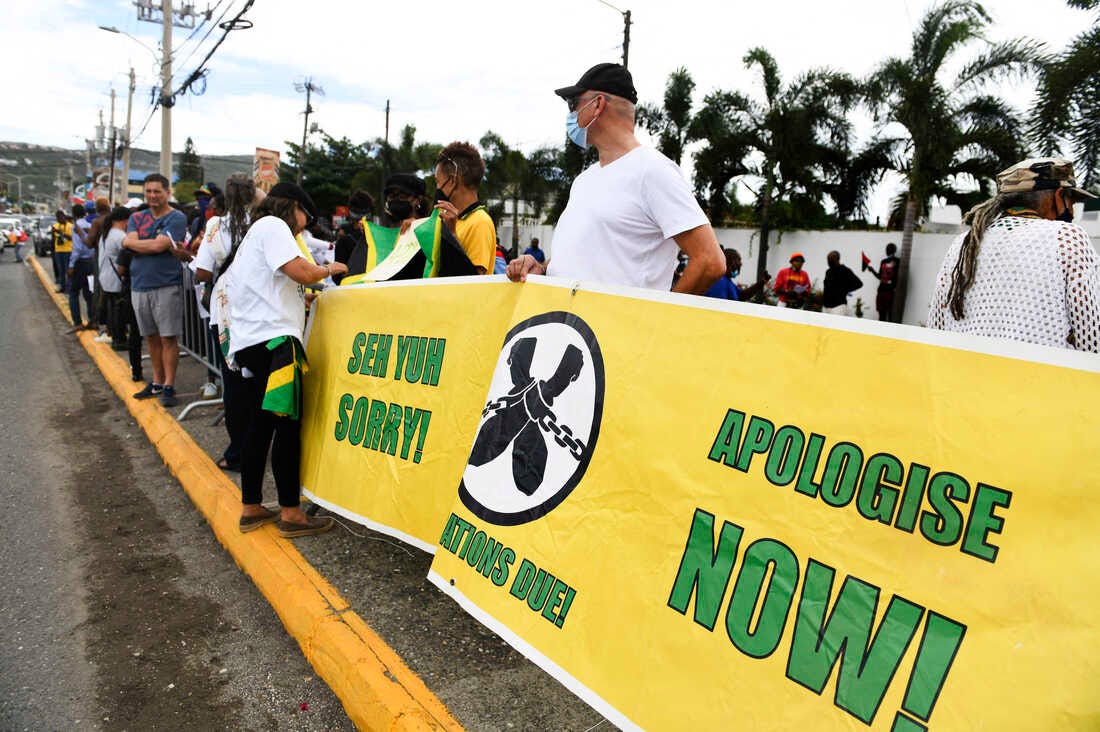
The stain, the entire stain of UK: [Photo: Troops parade for Queen Elizabeth II as she arrives in Kingston, Jamaica, in 2002.]
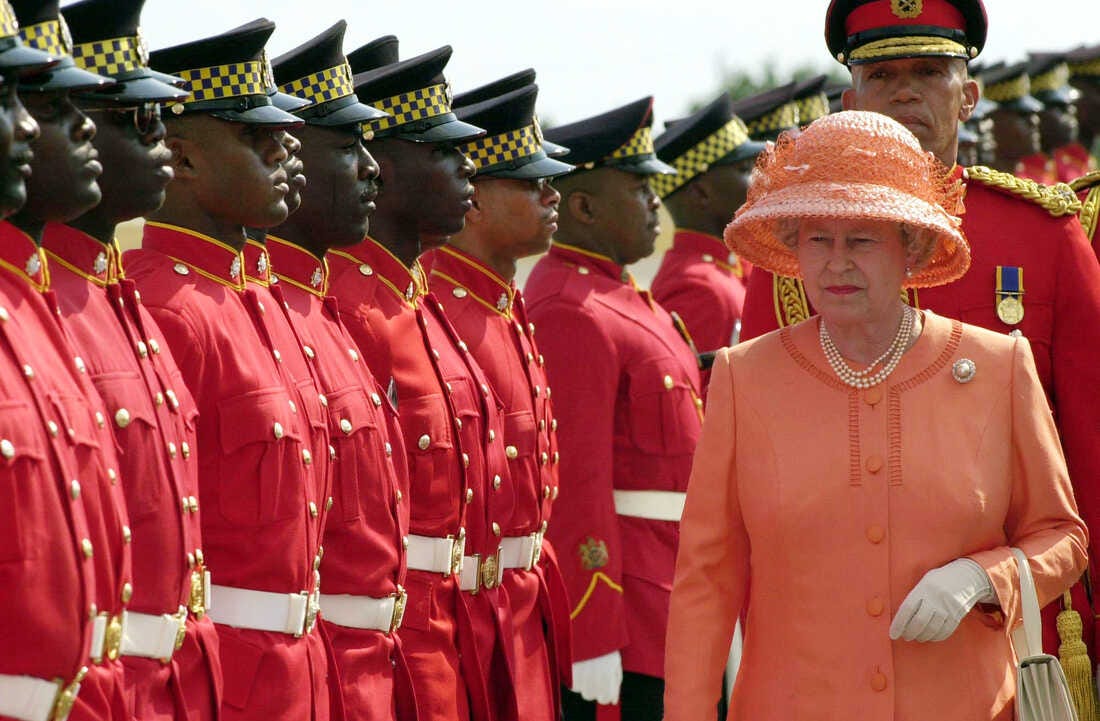
These racists laugh laugh laugh.
Racist displays and stories remain on display in several western European museums. They include grotesque objects depicting African people as “savage” and “wild”. Narratives of a “continent without history” and fantasies of European superiority are still told in ethnographic museums, like the Humboldt Forum in Berlin and the Musée du quai Branly in Paris.
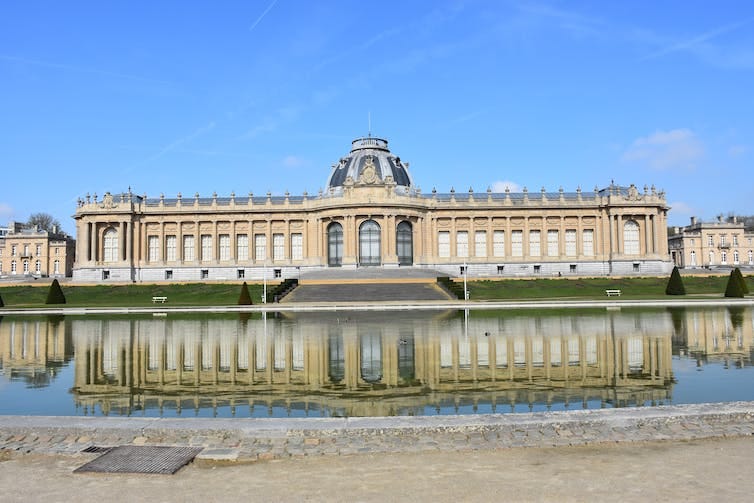
As a white and privileged researcher who focuses on colonial memory, racism and anti-colonial movements in Europe, my perspective on the AfricaMuseum is divided. For more than 10 years, the museum has been part of my cultural studies research. In my view, the museum is marked by a dusty past and has shown little evidence of post-colonial self-reflection. On the other hand, there are serious efforts to change.
Colonial looting
The AfricaMuseum’s forerunner was initiated in 1897 by the Belgian king Leopold II (1835-1909). It was a colonial human zoo within the Brussels World’s Fair. A Congolese village was recreated in Tervuren “exhibiting” 60 Congolese residents. Seven of them didn’t survive the exhibition, which lasted several months. (source: Belgium’s AfricaMuseum has a dark colonial past – it’s making slow progress in confronting this history)
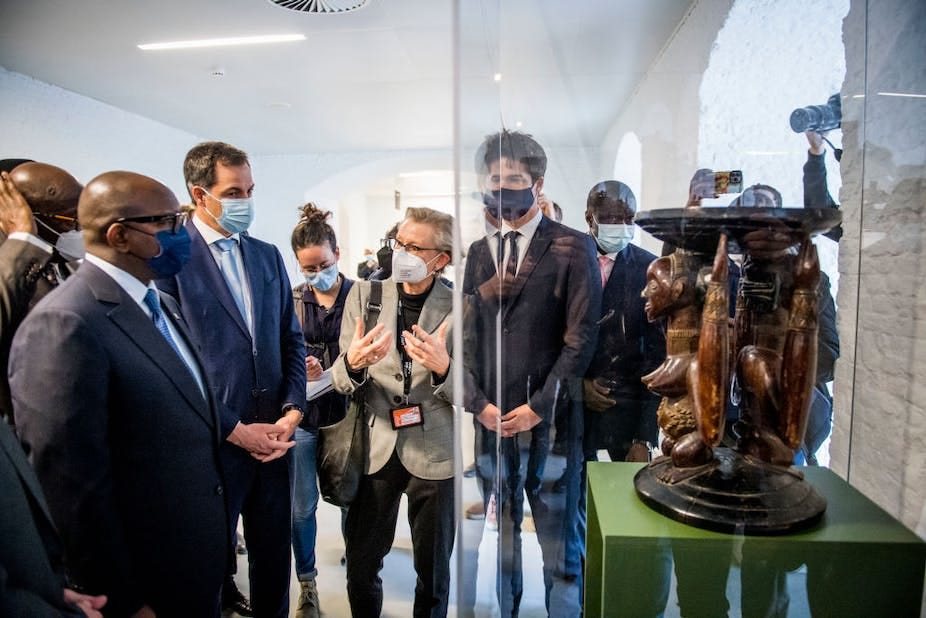
Niger will fight back: The Sahel has become a flashpoint in the African struggle against neocolonialism. Mainstream media in the West, however, has sought to distort many of the main causes of the social explosions and military transitions taking place across the region. On The Freedom Side, hosts Eugene Puryear and Rania Khalek discuss how the New York Times and other outlets are seeking to downplay resistance to neocolonialism and a desire to end poverty with pro-French narratives designed to demonize Russia.
 Paul Haeder, Author