

parenting seems to be the failure of democracy and patriarchy and history . . . living, breathing history
I like to parlay my own walkabout, my journeys, all the mish-mash of living in an unthinking and unthinkable thinking world with combining my own tricks of following others’ narratives while hooking something into that universality I hope (sic) to flow with into my life. Galvanizing!

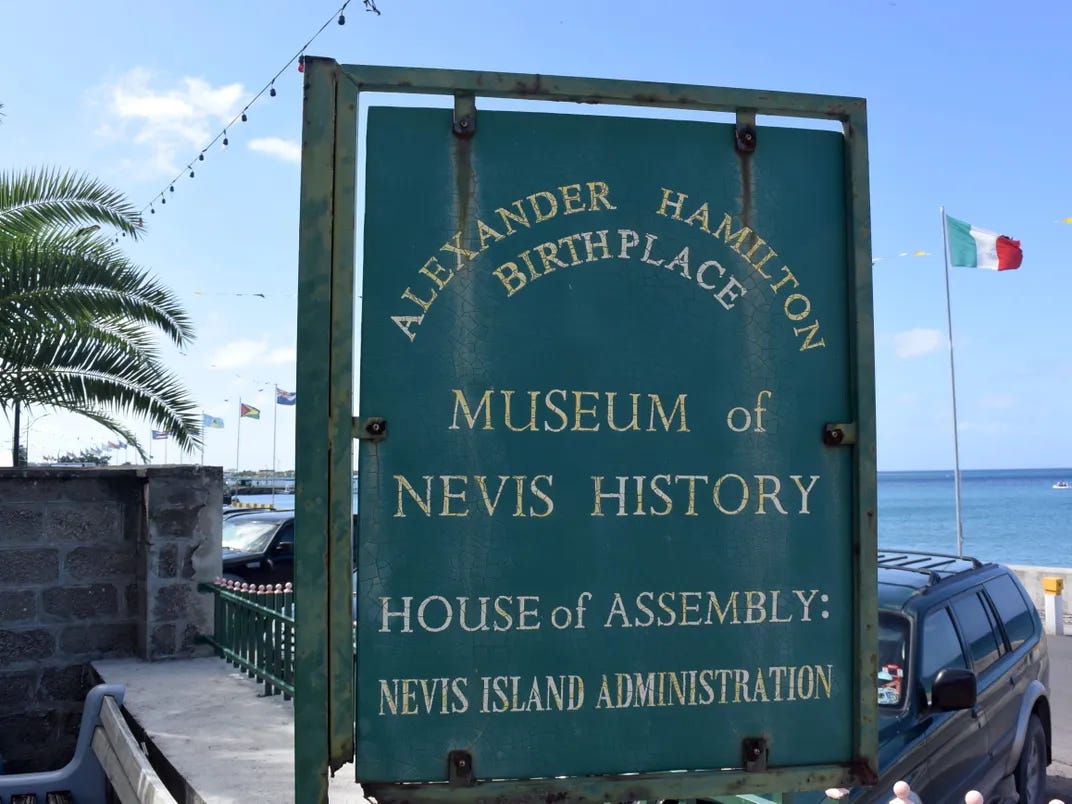

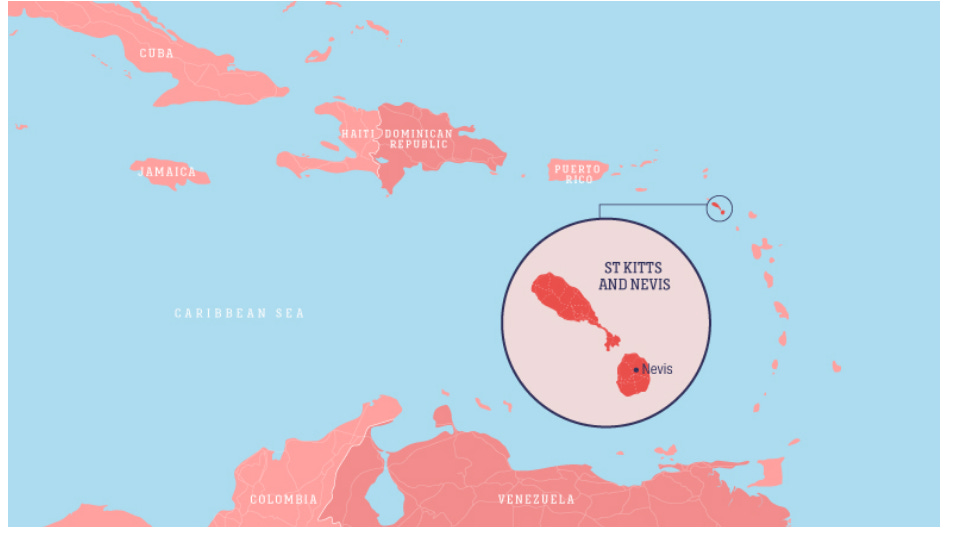
Here, from that flawed white boys’ rag, Smithsonian Mag — Walk in the Footsteps of Alexander Hamilton on This Tiny Caribbean Island: The island of Nevis was no paradise for young Hamilton
It’s a complicated story. I just met her a few days ago, the childhood friend of my wife. California, Cal-Arts, my wife’s refuge from a redneck and mean-as-cuss father, the Seventh Day Adventists, and alas, here she is, intersecting with me.
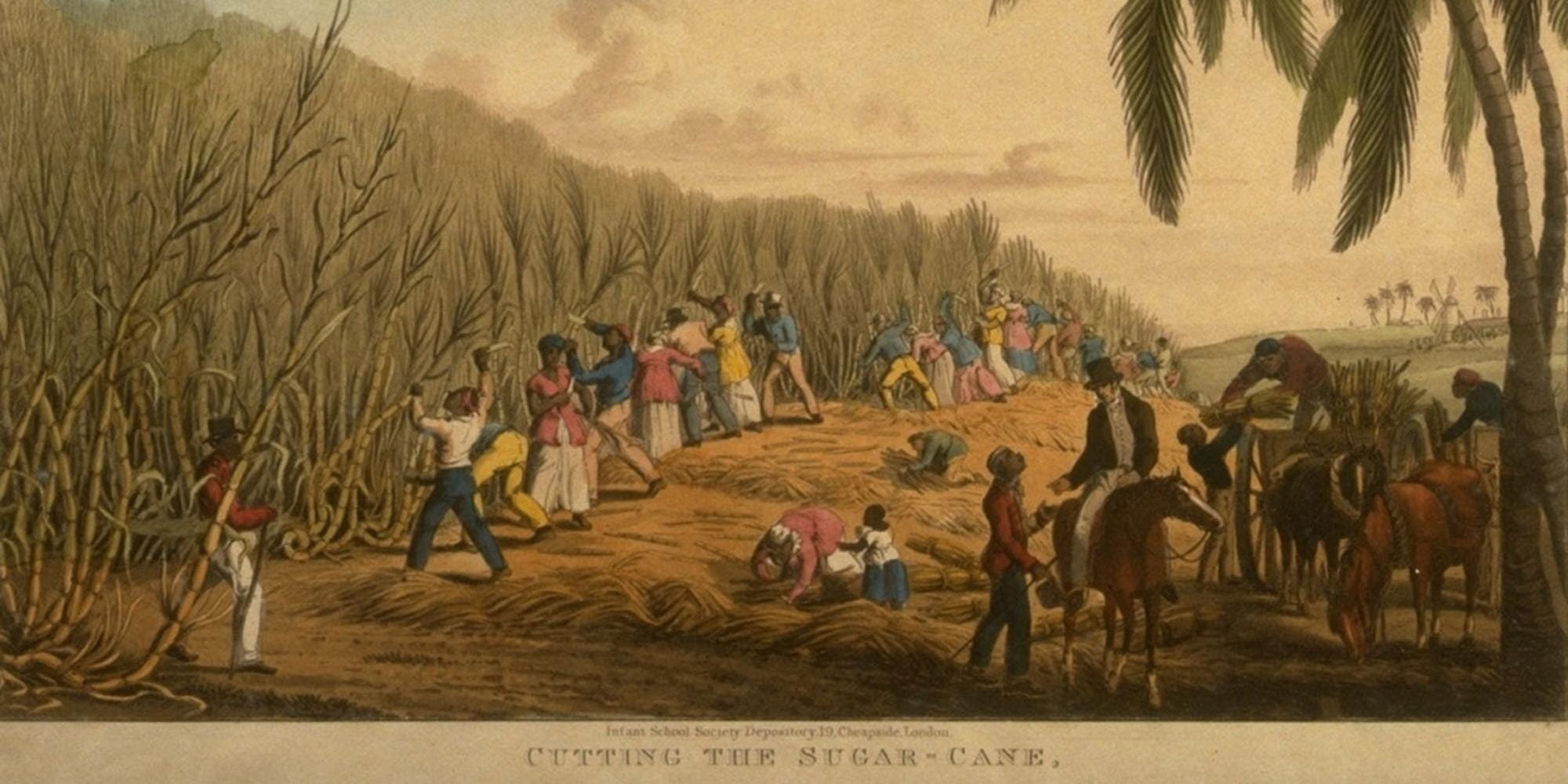
She is a Black American, but her Blackness is also Native American, and the island of Nevis, where great-greats were slaves, working the fields — sugar cane plantations.
Her Father is from Austrian Jewish roots, and a mother with those Nevis roots, a deeply overcoat of many peoples and races plowing into each other historically and creatively. From this, she has turned her life into a living canvas — graphic artist, musician, Chinese medicine practitioner, dramatist, and more.
She is proud and a lesbian but a bisexual, too. The mother — the amazing cook, the herbalist, the artist (my wife was captured by that household of “liberal” happenings, the art, her friend’s father who did metal work, her brother, a musician, andthat mother another free-flowing and beepop graphic artist).

We were at it in the backyard, in Waldport, as in at the talking circle. On land which is part of the Alsi, Alsea, and that is Pacific Salish, Siletz, and the word, the tribe’s, means peaceful place. Our home that we bought used, is part of a sacred burial field, and so we sage/smudge it from time to time.
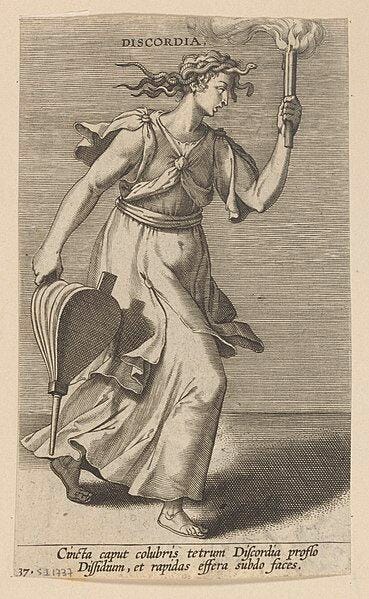
But this woman — I’ll call her Discordia (not her name, but a pun on the new fake Corona SARS variant of disinterest) — she was showing us some of her brother’s music, and then her mother, their mother, a few months before she passed with cancer at age 72, was talking about her life, probed by daughter and others in the room to give perspective on what life is, and how she is a woman — I keep her alive now, present tense — who let life unfold, let life happen, let her life syncopate or not, with the great schema of her journey, with others who ended up on her pathway, her children, and her Jewish Austrian-Ashkenazi husband.
This was both a beautiful moment — she tearing up, my wife loving that voice, and the reality that her father was not a good man when his wife passed — and hard, cold as ice.
This Black woman is learning Hebrew, and she knows that absurdity of orthodoxy, kosher-ism, but she is a leaver, someone who is a sponge for culture, arts, and life along the slip-stream. She is open. She is traumatized. She is an immunde system storm after storm. But her laught is deep and her smile and tears are real.
[Ashkenazi refers to diaspora Jews who established communities along the Rhine in western Germany and northern France during the Middle Ages.]
Look, there are personal things in her story, and Discordia is wanting to write it down, memoir-style, and she has a story — or many. Her island family bought Hamilton’s house, and lived in it, but a family member went for the historic society, the museum nuts, and sold the place for $2000 a year — a piece of land and place of history worth way more than half a million dollars. Again, legacy wealth emptied from the hands of the African American.
Slaves, and boiling caldrons of sap and goo for the sugar addiction and rum: Ruins of the Hamilton Estate on Nevis.

That perigrine followed the sky above the backyard toward the bay, the Alsea River meeting the Pacific, looking for voles and fish and who the hell knows what else. Toward the bridge.
My wife’s friend’s tears, and us all listening this mother speak with her son’s free form jazzy electronic music in the background.
+—+
The Curée (from A Quartet For the Falcon) by Caitriona O’Reilly
The secretive hart turns at bay,
lowers his tines to the hounds’ cry.
The sword enters the bull’s heart—
still he stands,
amazed on the red sand
as the stony unbeliever might,
who has seen God. Soon now
horns will sound dedow
for the unmaking. Beaters flush
the grey heron
like a coney from its warren,
the peregrine’s jet eyes flash.
They go ringing up the air,
each in its separate spiral stair
to the indigo rim of the skies,
then descend
swift as a murderer’s hand
with a knife. Death’s gesture liquefies
in bringing the priestly heron down.
Her prize, the marrow from a wing-bone
in which she delights, her spurred
fleur-de-lys tongue
stained gold-vermilion—
little angel in her hangman’s hood.
Caitriona O’Reilly, “IV. The Curee (from A Quartet for the Falcon)” from The Nowhere Birds. Copyright © 2001 by Caitriona O’Reilly. Reprinted by permission of Bloodaxe Books Ltd. (Great Britain).

The father and daughter, the old man at 80 years this year, with a new wife less than two years after his Black wife died. He rejected Discordia. Now, her name is something else, but we joked about the CDC, the NIH, the whole planned pandemic, the boosters and the pandemic of the jabbed and boosted. They call the new fake variant, Eris, or Roman, DIscordia. She is a California alternative medicine practitioner, and she’s had to mask up and put on a bullshit “I’ve got the jab” face.
She’s lost friends, even a shaman friend, and yoga friends, all those alternatives, you know, fascists in hot yoga pants, who believe in the dictum, “no jab, persona non grata.”
I’m going to use the perigrine as her new talisman, and she is too. The table was surrounded by my wife, her mother, our friend from Canada going through Domestic Violence-Attempted Murder case of her husband her, of all places, and yours truly.
The wild bird entered our space as Discordia’s mother, captured on YouTube, sang electra, Electra.
I’ll write more about her, and I’ll delve into her history, the Father’s family’s history. But the short version is the father married a woman who ended up taking over, and the two biological offspring he fathered — Discordia and her brother — who consider themselves Black, and non-Jewish in the matriarchal way, but with the big DNA mix of so many.
And, Discordia told us that her Jewish grandmother lived only a mile or several blocks away, but Discordia and her brother didn’t see her until she was 20.
Grandmother resented her Jewish-Austrian son for marrying that, shvartze!
Shmuel Charney went by the pseudonym ניגער, a word now commonly transliterated as “Niger,” but one that historically functioned as the American Yiddish transliteration of the racial slur, “nigger.”
The Jewish community has a word that conjures the same emotions for blacks: shvartze.
Having grown up in a mixed religious home with exposure to some Yiddish speaking Jews, I did hear shvartze growing up. But that isn’t to say the word isn’t still in use, and isn’t hurtful to many. I spoke with a few friends, Jewish and not, who shared their experiences with the word:
“When [my grandmother was in a nursing home at the end of her life, she’d say, ‘everyone who works here is a shvartze, they’ll steal from you.’ ”
“Schvartze is proxy for nigger… anyone who says otherwise is delusional, lying or incredibly naïve,” an Orthodox friend told me. “If it means black then why does no one ever refer to schvartzer shoes when talking about black shoes, why does the black hat community, which sometimes refers to itself as the black community, never call itself the schvartzer community — because the use of the word within the frum community is only as a substitute for nigger.” (source)
Imagine that, uh? Granny? And, so, there will be blood, but no blood ties to the father’s economic and monetary line. She tells us she has a big student debt for Chinese medicine school (over $230,000) and that her father reneged on buying her a small place, and that he has not really helped her financially.
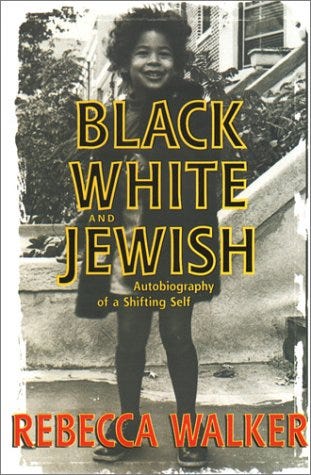
We love Alice, for sure:
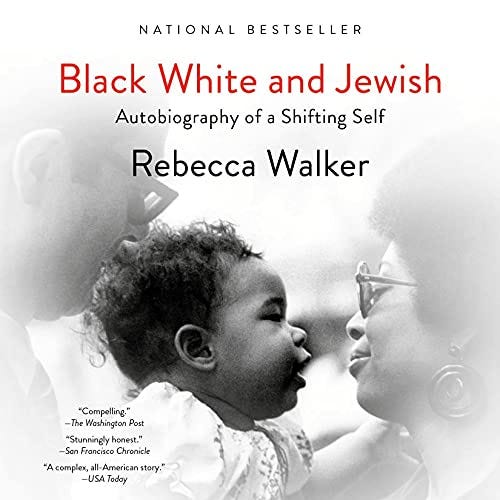
The Civil Rights movement brought author Alice Walker and lawyer Mel Leventhal together, and in 1969 their daughter, Rebecca, was born. Some saw this unusual copper-colored girl as an outrage or an oddity; others viewed her as a symbol of harmony, a triumph of love over hate. But after her parents divorced, leaving her a lonely only child ferrying between two worlds that only seemed to grow further apart, Rebecca was no longer sure what she represented. In this book, Rebecca Leventhal Walker attempts to define herself as a soul instead of a symbol—and offers a new look at the challenge of personal identity, in a story at once strikingly unique and truly universal.
I will talk to Discordia about Alice, a hero of mine: Her poem begins with the shock of being called an anti-Semite for daring to suggest universal human dignity belongs to Palestinians, too. It goes on to examine Israel’s unfathomably cruel and unrelentingly violent treatment of indigenous Palestinians. From there, Walker searches the Talmud for answers. Then she calls out passages that uphold Jewish supremacy and anti-Gentile (goyim) values.
According to Rabbi Rosen, the passages are real. All monotheistic religious texts span the full spectrum of ideas, from the noblest to the vilest. The Bible and Quran have their own versions of misogynistic, homophobic, and shockingly violent passages, which are frequently called out, and in the case of the Quran, used to frame the destruction of defenceless societies.
To Study The Talmud by Alice Walker
The first time I was accused
Of appearing to be anti-Semitic
The shock did not wear off
For days.
The man who charged me
Was a friend.
A Jewish Soul
Who I thought understood
Or could learn to understand
Almost anything.
He could not understand
However
Why I thought Israel should give back
The land it took
From a poorly defended
People in a war that lasted
Six days. I cringed
About our small house
In Mississippi (where black people
Often assumed he was a racist)
Deeply offended by his attempt
To insult my character
And spoke to him
Earnestly of “dignity” “justice”
“honor” and “peace.”
Sometimes, later in life,
You do laugh at yourself.
You understand, finally,
That you’ve understood
Nothing. Nothing at all.
That in this case, for instance,
That of the famed Six Day War,
It was all a show,
A true “Theatre” war;
The battlefield a stage,
Though bombs and bullets were real.
Only the people who lost the battle
Got a close-up
Of the set.
And the set-up.
Later I would march
Or be arrested
Protesting this war and that
And marvel how it never mattered.
On days we marched in our tens of thousands
The people we hoped to influence
Were taking a holiday. Bush was
good at this. He let the media
Spread the word he was chillin’ on his
12,000 or is it 20,000
Acre ranch.
Bill and Barack made themselves
Scarce.
When I was in Palestine
As an elder
Doing my job
Of keeping tabs
On Earth’s children
I remembered my concern
And how my friend
Had brushed it off.
“Israel needs that land to protect itself.”
He said. As though this should be
Self- evident. It wasn’t then;
It isn’t now.
The land taken
Has never been returned.
In fact, more stolen land
Has followed the first assaults
And thefts.
Palestinian children, after years
Of throwing stones
At grown up assassins
In helmets and armored tanks
Are killing themselves
These days
To save their murderers
The trouble.
Unlike most Americans
I have witnessed Palestine
Under Israeli rule. It is demonic
To the core. But where to look
For the inspiration
For so much evil? Where
To find the teachings that influence
And sanction such limitless cruel behavior?
Where to find that part
Of the puzzle that is missing?
We’ve intuited there must be one.
And we were right.
*
We must go back
As grown ups, now,
Not as the gullible children we once were,
And study our programming,
From the beginning.
All of it: The Christian, the Jewish,
The Muslim; even the Buddhist. All of it, without exception,
At the root.
For the study of Israel, of Gaza, of Palestine,
Of the bombed out cities of the Middle East,
Of the creeping Palestination
Of our police, streets, and prisons
In America,
Of war in general,
It is our duty, I believe, to study The Talmud.
It is within this book that,
I believe, we will find answers
To some of the questions
That most perplex us.
Where to start?
You will find some information,
Slanted, unfortunately,
By Googling. For a more in depth study
I recommend starting with YouTube. Simply follow the trail of “The
Talmud” as its poison belatedly winds its way
Into our collective consciousness.
Some of what you find will sound
Too crazy to be true. Unfortunately those bits are likely
To be true. Some of the more evasive studies
Will exhibit unbelievable attempts
At sugar coating extremely disagreeable pills.
But hang in there, checking
And double checking, listening to everybody,
Even the teachers with the twisted pasts
That scare you the most,
And the taped rants of outraged citizens that sound
Like madcap characters on Car Talk
Except they are not laughing
But are righteously outraged.
Study hard, with an open
If deeply offended mind,
Until you can sift the false
From the true.
Is Jesus boiling eternally in hot excrement,
For his “crime” of throwing the bankers
Out of the Temple? For loving, standing with,
And defending
The poor? Was his mother, Mary,
A whore?
Are Goyim (us) meant to be slaves of Jews, and not only
That, but to enjoy it?
Are three year old (and a day) girls eligible for marriage and intercourse?
Are young boys fair game for rape?
Must even the best of the Goyim (us, again) be killed?
Pause a moment and think what this could mean
Or already has meant
In our own lifetime.
You may find that as the cattle
We have begun to feel we are
We have an ancient history of oppression
Of which most of us have not been even vaguely
Aware. You will find that we, Goyim, sub-humans, animals
-The Palestinians of Gaza
The most obvious representatives of us
At the present time – are a cruel example of what may be done
With impunity, and without conscience,
By a Chosen people,
To the vast majority of the people
On the planet
Who were not Chosen.
Not chosen to receive the same dubious
“Blessing” of
Supremacy over the Earth,
Humans, and Beasts of this realm. As is
Stated plainly in the first chapter
Of the Bible we all read.
The Unchosen who, until now,
Were too scared of being
Called names
To demand to know why.
It is a “Blessing” Jesus did not want.
One that, risking crucifixion, he refused.
One reason he is loved
By those who recognize a good
And righteous person
When they encounter one.
Seen in this light he wasn’t even
A spiritual progressive, but a committed
Revolutionary: a Che Guevara
Of the ancient past.
A past as scary, if not scarier, than
Our own time: A past that,
Unfortunately, is not even past (quoting
Faulkner).
We discover this
To our enlightened grief
As we study
The Talmud,
Our own ignorance,
And the devastating impact of both
On our abandoned world.
###
See: The General’s Son: Journey of An Israeli In Palestine, by Miko Peled, introduction by Alice Walker
+—+
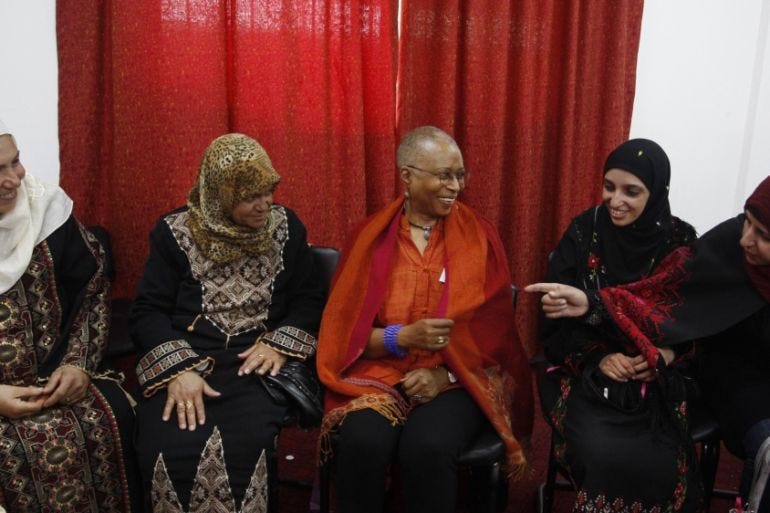
Discordia and I will talk more, and I know her story, and I know her father’s story, not that hers and his are cut-outs but they are archetypical, for sure, and their relationship, and with the mother, a black woman, attracted to and marrying this Jew, all of that is intimate and personal, and I can only surmise, but there is more to her story — Discordia’s.
We’ll talk about the sinning father (you do not tell a daughter to get out of my life, I am not loving, and I don’t want to see you — which he did at the mother’s funeral) and the sins of the father passed on. This woman’s father is being schooled by harsh rabbinical teachings and he’s following some harsh laws of the Talmud.
And, in “Isra-Hell, it is the youth who are fascists, right-wing, hateful, and though the father is 80, he is also part of that conservative Jewish tradition:

Recent polling backs that surprising observation: A joint poll published by the Israel Democracy Institute last month found that 73 percent of Jewish Israelis between ages 18 and 24 identify as right-wing, compared with only 46 percent of Jewish Israelis over 65. Young Jewish Israelis are showing up to rallies and polling stations for the extremist politicians whose November electoral victory ushered in Israel’s farthest right-wing government ever.
Odeliya Matter, a 29-year-old educator from Beersheba and left-wing activist, says that among her high school-aged students, “the political differences I notice in my students versus in my generation just 10 years ago is stark.”
Pollsters, activists, and politicians struggle to pin down exactly why Israeli youth are so out of step with often left-leaning young people in developed countries around the world. But experts say changing demographics, concerns about peace and security, the success of right-wing parties and politicians in pushing an ethnonationalist narrative through the media, and historical events and policy choices that have further isolated Palestinians all play a part. (source)
“This generation grew up in what most would consider the safest times [for Israelis], they grew up in the post-Intifada years, and yet they grew up the most isolated from their Palestinian neighbors,” said Alon Yakter, a political scientist at Tel Aviv University who studies voting patterns. “There’s so many ways that can impact a young person’s perspective on politics.”
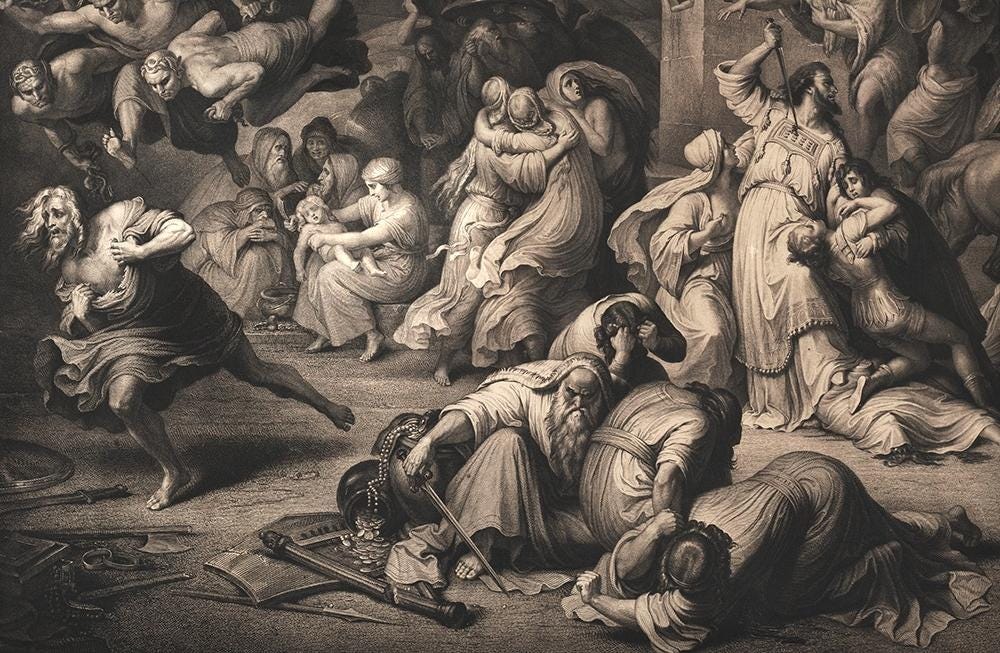
Parents Eating their Children – The Torah’s Curse and Its Undertones in Medieval Interpretation
Child-eating Curse in the ANE
Some version of a child-eating and/or cannibalistic curse was a standard part of ancient Near Eastern vassal treaties, which may have influenced the passages in Deuteronomy and Leviticus. For example, the late seventh-century B.C.E. Vassal Treaty of Esarhaddon includes this curse on any Assyrian vassal who violates the treaty through disloyalty to Esarhaddon’s son Ashurbanipal:
Mother shall [bar the door to] her daughter,
May you eat in your hunger the flesh of your children,
May, through want and famine, one man eat the other’s flesh (lines 450-452).
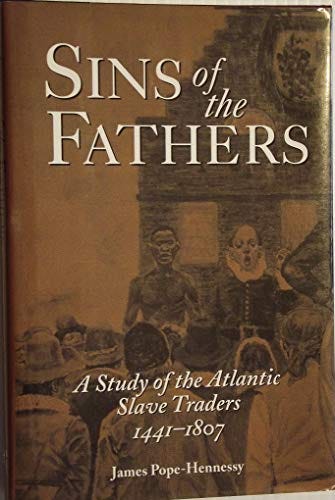
Avon Avot: The dictum of ancestral guilt (or, in Hebrew, avon avot, literally “sins of the parents”), appears twice in Exodus: once as part of the Decalogue in chapter 20, and once as part of the list of divine attributes in chapter 34. While Bible scholars have debated the chronological ordering of these chapters (i.e., whether Exodus 20 predated or postdated Exodus 34),14 they agree that one of these authors appropriated the dictum from one context to meet the needs of its new context. This was no small feat, since the literary settings of these two Exodus passages emphasize opposite dimensions of divine justice. On the one hand, the context of Exodus 20 is divine harshness: God employs avon avot as a motivating and even threatening device to ensure Israelite compliance with the prohibition against idolatry:
You shall not bow down to them [idols] or serve them [idols]. For I, the Lord your God, am a jealous God, visiting the guilt of the parents [פוקℸ עון אבות] upon the children upon the third and upon the fourth generations of those who hate Me [לשנאי], but showing kindness to the thousandth generation of those who love Me and keep My commandments. (Exod. 20:5, 6)15
This passage illustrates the consequences of sinning. Not only will sinners suffer for their transgressions, but their progeny will as well. On the other hand, Exodus 34 cites the principle of transgenerational punishment in the context of accentuating divine leniency, not divine harshness:
The LORD passed before him [Moses] and proclaimed: “The LORD! the LORD! a God compassionate and gracious, slow to anger, abounding in kindness and faithfulness, extending kindness to the thousandth generation, forgiving iniquity, transgression, and sin; yet He does not remit all punishment, but visits the iniquity of parents upon children and children’s children, upon the third and fourth generations.” (Exod. 34:6, 7) (source)
“Nevis was at one time the head of what we call the Royal African Company in the West Indian islands, and Nevis was the base,” Manners says.
“All of the slaves to be sold in the islands landed in Nevis, just up the street there. The planters came from Antigua and St. Kitts and other places to buy their slaves here.”
That main slave market, in fact, was practically next door to where Hamilton grew up.
“He would have seen [slave auctions] because he was born in 1757, and that was in the middle of slavery period. At that time, Nevis had a population around that time around 10,000 people, predominantly Africans.”

This is her family’s house, until the mid-1980s. Hamilton House! Discordia and I have more talks in the coming two days.
 Paul Haeder, Author