

With full-fledged summer coming on strong, we say goodbye to July. We can be hopeful families will bond in these troubling times, as school is out, vacation time’s high on the to-do list and outdoor rec becomes priority one.
July was marked by celebratory milestones — Disability Pride Month, Minority Mental Health Awareness Month, Plastic Free July, Malala Day, International Self-Care Day, World Heart Day, International Tiger Day. Add UV Safety Awareness Month and Shark Week (July 23 – 30).
Some of these observations are close to me. Tigers? I was in Vietnam in the 1990s working on biodiversity studies with several groups, one of which was tracking the rare and endangered Indochinese tiger. Living in rough conditions in my one man tent, I was always aware of the possibility of a tiger coming into our camp and having me or another member of our team as a midnight snack.

I’ve also been in the social services arena, working as a case manager for homeless veterans, just-released prisoners, foster youth, and others. Overworked and over-booked, our cadre has been fighting for more responsive and trauma informed supervisors and leadership to cut our workloads and incorporate true self care measures to keep our fellow professionals from burning out.

I’ve worked with many minorities over the years, as an educator and social worker. I’ve been trained by the best of them — African-Americans, Latinos, many from several African nations and friends from Iran and Palestine — who taught me mental health challenges are as or more severe for minorities for a plethora of reasons. Mental health outcomes are tied to racism, poverty, and general perception of mental health as a problem in those communities.
All of these are prudent ways to learn about amazing people doing the hard work of embracing social justice and positive outcomes for their respective communities. Disability Pride Month for those living with any number of disabilities also intersects with my life as an educator and case manager for adults with developmental and intellectual disabilities. Many I worked with were struggling with gender and sexual identities, and many felt as if their disability status caused other to not take their mental hygiene seriously.

Shifting from the social justice element to these awareness milestones, let’s move to no plastics July. For so many years, I’ve studied sustainability and written about the complicated issues of pollution, both the large aspect of the Pacific Gyre Garbage Patch, to the reality of micro plastics not only in fish and cetacean flesh, but in our human metabolism. Plastic is in everything, and those polyester clothes, it’s the miniscule fibers which get sucked into our lungs. Eventually we end up with that six grader weird research project “why’s there plastic in our feces?”

As a member of planning teams, and my own work as a sustainability coordinator for a college in Spokane, I have much awareness of climate change and the reasons for the 1987 Montreal Protocol on the ozone. This is a global agreement to protect the Earth’s ozone layer, an accord designed to phase out a host of chemicals, such as chlorofluorocarbons (CFCs) and hydrochlorofluorocarbons (HCFCs).
In 1987, we were addressing a continent-sized hole in the ozone layer above Antarctica. We’ve seen amazing progress (shrinking of the hole) in those 36 years.
We all know about sun block creams, SPF 30 lotions that reduce sunburning. The sun emits radiation in the form of ultraviolet light, which is classified into three types: U.V.A., U.V.B., and U.V.C. The ozone layer protects the Earth’s stratosphere and blocks the most damaging U.V.C. light, but U.V.B. and U.V.A. light pass through it. U.V.C. radiation can come from artificial sources such as sunlamps or tanning beds.
The U.V. Index. describes the level of solar U.V. radiation hitting the Earth’s surface. The higher the index value, the greater potential for damage to the skin and eyes.
Now, shifting from potential skin cancer damage to Shark Week, I will attempt some finesse. First, I spent much time admittedly without sunscreen lotions diving in the Sea of Cortez at a young age. One of the prime attractions for me were sharks. I’ve spent considerable time with blue sharks off of Baja and much time with hammerheads as well, scuba diving off Guaymas.
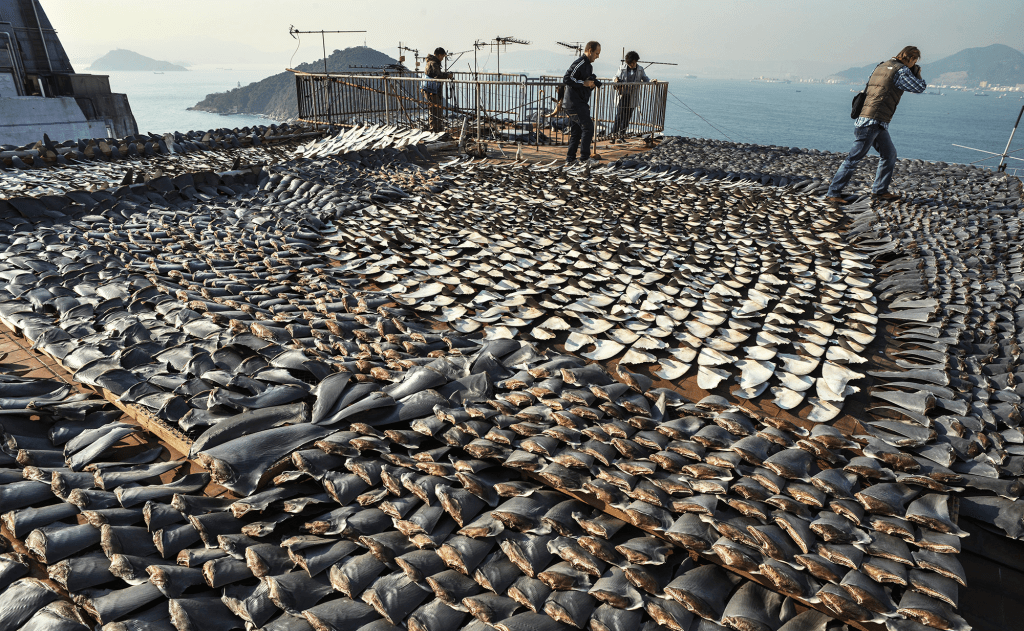
Shark Week is of course a commercial gimmick propped up by the Discovery Channel. Debuting in 1988, it’s now TV’s longest-running programming event. No, sharks aren’t mad revenge-filled characters from a movie (think 1975’s Jaws). In fact, the author of the book “Jaws,” Peter Benchley regretted the complete paranoia and revengeful panic his story created. I’ve been to Costa Rica where shark-finning (killing these species for shark fin soup and other human uses) was rampant. In 1977, when I was 20, I encountered so many species of sharks in Mexican waters; off Belize, Honduras and Costa Rica I was in shark heaven. Now, over three-quarters of shark and ray species are classified as ‘near threatened’ or worse, with the number of endangered species growing each year. Sometimes I need to give myself some self-care time to grasp how quickly the shark world — and oceans in general — has changed.
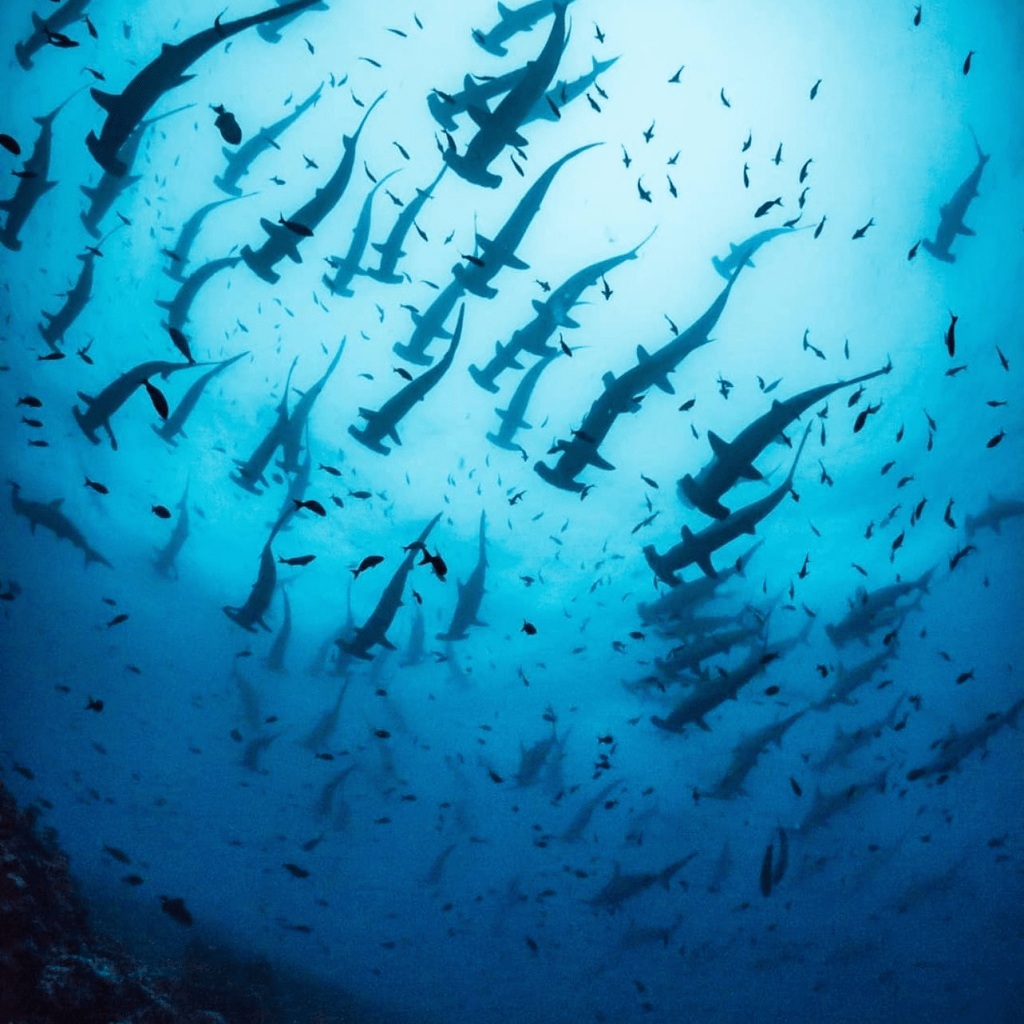
Happy summer memories.
Note: First Appeared Today, Newport News Times.

Paul K. Haeder is a novelist, journalist, educator and author of “Wide Open Eyes: Surfacing from Vietnam,” Cirque Press.
 Paul Haeder, Author