from episode 6 in the “series” Too Old to Die Young”
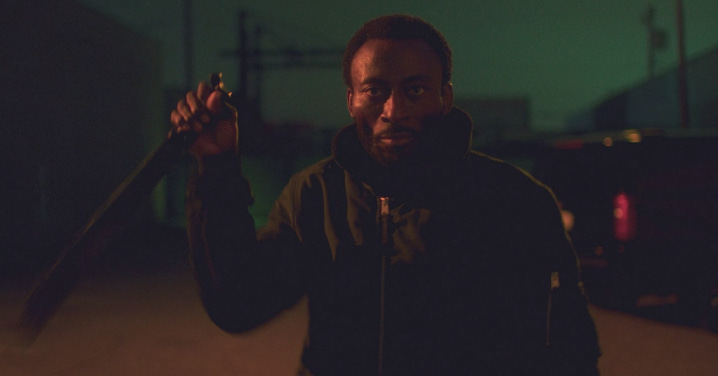
Yes, this series, this noir multi-part streaming art thing on Amazon is quite the story, or stories, involving the perversions of our time — bad cops, murdering cops, drug lords, pornography distributors, underage sex, drug use, gangs, gang banging, the dark side of what it is to be in today’s conquest world . . . again, that subtitle — “Never forget, we are conquistadors.” Then the new little drug lord proceeds to shoot 16 cops shackled and kneeling in their heads! SPAIN. Mexico. That rape.
Spoken by the son of a drug lord, in Mexico, as he annoints his Americanized brother and the dead old man’s witch woman as drug lord bride and groom, to continue the trade in the USA, where is mother was the drug lord.
And the boy-man, very homoerotic in his own way, had/has a thing for his dead mother. Oedipus and all of that.
I’m thinking about Shakespeare and the Bible, all the violence in our literature, and alas, this series, interestingly, is supposedly breaking ground because it is a serialized streaming affair, where episodes are treated as indie films each unto themselves.
The director wrote an op-ed in the Guardian (that shit storm rag): “Nicolas Winding Refn: our times need sex, horror and melodrama”
This is a frightening time to be alive. For the past six months, I’ve been shooting in America, and it seems increasingly clear we’re now living in a dystopian reality TV show. America has always had a tendency towards the operatic but, fuelled by the hand grenade of insanity that is Donald Trump, it’s reached new heights of hysteria. This means even the smallest developments are heralded as either the end of the world or the second coming.
It’s terrifying. It is also thrilling. We are appalled by what we witness unfolding each day – essentially, the destruction of the American way of life by its own administration – but we’re also inescapably gripped by it. This is a very exciting time in our history.
Of course, he’s a celebritized Dane, and the series, Too Old to Die Young, is intriguing, but alas, I am a writer, a novelist, a short story writer, and I taught writing and fiction and literature, and I am certainly well read, and film classes I have taught as film appreciation classes, so I get this sort of film-making. But again, a Dane, a Westerner, a millionaire, a Holly-Dirt sort of guy telling us in the Guardian that we should embrace the hard times:
According to Refn, Americans need to “embrace such an apocalyptic time.” The director reasons that out of darkness comes light and the benefit of Trump’s presidency is in getting people to wake up to the hypocrisy of the men in power.
“Whenever there’s any kind of enormous global shakeup, there’s bound to be paranoia and insanity, but out of earthquakes come opportunities,” Refn writes. “Even Trump’s fierce arrogance and distaste for his fellow man is good. It’s revealed how many people and politicians share such a view, and our exposure to such hypocrisy is healthy.”
“We need to be pushed out of our comfort zones – of complacency, and, for most of us in the west, an easeful life,” the director continues. “I’m not advocating physical pain, but I do believe mental pain can be a way to stimulate and reset the brain.”
He’s purchased and restored old movies and if offering them soon this month for free: “Nicolas Winding Refn’s Free Movie Website: Here’s Why the Director Picked These Cult Movies to Stream”.
Nicolas Winding Refnannounced last October he was launching a free curated website of films and essays, and now it’s almost time for that website to launch. The Guardian reports byNWR.com is set to launch later this July, and Refn celebrated his upcoming website debut by telling the publication the first four films that will be made available to stream for free. Refn handpicked Curtis Harrington’s “Night Tide,” Bert Williams’ “The Nest of the Cuckoo Birds,” Ron Ormond’s “The Burning Hell,” and Dale Berry’s “Hot Thrills and Warm Chills.”
Ahh, then I come to the defense of this odd series, after reading that shit storm, Variety, and some two-bit critic: TV Review: ‘Too Old to Die Young’ by Daniel D’Addario
This Danny boy’s bullshit Variety perspective is what I used to bring up in classes to then parse, and understand what the critic’s role is in life:
If Attila the Hun were alive today, he’d be a drama critic.
Edward Albee
The public is the only critic whose opinion is worth anything at all.
Mark Twain
think negative criticism mostly stings early on. But if a book has been out a while and gets a bad review after a bunch of decent reviews, it doesn’t bother me as much. In fact, sometimes it’s kind of fun to read a bad review of your work. It’s a different perspective and often times a critic’s gripes are actually the things you like about your writing.
It’s hard to imagine that having been served the first three episodes would have resolved my distaste for this extended bit of exposure to Refn, a filmmaker whose work has historically left me cold. But they might, maybe, have generated a bit more context for Martin and his situation. As things stood, jumping in around the series’s midpoint, his decisions and relationships seemed random, emphasizing the degree to which the show’s bits of mythologizing and its gratuitousness spring from the clear blue sky. The fifth episode, for instance, begins with a revolting bit of abuse and assault against a young man, walked up to languorously as the nature of what is about to occur is made sickeningly clear. This, perhaps, can be said to justify Martin’s deranged quest to wipe out wrongdoers, just as does, later, the image of a trembling woman emerging from a shallowly dug grave in the middle of the desert. But it’s also shoving cruelty in our faces for the sake of doing so.
Ahh, much ado about nothing? This is the cult of writing and directing and odd filmmaking:
So if viewers are expected to drop in and out of “Too Old to Die Young” at their leisure, and it doesn’t matter if they start at the beginning or in the middle, how would Refn feel if an audience member liked what they saw, but only watched 30 minutes of his 13-hour series? What if that was enough for them?
“I would say, appreciate the experience. Thirteen hours is a long time in someone’s life.”
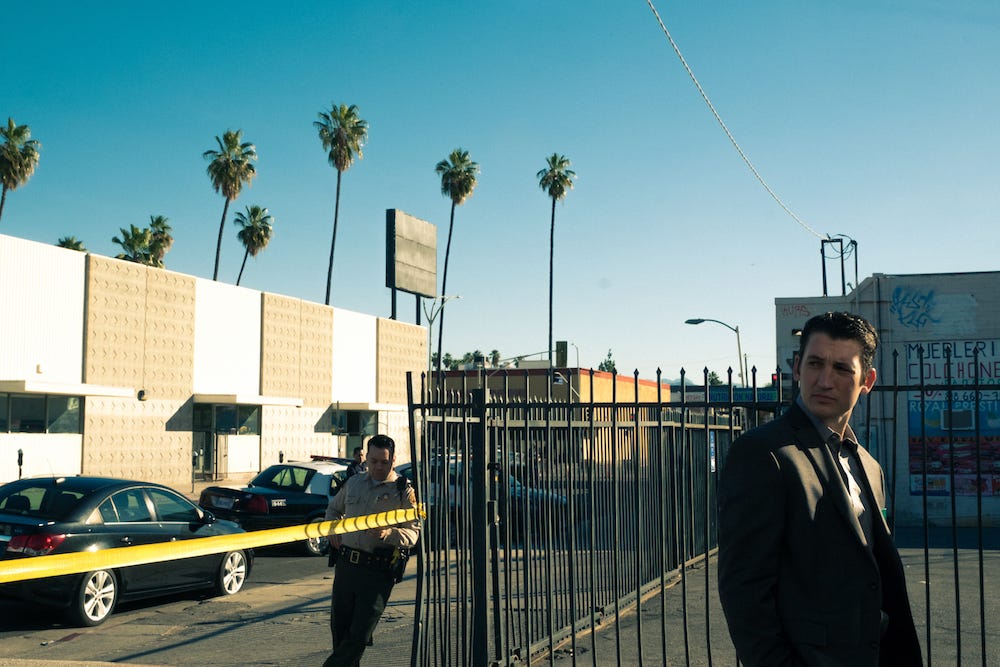
Miles Teller in “Too Old to Die Young”Amazon
And time is something Refn appreciates. It’s what drew Refn to the project in the first place. He asked himself what he couldn’t do with a typical, theatrically-released film, and his answer was, “Well, I can’t make a 13-hour movie.” In the production notes, he took it a step further, asking, “What would Fritz Lang do if he was alive today?” (source)
It goes back to the Conquistadores, man, and because he’s not a deep guy, the Dane is looking for sex, drugs, rock n’ roll, rape, violence, pedophilia, and more to enter our dopamine centers.
Imagine really fucking cool dramatized accounts of the real thugs, the real cartels, the real violence factories, in your homes, in your schools and in your boardrooms.
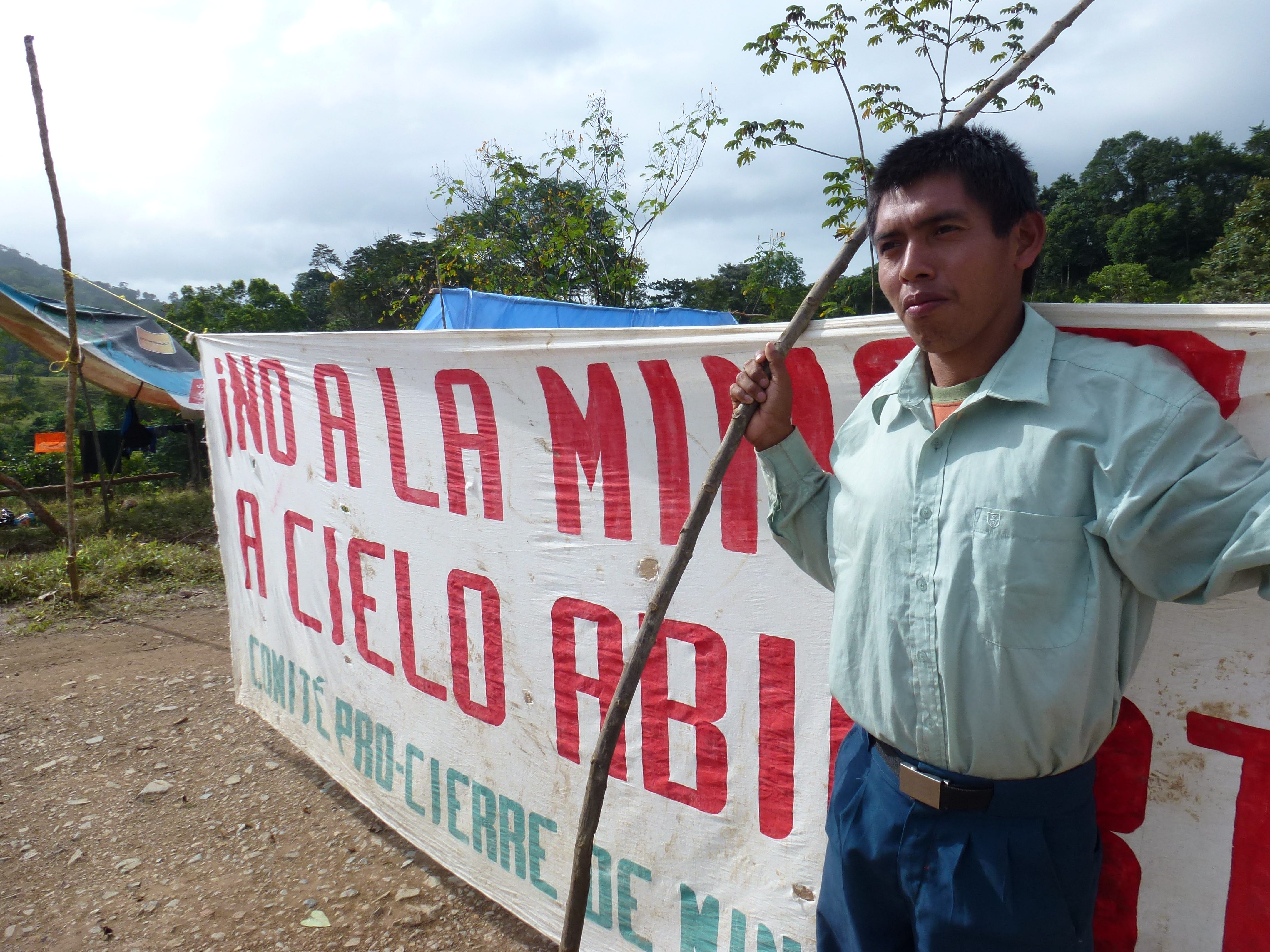
[Photo: A Ngobe activist protests against a Canadian mining company in Nueva Lucha, Panama, where indigenous people see the mining industry as a threat to their way of life. Image by Mellissa Fung. Panama, 2012.]
Canada is on the frontlines of a new battle in the rainforests of Mesoamerica, and billions of dollars worth of precious metals are at stake.
As the developing countries in Latin America turn to the mining industry to secure their economic futures, Canadian mining companies are eager to expand their claims. Already, they hold about 1,400 mining properties from Mexico to Argentina, bringing to mind for some Latinos images of an old enemy, the Spanish Conquistadors.
One of these properties is in the Colon province of Panama, where a number of indigenous peoples and peasant farmers, backed by a national consortium of environmental groups are trying to stop two Canadian mining companies from developing a gold mine and one of the last known major copper reserves in the world. They are concerned these mines would strip thousands of hectares of rainforest, deplete and contaminate water supplies, and displace the communities that have made the area their home for centuries, including the Ngobe people, Panama’s largest indigenous group.
The mining companies say they have had extensive consultations with locals and there is widespread support for their projects. In addition, they say they are bringing economic development, jobs, and growth to these communities.
The local communities are drawing inspiration from similar fights that took place in Costa Rica, where public pressure led to a ban on open pit mining, and El Salvador, where indigenous people secured a moratorium on mining in part of the country. Both are considered victories against the “Canadian Conquistador,” but have come at a great cost – lives were lost, and considerable damage to the environment had already taken place.
Canadians, in the meantime, are largely oblivious to this new role, still considering themselves peacemakers on the international stage, despite the fact that the Conservative government recently rejected a bill in Parliament that would have made Canadian mining companies more accountable for their activities abroad.
A CBC / Pulitzer Center on Crisis Reporting collaboration
Shit, imagine a creative like this Dane going into real territory: The expression “evangelical drug trafficker” may sound incongruous, but in the Brazilian city of Rio de Janeiro, it’s widespread.
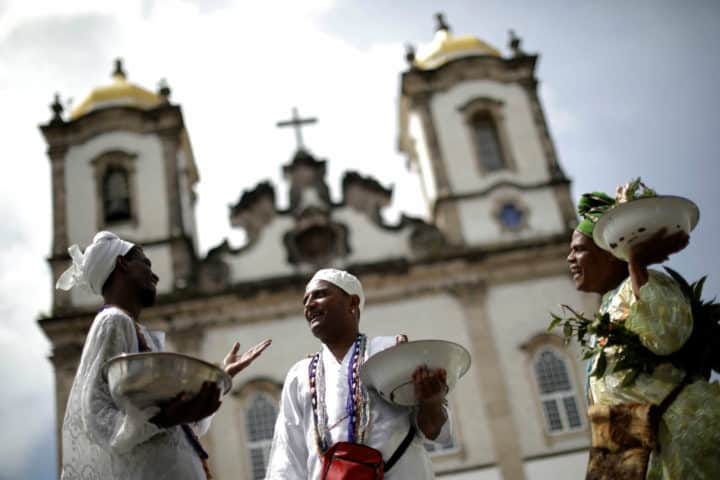
But the current wave of religious bigotry is more personal, and more violent, than in the past. As the Washington Post recently reported, Afro-Brazilian priests are being harassed and murdered for their faith. Candomblé and Umbanda practitioners fear leaving their homes. Terreiros have closed due to death threats.
[Photo: In some gang-controlled parts of Rio, just wearing the religious garb of Candomblé or Umbanda could lead to expulsion.]
Talk about Conquistadors, old and new, biological, a la botany! “Tropical forests play an important role in the global carbon cycle. Moreover this biome is vital in scope of climate change mitigation, storing huge amounts of excess anthropogenic CO2 in tree biomass and in the soil. “Lianas, the new ‘conquistadors’ of the Neotropics”
However, during the last decades a strong increase of liana abundance and biomass has been noted in the tropical forests of Latin America. The impact lianas have on the well-functioning of the forest is still unclear, what triggers their increase is a complete mystery. Are we approaching complete and irreversible ecosystem collapse?
Lianas are thought to be increasing and altering tree growth and ecosystem productivity in tropical forests, but less research has focused on secondary or seasonally dry tropical forest. We report on an 11-year study of tree growth and liana presence from Guanacaste, Costa Rica, where we measured the diameter growth and liana presence on more than 1,700 trees in regenerating forest of different ages. We find that the proportion of trees without lianas is decreasing and the number of trees with lianas occupying more than 10% of tree’s crowns is increasing. We also find that lianas are affecting the diameter growth of trees. The 11-year average relative growth rates of trees with lianas in more than 10% of the tree’s crown are lower than the relative growth of trees with no lianas or lianas in less than 10% of their crown. Year-to-year, tree relative growth rate is related to annual precipitation and tree diameter. However, trees that were heavily infested with lianas (i.e., with lianas in more than 50% of their crowns) had lower relative growth and a weaker precipitation-growth relationship. This work underscores the value of long-term longitudinal data in secondary forest and adds critical data on dry forest liana abundance change. (Increasing Liana Abundance and Associated Reductions in Tree Growth in Secondary Seasonally Dry Tropical Forest)
Ahh, drug cartels, those Iberian conquest queens and kings: “Ask a Mexican on Drug Cartels and Conquistadors.”
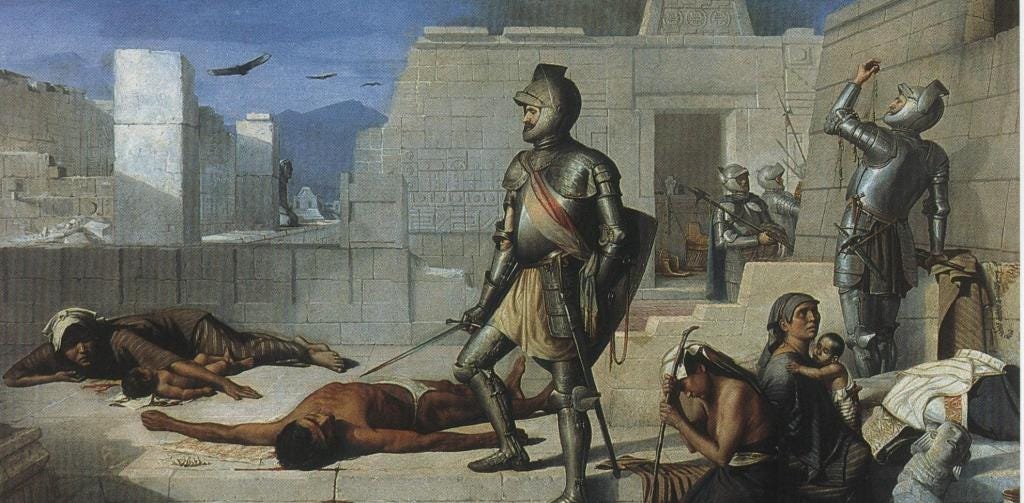
This is the second rant I’ve felt I had to send to you. I don’t know if readers are allowed “seconds” but here it goes: Much has been said about the terrible things happening to the United States and its citizens by the Mexican drug cartels. But what’s the difference between the modern-day cartels and the Big Four of the period between 1492 and 1775? I refer you to the kings of England, France, Portugal, and Spain who invaded the Americas during the above-noted period. The invaders didn’t bring cocaine, pot, or meth, but they brought various diseases that, if I read history correctly, led to the deaths of many thousands of native peoples. And, of course, they brought their heavyweight weapon, the one I believe that Lenin called the opiate of the masses: religion. Today, many people and our economy are hurt by today’s cartels, and I’m not defending them in any way, but it strikes me the cartels of today are pikers compared to their predecessors, who killed an untold number of native peoples and stole a continent.
Mexica Tiahui!
Sloppy seconds are always welcome here, cabrón! It was Marx who dropped the line about religion, not Lenin (he wrote of religion that it’s “a sort of spiritual booze, in which the slaves of capital drown their human image, their demand for a life more or less worthy of man”), and the natives were muy religious, but otherwise, your analysis doesn’t go far enough. You forgot to mention how, like the cartels, the conquistadors fought each other for trade routes, killing each other and innocents in the process. How they demanded tribute from villagers, and terrorized them with public displays of brutality to keep them in line. How the conquistadors built empires that enriched only themselves, and created serfs out of those whom they didn’t bribe into submission. The only real difference between the conquistadors and drug cartels is that the former did it in the name of Christ — and even the narcos aren’t pendejo enough to pull that card.
+—+
Does it make any sense to you that, in some cities in Mexico, there are statues of the Spanish conquistadors? After all, these were the same people who believed that they were superior to the Mexicans so they had to force their ways on them, and not to mention the whole slaughtering of thousands of Mexicans, too.
Lies My Maestro Told Me
Of course it does. Because, while though the conquistadors raped and murdered countless indigenous folks, they represent order and progress to Mexico’s elite, the very people who have the money to erect statues and are more that proud to claim direct ancestry to the barbarians. Witness the furor that happened last year, when the city of Merida in the Yucatan erected a statue to its founder, the conquistador Francisco de Montejo. Even though Montejo laid waste to the Mayas back in the 16th century, and even though the descendants of the vanquished protested loudly, the city’s elites erected the statue. And the same controversy happens whenever someone commemorates Juan de Oñate, the conquistador who swung his sword through New Mexico, much to the delight of the Hispanos who claim no Injun blood in their veins and to the horror of everyone else. But it’s not just an elite-Mexican thing to side with the cruel — just look at the Southern love for the Confederacy. (source = Gustavo Arellano)
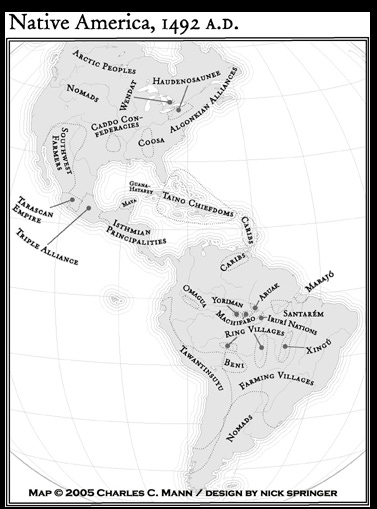
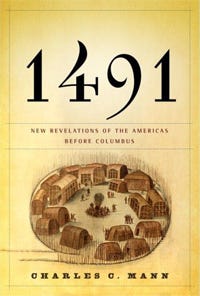
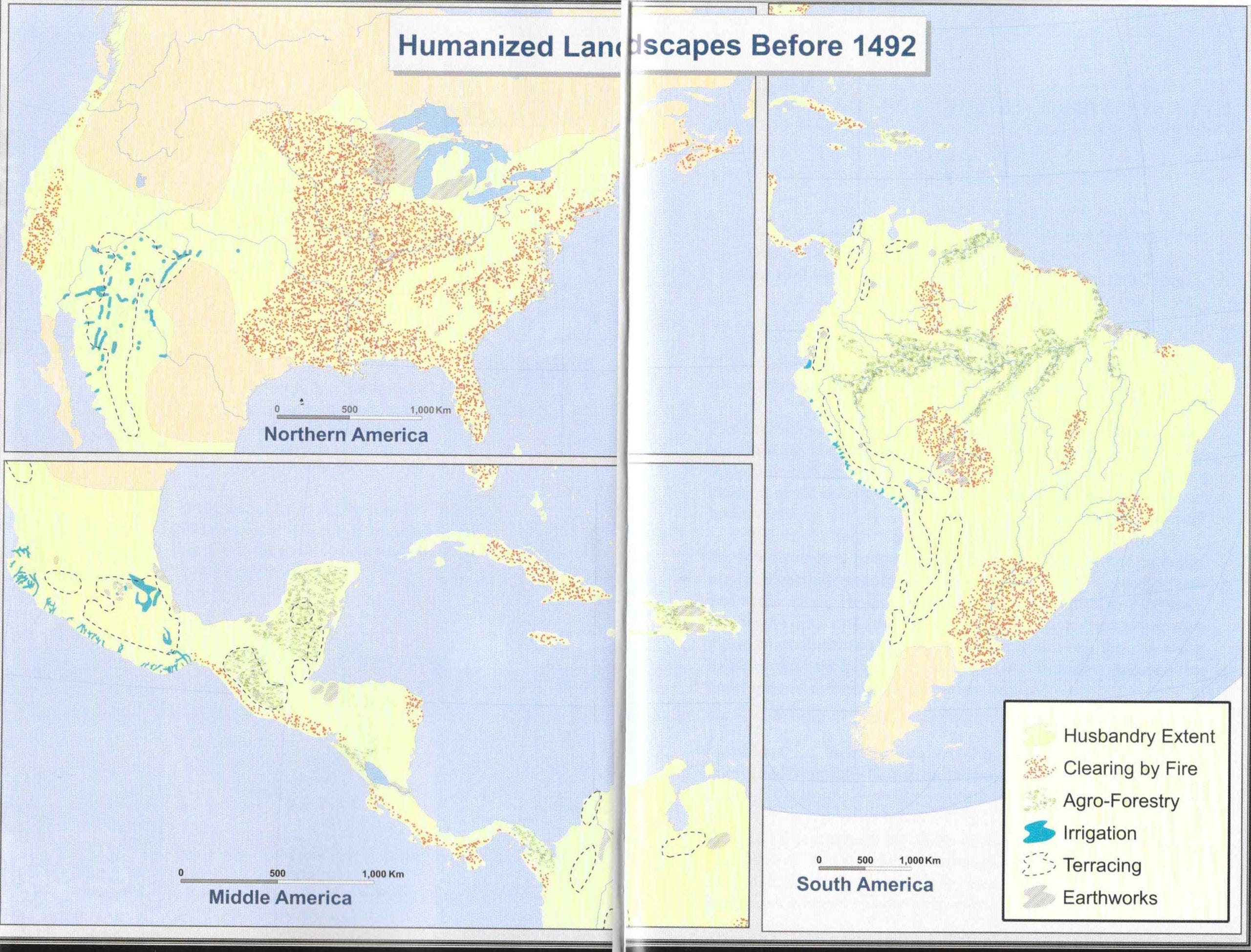
(a) population levels in the Native Americans were probably higher than traditionally believed among scientists and closer to the number estimated by “high counters.”(b) humans probably arrived in the Americas earlier than thought, over the course of multiple waves of migration to the New World (not solely by the Bering land bridge over a relatively short period of time).
The level of cultural advancement and the settlement range of humans was higher and broader than previously imagined.
The New World was not a wilderness at the time of European contact, but an environment which the Indigenous peoples had altered for thousands of years for their benefit, mostly with fire.
These three main foci (origins/population, culture, and environment) form the basis for three parts of the book.
In the introduction, Mann challenges the thesis that Native Americans “came across the Bering Strait about thirteen thousand years ago, that they lived for the most part in small, isolated groups, and that they had so little impact on their environment that even after millennia of habitation the continents remained mostly wilderness.”
Children of the Days
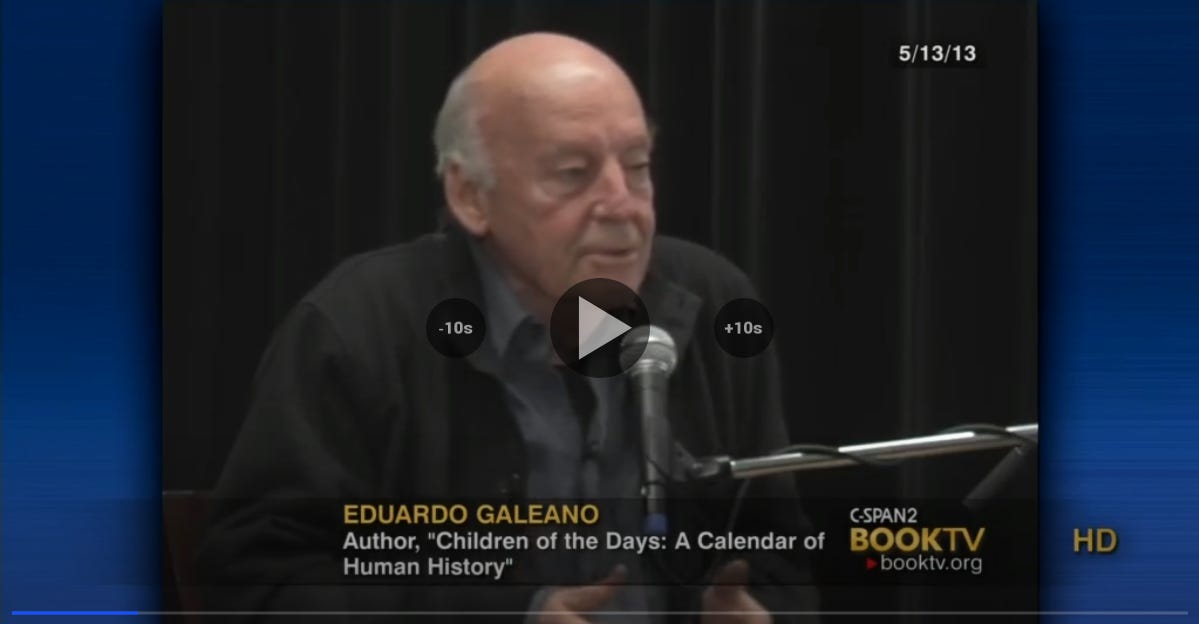
Eduardo Galeano talked about his book on world history, Children of the Days: A Calendar of Human History, in which he writes about different historical events that happened on each day of the year. During this event hosted by the Chicago History Museum, Mr. Galeano was joined by author and New York Times guest columnist Marie Arana
Drugs and guns and merchants of death and the reality of entertainment as history, as education (sic sic wrong wrong) , and these rough and tumble times, these streaming on Netflix Times, the unbearable heaviness of being a Western Culture Zombie, as we find more channels to scan, as we find more time to forget. The art of forgetting context and history. Violence? Religion? Drugs? Spanairds?
And the conquest is Double Speak, Orwellian langauge.
I have come to notice that one of the most effective tools for making people easily malleable sheep is through something called “nominalism”.
Nominalism can be thought of as a “rule of reasoning” governing which pathways our minds use as we move from ignorance to understanding on any topic imaginable. In essence, this school of thought presumes that reality can only be known through the names and definitions given to things and processes in the real world.
The definitions of those words/labels are then defined by the ruling perception managers who control whatever systems of authority happen to be dominant in that society. Orwell referred to this as the Ministry of Truth in his “1984.”
I’ll let you think about those power centers that control definitions of words today.
One can see clearly how this sort of thing can be used to get soft-minded people to support (or at least ignore) the growth of fascism. Since nominalism presumes that a ruling power creates definitions, which substitute for “truth”… then definitions can be changed over time as said ruling class deems those definitions to change. Just think of the very different definitions of “man” or “woman” from a decade ago, to today. If changing definitions are truth… then there is no ontological truth at all, and inversely no such thing as a lie. How useful for oligarchs if their victims lose the ability to believe in truth or lies… especially when you want them to lose sight of their true enemies while creating new enemies to hate and fear.
Nominalism works because people haven’t learned how to use the god-given tool called their MINDS in order to look for context, nuance and truth that fall outside of the controlled framing of approved definitions given to “names/labels”.
Reality can be known…but not through narrow definitions and categorisations.
Ahh, so those terms, those words, the controllers have control of:
digital conquistadors
disruptive economies
tragedy of the commons
ecological footprint
sustainability
soft coup
before contact
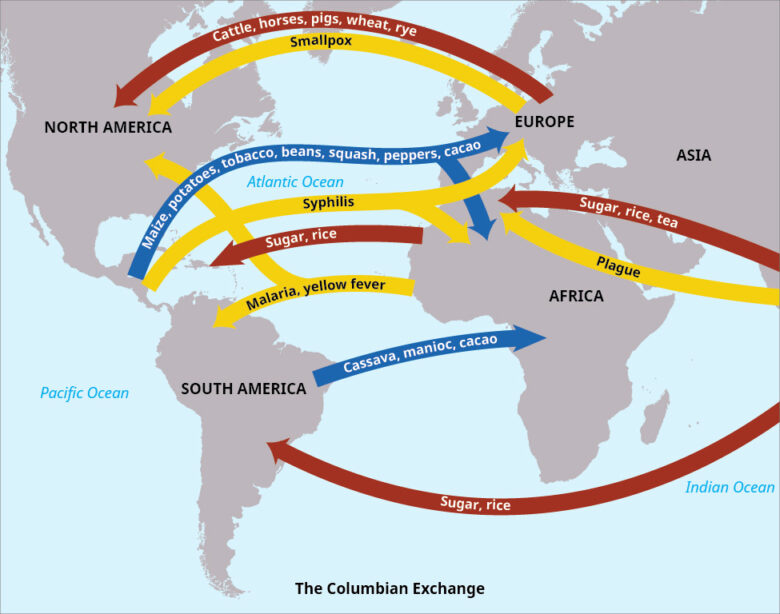
Columbian Exchange
transhumanism
fourth industrial revolution
internet of bodies, things, nano-things, everything
Just looking at the textbook glossary makes a grown communist want to load up the Molotov’s. Now you know why some of us want to just dive into the hellish nature of a Dane with a script and camera!
While I am waiting for real work, on Galeano’s trilogy, or Garcia Marquez’s work:
Just singing those narco ballads, the new bent and misaligned and fucking killing out in the open, Conquistadors.
“El Corrido de Tony Tormenta”
[Lyrics to an excerpt of “The Ballad of Tony Tormenta” by Chuy Quintanilla]
Todo esta bien contralado senores hagan conciensia, ahora que ya tomo el mando el senor tony tormenta
Everything is well under control, be aware senores, Now that Mr. Tony Tormenta is in charge
Todo los grandes se juntan para escoger al mejor pero si se necesita tambien sabe usar las armas
All the big shots get together to choose the best man, But if it’s necessary they also know how to use their weapons
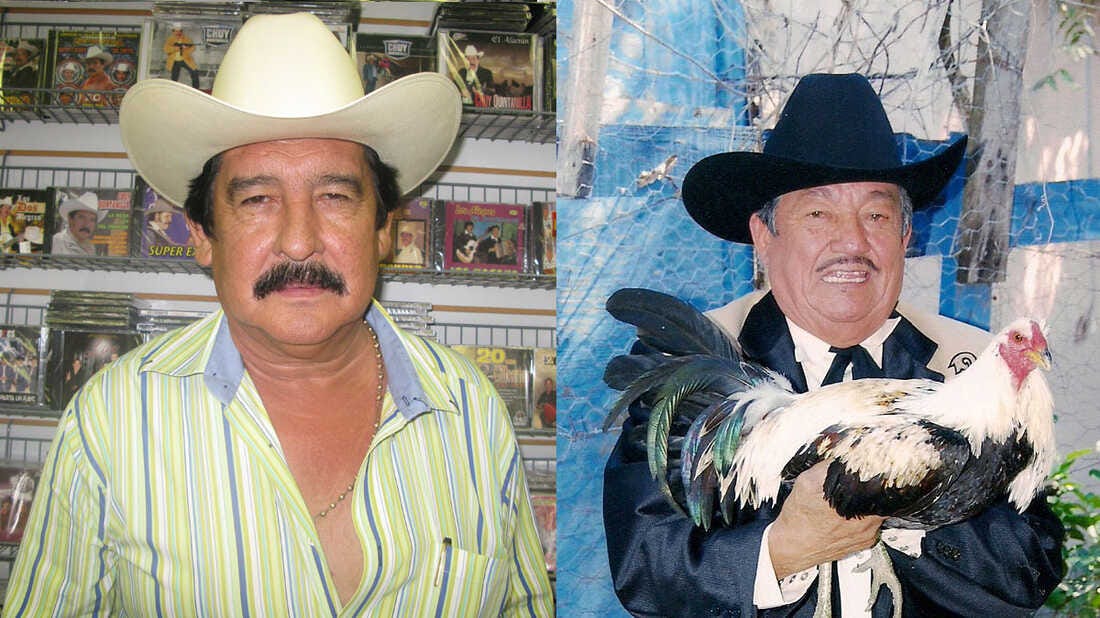
[Photo: Left: Chuy Quintanilla, a former federal police commander and current narcocorrido singer, stands in a record store in McAllen, Texas. Right: Reynaldo “The Roosterman” Martinez, one of Mexico’s most prolific corrido composers, has 270 ballads to his name.]
[Photo: Nino de Atocha: The Holy Infant of Atocha, who has roots in 13th-century Spain, is the patron saint of prisoners and travelers– and popular among drug traffickers. Medellin cartel leader Pablo Escobar had altars in many of his safe houses dedicated to the nino (who allegedly appeared to Christian prisoners as a boy who brought them food and water) and made a pilgrimage to Spain to visit the shrine. Mexican drug lord Ovidio Guzman, a son of Joaquin “El Chapo” Guzman, was wearing an amulet of the saint around his neck when he was briefly detained by Mexican authorities in 2019.]
[Image: San Ramon: In 12th-century Spain, San Ramon was ripped from his mother’s womb after she died in childbirth. He later entered the order of Mercedarian Fathers, who dedicated their lives to freeing Christian captives that had been imprisoned by Muslim conquerors in North Africa. When he could not buy their freedom, he offered himself in exchange for several Christians — taking advantage of the situation to preach the Christian gospel. But his Muslim captors placed a padlock on his mouth so that he could not speak. Drug traffickers often place a coin on the face of his effigy when they pray to him to keep people quiet.]
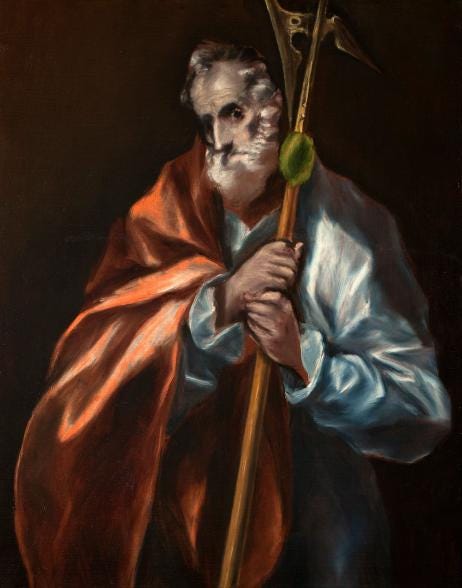
[Image: St. Jude: One of the original 12 Apostles of Jesus Christ, St. Jude is the patron saint of lost causes. He is particularly popular among drug traffickers, who pray to him “When they are driving a load of dope down a highway,” said Almonte.]
[Photo: Jesus Malverde: You might know the Robin Hood-like bandit from a Season 2 episode of “Breaking Bad,” when DEA agent Hank laughs at the notion of drug dealers praying to the saint. But indeed they do, as Malverde — who was allegedly killed by police in 1909 — has become the patron of outlaws, especially in his home state of Sinaloa, Mexico.]
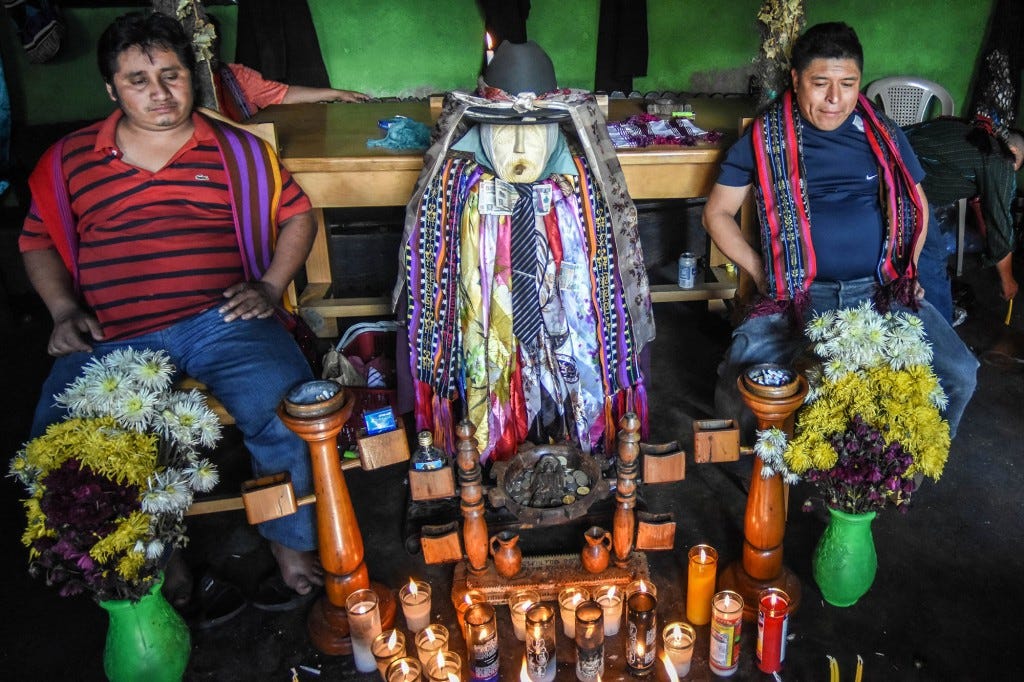
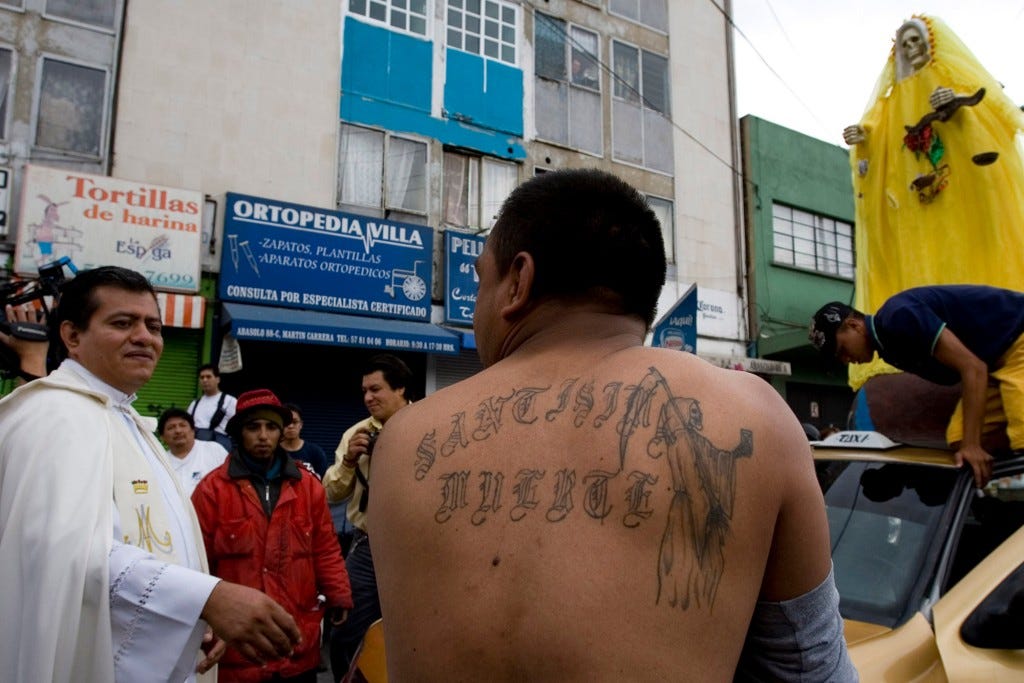
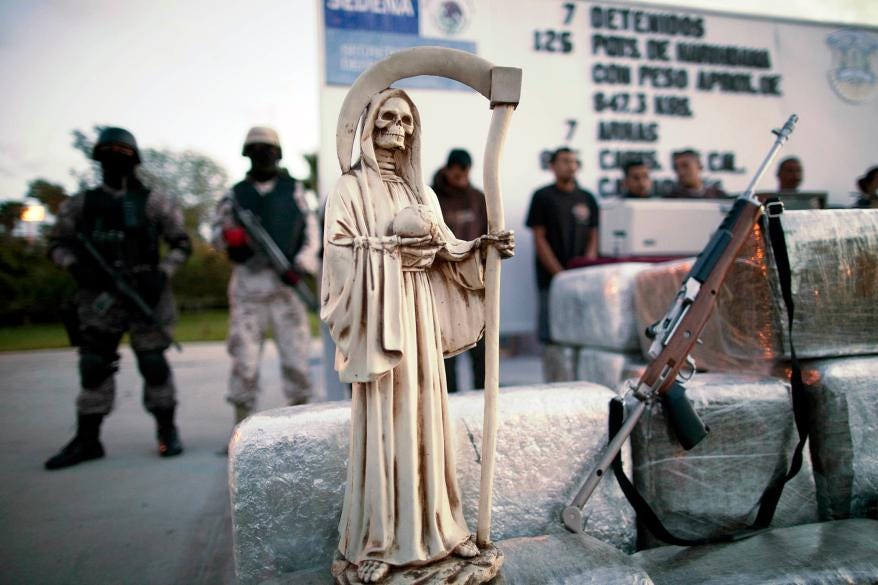
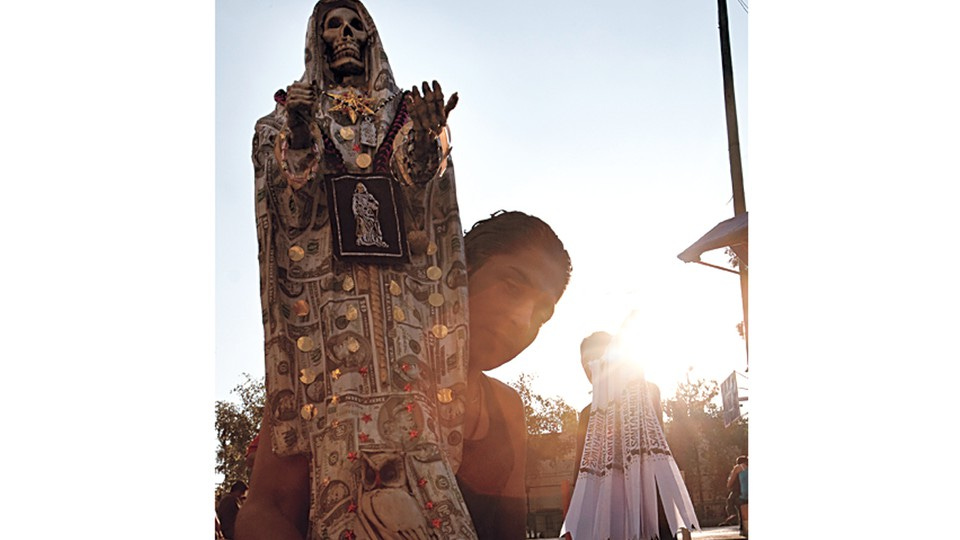
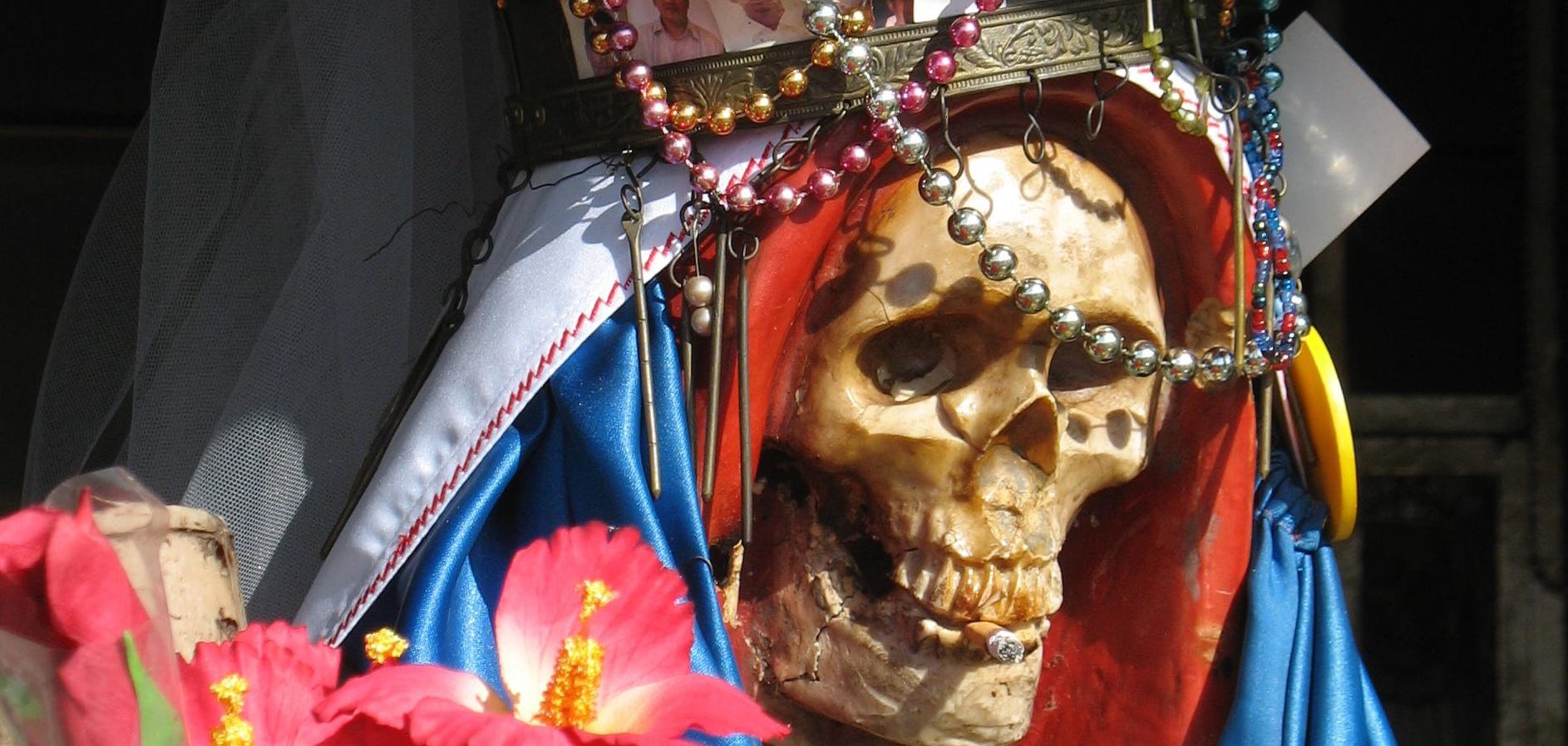
And yet, despite this condemnation, her flock is flourishing. Enriqueta Romero, an adherent so frequently interviewed by Mexican and foreign press that she’s become a sort of spokeswoman for the Santa Muerte movement, attributes this to the folk saint’s democratic nature: “She is fair and listens to everyone’s prayers.” According to Andrew Chesnut, a professor of religious studies at Virginia Commonwealth University, Mexican botánicas (esoterica shops) sell more Santa Muerte figurines than they do icons of the Virgin of Guadalupe, Mexico’s patron saint. “She has a reputation for being an incredibly speedy and efficacious miracle worker,” says Chesnut, describing her as a healer and a whiz at solving legal problems. “And unlike most canonized saints, at the end of the day, she isn’t Catholic, so you can ask her for anything—to bless a shipment of crystal meth, for example.” (source)
















 Paul Haeder, Author